You spend long hours working from home, so your space matters. Modern home offices change how you feel and how much you achieve by combining thoughtful home office design UK principles with practical comfort. A well‑arranged room or corner can cut distractions, ease physical strain and support remote work wellbeing.
Research from the Chartered Institute of Personnel and Development and the World Green Building Council links ergonomic furniture and daylight to lower fatigue and fewer sick days. Good indoor air quality and stable temperature help cognitive performance, while clear boundaries between work and relaxation improve focus and home office productivity.
To know if your comfortable home workspace is working, track a few simple metrics: distraction‑free hours per day, frequency of neck or back discomfort, task completion rates and a short daily wellbeing score for mood or stress. These figures make design changes measurable and help you refine what suits your home, whether that is a spare room, a converted attic or a compact flat in London.
This article will next cover design principles that boost efficiency, then technology and connectivity, followed by climate and acoustics for comfort, and finally routines that your space should support. Each section gives practical steps you can apply across UK homes and budgets.
modern home offices: design principles that boost efficiency
Good design starts with simple choices that match your body, your tasks and your home. An ergonomic home office reduces strain and keeps you working comfortably for longer. This section outlines what to look for when you choose furniture, plan your space and set the light and colours that shape your mood.
Ergonomic layout and furniture selection
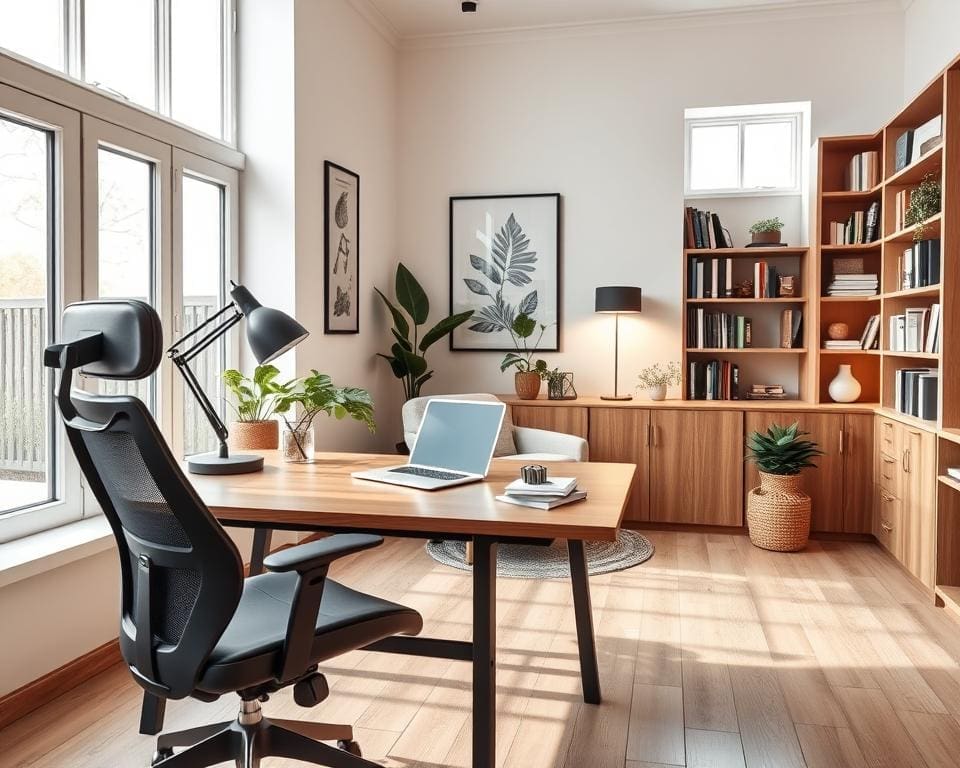
Ergonomics means matching furniture and layout to your body and daily tasks. Choose a height-adjustable desk such as an IKEA Bekant or a sit-stand model from Fully to alternate between sitting and standing. Pair it with an ergonomic chair from Herman Miller or a UK alternative like HÅG or Sedus to support your posture.
Place your monitor at eye level about an arm’s length away. Use an external keyboard and mouse so your wrists stay neutral. Small investments — footrests, monitor arms, laptop stands and document holders — make a big difference. Check depth and adjustability when you buy home office furniture UK to ensure comfort.
Follow Health and Safety Executive guidance on workstation setup to reduce risks of musculoskeletal strain. Anti-glare screen filters and correct screen contrast protect your eyes during long sessions.
Space planning for focused work and relaxation
Good space planning home workspace starts with zoning. Create a primary zone for focused work and a smaller secondary zone for breaks if you have the room. When space is tight, use temporal zoning: folding desks, screens or storage can turn a dining table into a focused desk for the day.
Control clutter with built-in storage, shelving and cable management systems. Clear surfaces lower cognitive load and cut distraction, a finding supported by environmental psychology research. Regular decluttering routines help maintain that calm.
Choose modular, multi-use pieces so your room adapts as needs change. Thoughtful separation between work and living space reinforces work–life boundaries and helps you switch off at the end of the day.
Lighting and colour choices to influence mood and alertness
Maximise daylight by positioning your desk near a window and using light-diffusing blinds to reduce glare while keeping brightness. Daylight supports circadian rhythms and helps keep energy levels steady through the day.
Layer artificial light with ambient, task and accent fittings. An adjustable desk lamp with a 2700–6500K range offers warm light for focus and cooler light for alertness. LED fittings give long life and lower running costs, important for any home office lighting plan.
Use colour psychology workspace principles when you choose paint and materials. Muted blues and greens support concentration and calm. Warm accents such as soft yellows or terracotta add energy when you need it. Neutral backgrounds reduce visual distraction. Brands like Farrow & Ball and Dulux offer palettes suited to these aims in the UK market.
Pay attention to visual ergonomics: matte finishes, appropriate contrast between screen and background and fewer reflective surfaces cut glare and help maintain comfortable viewing.
Technology and connectivity for seamless remote work
Get your tech in order to make the rest of your day smoother. Reliable hardware and a stable connection cut down frustrations on video calls, speed up cloud sync and keep your focus on tasks that matter. This section guides you through practical steps for network setup, the best remote work software and the peripherals that reduce strain and boost output.
Reliable broadband and network setup
A stable connection is the backbone of any home office. In the UK you can choose from FTTP, FTTC or full-fibre plans with providers such as BT, Virgin Media O2 and Hyperoptic. Aim for upload and download speeds that suit your workload; 20–50 Mbps handles standard video calls well, with higher speeds needed for large transfers or multiple users.
Test speeds with Ofcom’s broadband checker and consider a mesh Wi‑Fi system for larger houses. Use wired Ethernet for desktop machines when possible. Pick a modern router that supports QoS to prioritise work traffic and WPA3 for security. Keep a mobile 4G/5G tether or a secondary ISP as a contingency for critical meetings.
Productivity tools and software that streamline tasks
Choose collaboration platforms that match your team’s habits. Microsoft Teams, Zoom and Slack are common in the UK workplace. Sync calendars with Outlook or Google Calendar and store shared files on OneDrive or Google Drive to avoid version clashes.
Manage tasks with Trello, Asana, Todoist or Microsoft To Do and track focus with RescueTime or Toggl. Use automation tools such as Zapier or Microsoft Power Automate to remove repetitive steps. Protect your work with a VPN on public Wi‑Fi, enable multi‑factor authentication and keep apps up to date.
Peripherals that improve comfort and efficiency
Good peripherals make a tangible difference to comfort and speed. Add an external monitor in the 24–32 inch range or an ultrawide screen for easier multitasking. Fit a monitor arm to get the height right and clear desk space.
Choose ergonomic peripherals such as split keyboards and an ergonomic mouse from trusted brands like Logitech or Microsoft. Mechanical options from Keychron suit heavy typists. For calls, use a quality headset or speakerphone from Jabra or Poly and a reliable webcam such as the Logitech Brio for clearer video.
Sort power with surge-protected strips and USB-C hubs. Tidy cables to reduce trip hazards and visual clutter. These small changes let you focus on work rather than wrestling with tools and keep your home office technology running smoothly.
Creating comfort: climate, acoustics and personal wellbeing
Your home office comfort depends on three practical areas: temperature and ventilation, sound control, and personal touches that support mental focus. Small changes in each area can lift concentration, reduce fatigue and improve wellbeing at work UK.
Temperature control and air quality
Aim for a steady 20–24°C for best cognitive performance. Use central heating with a programmable thermostat, or local heaters and fans to fine-tune temperature through UK seasonal swings. Check insulation and draught-proofing so you do not waste energy keeping the room at a comfortable level.
Fresh air and low CO2 keep thinking sharp. Open windows when weather permits, use trickle vents, and consider mechanical ventilation in tightly sealed flats. Portable air purifiers with HEPA filters help where indoor air quality falls short. Keep relative humidity around 40–60% to reduce dry eyes and respiratory irritation.
Maintain systems with regular servicing and filter cleaning to sustain comfort and good indoor air quality. Simple upkeep prevents performance dips and extends the life of heating or ventilation equipment.
Acoustic treatments to reduce distraction
Domestic noise—street traffic, neighbours or appliances—interrupts your focus. Frequent interruptions raise cognitive load and increase errors. Treat common sound sources first to regain sustained attention.
Soft furnishings absorb sound. Heavy curtains, rugs and upholstered furniture reduce reverberation. Use bookcases or shelving to scatter sound and add depth to the room. For higher needs, fit acoustic panels or ceiling baffles to control reflections.
Plan behaviours that protect focus. Schedule noisy chores outside core work hours. Use white-noise machines or apps to mask intermittent sounds. When you need crystal-clear calls, invest in quality noise-cancelling headphones tailored for speech clarity.
Biophilic elements and personalisation
Biophilic design boosts mood and attention restoration by connecting you to nature. Studies from WHO and building industry research show plants and natural materials reduce stress and improve concentration.
- Choose low-maintenance plants suited to UK homes: pothos, spider plant and Sansevieria.
- Introduce timber desk surfaces or stone accessories for tactile warmth and visual calm.
- Place your desk to enjoy an outdoor view where possible to enhance wellbeing at work UK.
Balance personal items with professional presentation for video calls. Use removable backdrops or adjust camera framing so your space feels safe, motivating and appropriate for clients or managers.
Applying these steps improves home office comfort through measurable climate control, effective acoustic treatment home office solutions and thoughtful biophilic design. You create a workspace that supports your health, focus and productivity.
Work habits and routines supported by the home office environment
Start each day with a short ritual to cue focus. Set up your workspace, review a simple plan and do a brief movement routine. This consistent start-of-day habit helps your brain switch into work mode and makes productivity routines UK more effective.
Use structured focus strategies such as 25–50 minute work blocks with short breaks, following the Pomodoro method or ultradian rhythms. Schedule microbreaks for stretching and eye rests to reduce fatigue and musculoskeletal strain. These remote work habits help sustain attention and lower the risk of burnout.
Protect work–life boundaries by setting clear hours and signaling availability with a closed door or calendar blocks and status updates in Teams or Slack. If you share a home, agree household schedules and quiet times, and consider flexible working requests under UK guidance when needed.
Carry out regular reviews of your setup and routines. Check ergonomics, light, connectivity and noise, and use employer resources such as DSE assessments or training on LinkedIn Learning and FutureLearn to refine your approach. Finish each day with a shutdown routine: tidy your desk, review completed tasks and plan tomorrow to keep work and home life distinct.