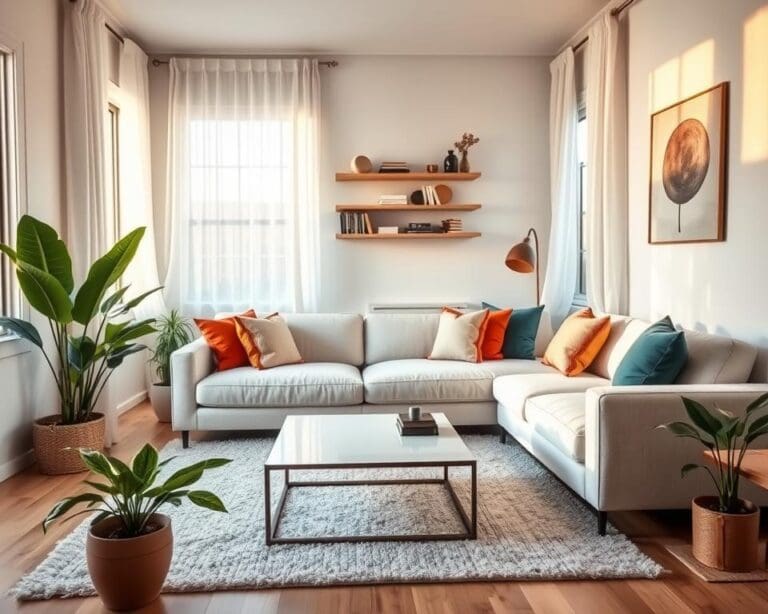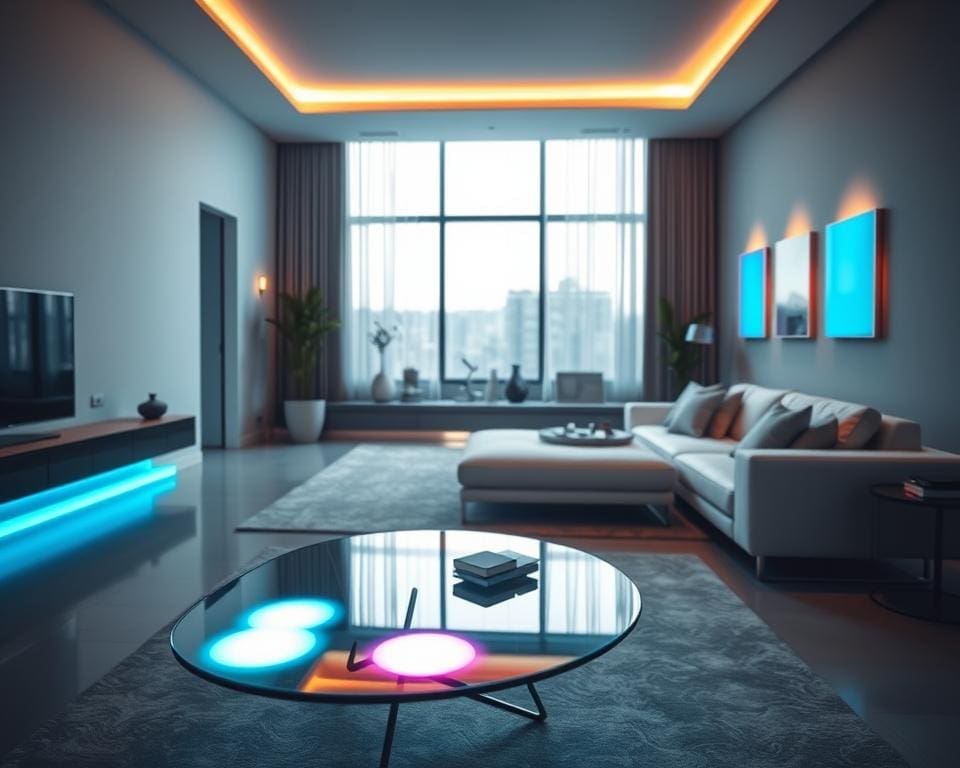
Smart lighting has moved beyond novelty and into everyday life. In the UK, falling hardware costs and wider broadband coverage mean more households adopt smart home lighting from brands such as Philips Hue, LIFX and IKEA. You can now treat light as a connected service rather than a fixed fixture.
For your home, intelligent lighting systems offer clear benefits. You gain personalised ambience, simpler routines through automation and voice control with Amazon Alexa, Google Assistant or Apple HomeKit, and stronger security thanks to remote control and presence simulation. These features reshape how you live, entertain and rest.
Energy savings are a practical reason to switch. LED smart bulbs typically use 70–80% less energy than incandescent equivalents, and schedules, dimming and occupancy sensors cut wasted use further. When you combine LEDs with home automation lighting, running costs fall and carbon footprint reduces.
This introduction prepares you for what follows: a clear definition of smart lighting, design strategies to create mood and support wellbeing, and practical points on installation, cost and efficiency. Throughout, you will see how lighting for modern homes integrates with wider smart-home ecosystems and improves daily life.
smart lighting: what it is and why it matters in your home
Smart lighting changes how you interact with everyday lamps and fixtures. At its simplest, it covers products you can programme, schedule, dim, colour‑tune or operate remotely through an app, voice assistant or automation rules. Understanding what is smart lighting helps you choose the right components for your home.
Defining smart lighting and common technologies
Smart systems include smart bulbs, smart LED strips, smart switches and dimmers, smart plugs for non‑smart lamps and fully integrated fixtures with built‑in connectivity. Brands such as Philips Hue, LIFX, Lutron and TP‑Link Kasa are common examples you will encounter when starting out.
Devices connect via several wireless lighting protocols. Wi‑Fi gives direct control without a hub but can increase network load. Bluetooth allows local control with minimal bandwidth. Zigbee and Z‑Wave create mesh networks that need a hub, for example the Philips Hue Bridge or Samsung SmartThings, which lower power use and improve reliability. Thread is an emerging IP‑based mesh gaining traction in Apple and Google ecosystems.
Matter is an industry initiative backed by Amazon, Google and Apple that aims to simplify cross‑brand compatibility. Bridges and hubs can translate between protocols so you do not end up locked into a single vendor.
Benefits for daily life: convenience, ambience and wellbeing
Smart lighting delivers clear lighting benefits you will notice fast. Convenience comes from remote control, scheduling and presence simulation when you are away. You can set morning wake‑ups, evening dimming and group controls for multiple rooms.
Ambience improves with colour‑tunable bulbs that create scenes for dinner, movie night or parties. Dimming and soft whites let you build layered moods that suit different times and activities.
Wellbeing ties into circadian‑friendly lighting that shifts colour temperature and intensity across the day. Research links appropriate lighting to better sleep and improved daytime alertness. Security and safety are enhanced by timed lights that deter intruders and by well‑placed task lighting that reduces trips and falls for older residents.
Energy savings are another advantage. LED technology, combined with smart scheduling and usage analytics, helps lower consumption and bills while giving you insight into how and when you use power.
How smart lighting integrates with other smart home systems
Smart lighting works best when it forms part of wider home automation. You can link lights to voice assistants such as Alexa, Google Assistant and Siri/HomeKit for hands‑free control and routines that combine heating, blinds and entertainment.
Practical use cases include motion sensors that trigger porch lights, door sensors that switch hall lights on when you arrive and camera‑linked responses for security. You can coordinate lights with smart thermostats like Nest or Hive for energised morning routines and sync lighting with TVs and PCs using tools such as Philips Hue Sync for immersive effects.
Control options range from vendor apps to central hubs and platforms such as SmartThings or Home Assistant for advanced automations. Check compatibility with protocols, hub requirements and voice platforms before you buy to avoid fragmentation and make the most of your smart home setup.
Designing atmosphere and ambience with adaptive lighting
Good lighting design shapes how a room feels and how you use it. Adaptive lighting lets you change brightness and colour to match activity, time of day and mood. Use zones, presets and simple automations to make the system do the work for you.
Creating mood scenes for living, dining and relaxation
Scenes are preconfigured groupings of brightness and colour temperature or RGB colour that you recall with one command or a schedule. They save time and keep mood lighting consistent across repeat activities.
Typical scene examples work well in most homes. For dinner, choose a warm, dimmed amber at about 2,700K and 20–40% brightness to create an intimate feel. For daytime tasks, pick a cool bright white between 4,000–5,000K at 80–100% to aid focus. For movie nights, set very low ambient light with a few focused task lights to reduce screen glare.
Set practical zones such as living area, dining zone and reading nook. Group lights in your app, create presets for common activities and add timers or voice triggers to switch scenes automatically. This approach makes adaptive lighting scenes effortless.
Colour temperature and circadian-friendly lighting strategies
Colour temperature is measured in kelvin (K). Lower values like 2,700–3,000K produce warm, amber tones. Higher values such as 5,000–6,500K give cool, daylight-like light.
For circadian lighting, favour cooler, higher‑lux light in the morning and daytime to support alertness, roughly 4,000–6,500K. Shift gradually to warmer temperatures in the evening, around 2,700K and below, to reduce blue light before bedtime.
Automate gradual temperature shifts using routines in apps or platforms like Home Assistant and Apple Shortcuts. Dimming reduces lumen output later in the evening. For bedrooms, avoid bright blue‑rich lighting within 90–120 minutes of sleep. Use night mode or low‑blue bulbs for late activity.
Layering light: task, accent and ambient approaches
Layered lighting splits roles into three clear types. Ambient lighting offers overall visibility via ceiling fixtures. Task lighting targets activities with reading lamps or under‑cabinet lights to reduce glare and shadows. Accent lighting highlights artwork, shelving or architectural details using spotlights or LED strips.
Smart controls enhance layered lighting by linking dimmable ambient fixtures, tunable task lights and adjustable accent lighting into coherent scenes. For cooking, try bright task light with subdued ambient to improve contrast. Choose bulbs with CRI 90+ in kitchens and art areas for accurate colour rendering.
Design tips include using varied beam angles and heights, and offering simple controls for household members. Programmable scenes, voice commands and motion‑activated task lights improve accessibility for elderly residents or those with limited mobility, making layered lighting both practical and inviting.
Practical considerations: installation, cost and energy efficiency
When planning smart lighting installation, decide early whether you want the bulb or switch route. Smart light bulbs offer the simplest path for renters and lamp-based fittings, and their smart light bulbs price often suits gradual upgrades. Choose smart switches or dimmers for integrated ceiling fittings and whole-room control; these keep the wall switch behaviour intuitive but may interact with older home wiring and require rewiring in some cases.
DIY is feasible for many plug‑in devices and screw‑in bulbs, but smart switches, rewiring or retrofits in older UK homes—especially those with loop‑in wiring or no neutral at the switch—should be handled by a qualified electrician. Compliant installers registered with NAPIT or NICEIC will follow Part P and Building Regulations, helping you avoid safety or insurance issues. Factor professional labour into your smart lighting cost estimate.
Budget realistically. Entry‑level bulbs can start at around £10–£20, while mid‑range options from Philips Hue and LIFX sit between £30–£60 each; starter kits with a bridge often cost £100–£200. Smart switches and dimmers plus an electrician raise total spend. Consider whether you need a hub, multi‑colour tunable LEDs or simple white tunable bulbs, as these choices drive both upfront cost and long‑term LED savings.
Energy efficient lighting is a clear long‑term benefit. LEDs paired with scheduling, motion sensors and adaptive dimming cut consumption versus halogen or incandescent lamps, and many systems report usage metrics so you can track savings. For waste and longevity, expect LED lifespans from 10,000 to 50,000 hours and plan for recycling at end of life. Keep firmware updated, follow smart lighting maintenance routines, segregate IoT devices on a guest network, and favour products that support open standards such as Matter for future flexibility.