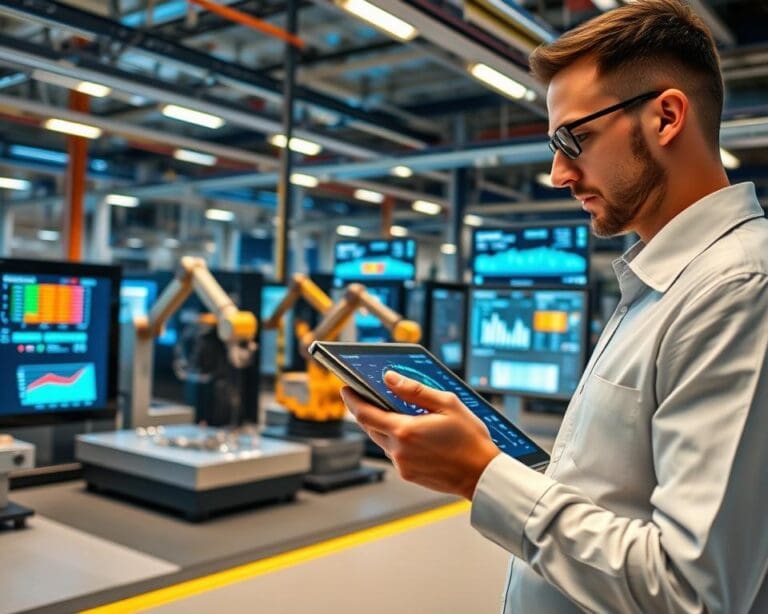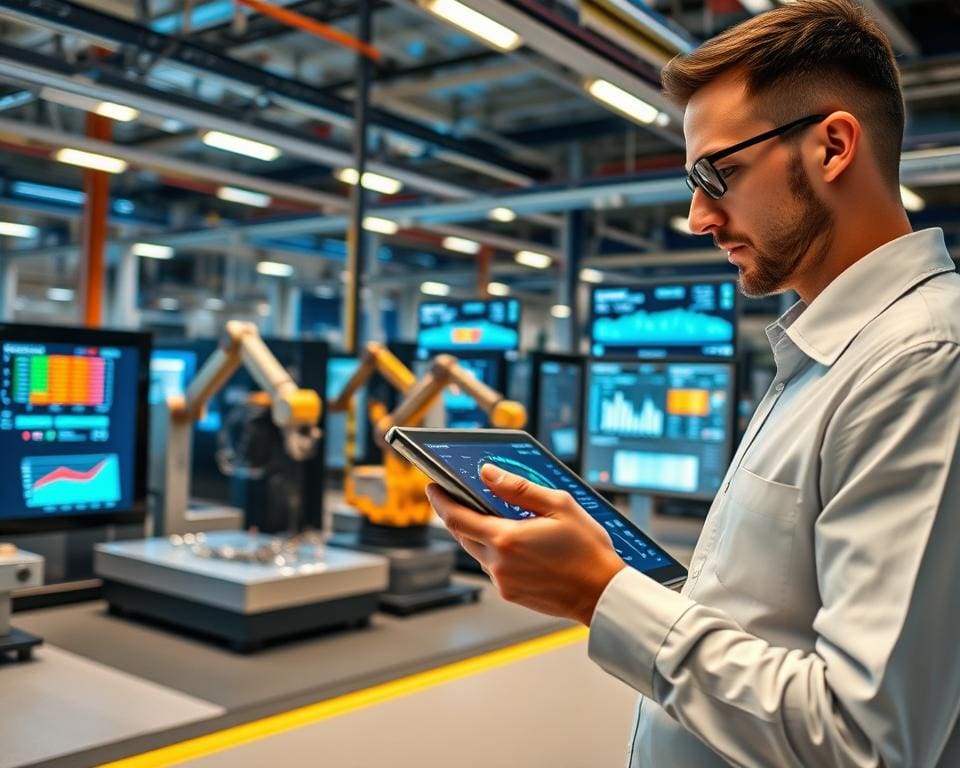
A smart factory links machinery, people and business systems through a shared flow of information. This approach, also known as smart manufacturing, helps you coordinate production, maintenance, quality and planning with greater confidence.
It combines industrial automation, sensors, secure networks, cloud or edge computing and data analysis. The aim is not to add technology for its own sake. It is to give your teams clear production data when they need it.
Traditional automation completes a set task with little human input. A connected factory goes further. It can track changing conditions, share information between systems and help you respond before a small issue becomes a costly stoppage.
This is the central idea behind Industry 4.0 and digital manufacturing. Connected equipment can send information through the Industrial Internet of Things, while manufacturing execution systems and enterprise resource planning software help turn that information into practical decisions.
The approach can support food production, pharmaceuticals, automotive plants, engineering and other areas of UK manufacturing. You do not need to replace every machine at once. Industrial gateways, retrofit sensors and application programming interfaces can often connect existing assets, provided the data is accurate and secure.
People remain central to the process. Operators, engineers, maintenance teams, planners and managers bring practical knowledge that systems cannot replace. As industrial automation reshapes manufacturing, these teams use reliable information to spot faults earlier, improve performance and make better-informed choices.
The National Institute of Standards and Technology links smart manufacturing with information, monitoring, automation, computing and networking. The UK Government’s Made Smarter programme also highlights how industrial digital technologies can improve productivity, competitiveness and resilience. The International Society of Automation describes the Industrial Internet of Things as a way to connect industrial assets, people and systems so they can exchange useful operational data.
How a smart factory connects equipment, people and production data
Smart factory technology links machines, software and people around clear operational goals. You can use factory connectivity to reduce unplanned downtime, improve first-pass yield, track energy use and strengthen product traceability.
The information flow follows a simple path. Equipment creates signals, communication networks transfer them, software organises the data, and analytics turn it into useful insight. Your teams can act on that insight with greater speed and confidence.
Connecting industrial equipment through the Internet of Things
Industrial IoT gives machines a way to share their condition and performance. The Industrial Internet of Things can connect programmable logic controllers, cameras, drives and other assets across a production site.
IIoT sensors capture temperature, vibration, pressure, speed and power use. Industrial gateways collect these signals and pass them through dependable networks. This machine connectivity creates a steady stream of machine data for production monitoring.
Your factory may combine factory automation with supervisory control and data acquisition systems. Edge computing can process urgent signals near the machine, while cloud services can support wider analysis. Each layer needs compatible data formats, secure access and clear ownership.
Good connections support a specific purpose. For example, rising vibration can trigger predictive maintenance before a bearing fails. Energy readings can reveal waste during idle periods. Quality signals can show where a process needs attention.
Bringing production data into one accessible system
A shared manufacturing data platform gives your teams one reliable view of operations. It brings together real-time production data from equipment, quality checks, stock records and maintenance activity.
Effective factory systems integration connects a manufacturing execution system with ERP integration, warehouse tools and engineering software. Strong data integration prevents duplicate entry and gives each record a clear place in the process.
Production data management keeps information accurate, timely and useful. A digital twin can show how an asset or line should perform. Real-time dashboards can display current output, downtime and order progress without forcing supervisors to search across isolated systems.
Data visualisation helps users spot patterns at a glance. Factory analytics can compare cycle times, scrap rates and energy use across shifts. A sensible alert design matters, since too many warnings can hide the events that need action.
Automation platforms can connect routine tasks across business tools. For practical ideas on reducing manual hand-offs, explore digital workflow automation. The same principle applies in manufacturing when approved data moves safely between production, maintenance and planning systems.
Helping employees collaborate with connected technologies
Technology creates value when people can understand and use it. Connected workers receive relevant information at the point of work, rather than waiting for a report at the end of a shift.
A connected workforce may use tablets, wearable devices and digital work instructions. These tools can guide inspections, record quality checks and show the correct response to an equipment alert. Operator technology should support clear decisions without adding unnecessary steps.
Industrial collaboration tools let maintenance, quality and production teams share updates in one place. Human-machine collaboration becomes stronger when machine signals explain what has changed and workers apply experience to decide what to do next.
Workforce training remains central to adoption. Your smart factory employees need time to practise new processes, understand data limits and follow safe escalation routes. Training should cover system use, cyber security and the reasons behind each change.
- Give each data set a named owner.
- Use common formats across machines and software.
- Show only the alerts that need human action.
- Protect access with suitable permissions and secure credentials.
- Review results against downtime, yield, energy and traceability targets.
When equipment, software and people share a dependable process, production insight reaches the person who can use it. Your teams gain context, machines provide evidence, and decisions become easier to co-ordinate across the factory.
Key benefits of smart manufacturing for your business
The value of smart manufacturing benefits comes from measurable business gains, not connectivity alone. Set a baseline for each project, link the investment to a clear aim and agree how success will be measured.
Live production data gives you a clearer view of bottlenecks, waiting time, short stops and long changeovers. This supports better scheduling and helps you use machinery and labour more effectively. The result can be stronger manufacturing efficiency and higher manufacturing productivity.
Condition data, alarm history and maintenance records reveal patterns behind recurring faults. With continuous machine monitoring, your team can plan repairs before a failure causes a major stoppage. Predictive maintenance can reduce downtime, shorten repair times and protect the useful life of key assets.
Track availability, performance and quality with one consistent method. Clear definitions for planned downtime, ideal cycle time and rejected output make overall equipment effectiveness easier to compare across lines. ISO 22400 provides a useful framework for consistent manufacturing performance measures.
Automated checks and process sensors can identify small changes before they create off-specification products. Digital records reduce manual entry errors, support root-cause analysis and make affected batches easier to isolate. This approach strengthens quality improvement and traceability during audits.
Energy data can show where electricity, gas, compressed air and water are being wasted. You can spot abnormal use and target energy-intensive processes with greater precision. These actions support energy efficiency, lower operating costs and wider decarbonisation plans. The U.S. Department of Energy’s Better Plants programme demonstrates how data can guide industrial energy improvements.
Managers gain timely, contextualised information instead of relying on delayed reports or disconnected spreadsheets. A shared view of orders, stock, equipment and capacity supports faster decisions. It can strengthen operational resilience when demand changes, supplies are delayed or production constraints appear.
Connected tools can support employees in practical ways. Digital work instructions, accessible records and automated data capture reduce repetitive administration. Your people can spend more time on problem-solving, quality checks and improvement work.
- Start with a focused use case and a reliable performance baseline.
- Measure benefits such as output, rejected units, repair time and energy per unit.
- Review data quality, user adoption, integration costs and ongoing support needs.
Once data standards and governance are in place, you can apply successful systems to more lines, sites or processes. The UK Government’s Made Smarter Review links industrial digital technology with improved productivity and competitiveness for UK manufacturers. A phased approach lets you test the business case before wider investment.
Smart manufacturing delivers value when the chosen use case suits your operation. Review results against agreed targets, refine the system and keep ownership clear across production, maintenance and management teams.
How to build and manage a connected smart factory
Begin your smart factory implementation with a clear review of current operations. Map equipment, control systems, software, data flows, networks, manual tasks and key performance problems. Use this evidence to build a smart factory roadmap based on business needs, not new technology alone. Set a baseline for downtime, throughput, scrap, energy use, changeovers and delivery performance, then test one valuable use case on a controlled production line.
Your smart manufacturing strategy should support an open, flexible architecture. Check industrial protocols, application programming interfaces, data models, network capacity, edge processing, cloud services, MES and ERP links. Gateways, sensors and adapters can connect older machinery where replacement is not practical. Cloud computing, automation, artificial intelligence and 5G can then improve access to data, analysis and rapid decision-making. You can learn more about cloud computing and connected technology before selecting suitable systems.
Build industrial cybersecurity into every stage of the design. Separate IT and OT where needed, limit remote access, use least-privilege permissions and keep an accurate asset register. Review guidance from the UK National Cyber Security Centre and the NIST Cybersecurity Framework to improve OT security, monitoring, response and recovery. Strong factory data governance should also define data ownership, naming rules, quality checks, retention periods and access rights. Consider the UK GDPR and the Data Protection Act 2018 when systems record employee identities, locations or access events.
Involve operators, engineers, maintenance teams, quality staff and planners from the start. Give each group practical training and clear responsibility for alerts, sensors, data checks and automated actions. Track safety, quality, cost, productivity, energy, availability, reliability and employee adoption. Effective connected factory management includes updates, calibration, access reviews, supplier checks and regular security testing. Use proven designs to scale, but reassess each site. Manufacturing digital transformation is an ongoing operating model, supported by continuous improvement, sound governance and regular employee engagement.