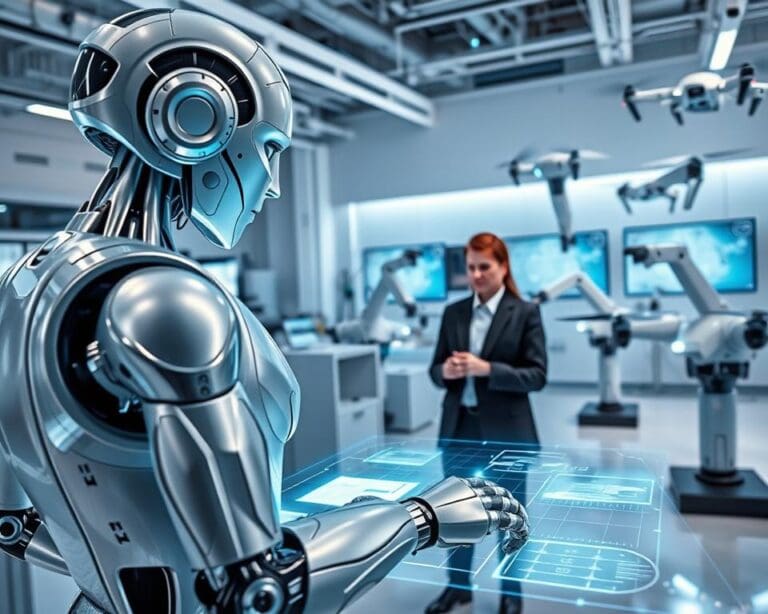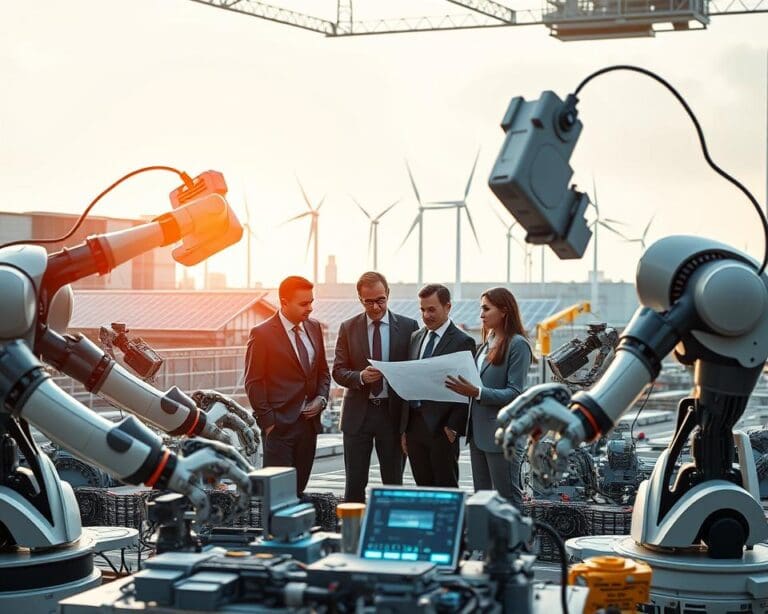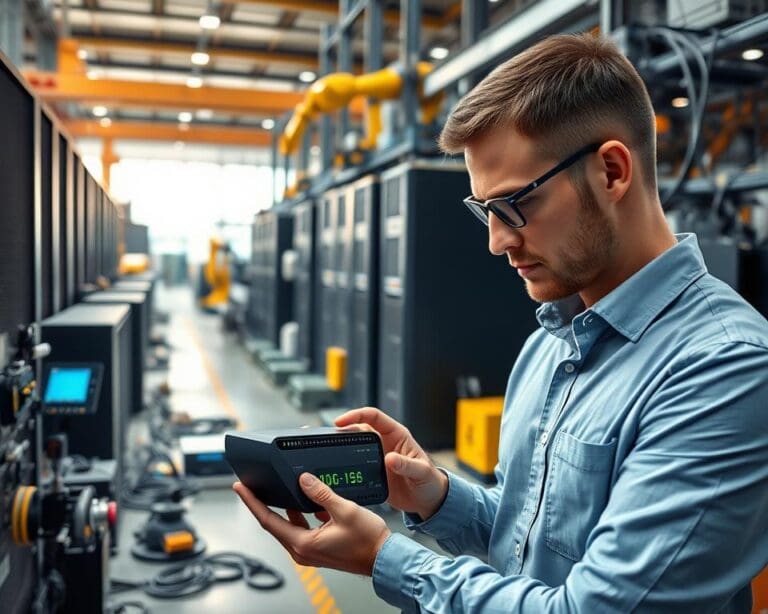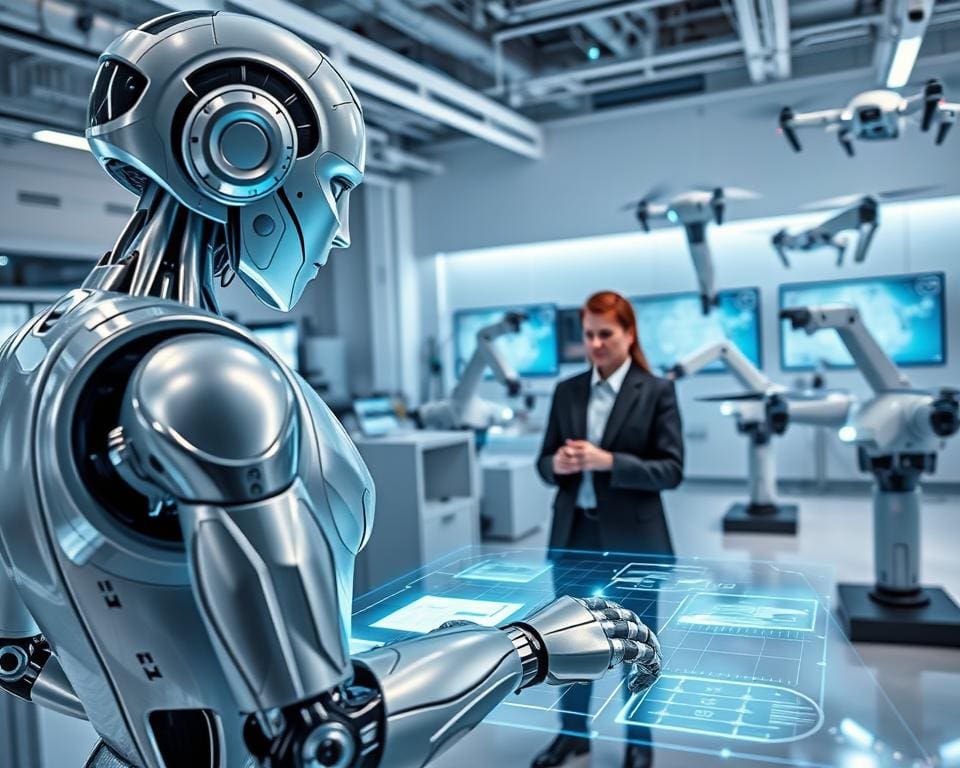
Robotics technology is moving beyond machines that repeat one task in a controlled setting. Today, robots can sense their surroundings, interpret visual information, learn from data and respond to change. This shift is shaping next-generation robotics across both industry and public services.
Modern intelligent robots combine physical movement with software intelligence. Artificial intelligence, machine learning, sensors, computer vision, connectivity, cloud computing and advanced automation all play a part. Their success also depends on reliable hardware, strong control systems, high-quality data and effective cybersecurity.
You can already see this change in UK manufacturing, logistics, healthcare, agriculture, construction, defence, research and warehouse operations. Autonomous robots can support people in demanding or risky environments. They can also improve consistency, speed and access to vital services.
The future of robotics will not depend on one breakthrough. Instead, robotic systems will become more capable when several technologies work together. This article examines AI-led autonomy, adaptable machine learning, generative AI, advanced sensing, computer vision, edge computing, 5G, cloud robotics, soft robotics and human–robot collaboration.
Safety and trust remain as important as productivity. When you assess robotics innovation, you must consider reliability, explainability, responsible deployment and the environment in which a machine operates. The International Federation of Robotics tracks global trends in industrial robotics and service robots. The National Institute of Standards and Technology studies testing, measurement, safety and trustworthy autonomous systems. In the UK, government-backed work, including research funded through the Engineering and Physical Sciences Research Council, supports practical applications for robotics and autonomous systems.
How robotics technology is transforming the next generation of machines
Modern robots can do far more than repeat a fixed sequence. With artificial intelligence in robotics, you can build systems that read sensor data, recognise objects, assess conditions and select a suitable action. This shift supports smarter AI decision-making across factories, warehouses, farms and public spaces.
Traditional automation works well in stable settings. It follows programmed steps for predictable tasks. Autonomous robots must cope with changing surroundings, missing data and unexpected obstacles. Their software combines perception, planning and control to guide each movement.
Artificial intelligence and autonomous decision-making
A robot first builds an understanding of its surroundings. Cameras, lidar, force sensors and other devices provide useful signals. AI helps the system identify a box, person, crop or damaged part within those signals.
The planning layer selects a safe route or task sequence. Control software sends commands to motors and actuators. This process turns robotic decision-making into physical action, such as grasping a parcel or avoiding a moving vehicle.
Safety must guide every autonomous system. You should set operating limits, add emergency stop mechanisms and keep human oversight in place. NIST research on trustworthy and explainable AI stresses the value of clear testing, traceable decisions and reliable evaluation for autonomous systems.
Machine learning for adaptable robot performance
Machine learning robotics allows a system to find patterns in data and improve its performance over time. A model may learn to recognise objects, estimate movement or adjust grip strength when materials change. This supports adaptive robots in warehouses, factories and agricultural settings.
- Supervised learning uses labelled images, movements or quality records.
- Reinforcement learning uses feedback from actions and their results.
- Unsupervised learning helps reveal patterns in large, unlabelled datasets.
These methods support robotic picking, visual inspection and mobile navigation. An agricultural robot may identify crops, weeds or damaged produce. A warehouse vehicle may alter its route when stock, lighting or people change position.
Training data must represent real working conditions. A model trained in one factory may struggle with different lighting, tools or work patterns. Platforms such as TensorFlow and PyTorch can support development, while IBM Watson Studio and SAS Analytics can assist with predictive analysis.
Learning systems can reduce manual reprogramming. You still need controlled trials, monitoring, version control and regular performance checks before deployment. The UK AI Safety Institute studies advanced AI capabilities and risks, offering useful evidence for evaluating systems that act in the physical world.
Generative AI and natural language interaction
Generative AI robots can interpret a high-level instruction, create a task plan or summarise sensor information. You might ask a robot to inspect a pallet and report damaged items. The system could convert that request into a sequence of actions for approval.
Language models cannot prove that a plan is safe or physically possible. Robotic software must check the robot’s tools, reach, surroundings and operating limits. This protects human–robot interaction from unsafe assumptions and unclear commands.
Natural language processing can make robotics easier to use. Google Cloud Natural Language and Azure Text Analytics are examples of tools that can help interpret human input. A fluent reply does not prove physical competence, so you should keep a clear boundary between conversation and control.
Key risks include invented instructions, ambiguous language, data privacy breaches and cyber threats. The International Federation of Robotics reports growing use of industrial robots in tasks such as handling, welding and inspection. These applications show why intelligent automation needs strong engineering checks beside advanced software.
Future systems may connect robots to Internet of Things devices for rapid data collection and real-time analysis. This can improve planning, maintenance and collaborative work across a fleet. Human review remains important whenever an AI system affects safety, quality or access to valuable information.
Advanced sensors and computer vision for safer robots
Robotic sensors give you the data needed to understand a robot’s position, surroundings, tools and payload. They can show how people and objects move nearby. This information supports safer control and more accurate work.
Common systems include cameras, stereo vision, depth cameras, radar, ultrasonic sensors and inertial measurement units. LiDAR robots use laser pulses to measure distance and build a detailed view of their surroundings. Proximity sensors detect nearby objects, while force and torque sensors measure pressure at a joint or tool.
Computer vision robotics helps you identify objects, classify materials and estimate distance. It can track movement, read labels and spot defects. In factories, machine vision can check parts at speed and guide a robot towards the correct item.
Two-dimensional images do not show distance on their own. Depth cameras add a three-dimensional view, which supports grasping, navigation and collision avoidance. This depth data helps a robot judge whether an object is within reach or too close to a person.
Object recognition becomes more reliable when several sensors work together. A mobile robot may combine cameras, LiDAR and inertial data to improve mapping and localisation. This process, known as sensor fusion, helps the machine handle gaps in individual readings.
Simultaneous localisation and mapping, or SLAM, lets a robot create or use a map while estimating its own position. This is useful in warehouses, hospitals and construction sites where routes can change. Accurate localisation supports steady movement around equipment, walls and people.
Robot safety systems use protective scanners, vision systems and force feedback to monitor risk. When a sensor detects a person, obstacle or unexpected resistance, the robot can slow down, stop or change direction. Tactile sensors support this response when a robot must react to contact.
Force and tactile sensing matter in assembly, polishing, medical robotics and delicate handling. A robot may need to feel a small change in pressure rather than rely on vision alone. This helps it hold fragile items and fit parts without excess force.
No sensor performs perfectly in every setting. Poor lighting, reflective surfaces, dust, rain, vibration and crowded spaces can reduce accuracy. Objects may hide one another, while a busy background can make tracking harder.
You should assess sensor placement, calibration, software validation and maintenance before deployment. Redundant sensing can provide a second source of information if one device fails. Clearly defined operating boundaries help limit movement near workers and visitors.
Risk assessments should guide safe human–robot interaction. ISO 10218 covers industrial robots, ISO/TS 15066 addresses collaborative robot applications, and ISO 13482 covers personal care robots. NIST research supports performance testing and the assessment of robot perception. UK guidance from the Health and Safety Executive helps you control machinery risks in the workplace.
Better perception supports wider use in farms, warehouses, hospitals, construction sites and public spaces. Careful testing and clear safety controls let you match each sensor to the task, environment and people who work nearby.
Cloud robotics, connectivity and real-time data processing
Cloud robotics lets you extend a robot’s onboard skills through networked computing. Shared software, remote storage and central services can support navigation, learning and maintenance. This approach fits wider digital change, where cloud computing and data services help organisations scale technology with less local hardware.
A robot still needs local control for movement, braking and safety checks. Edge systems sit close to the machine and handle urgent data. Cloud platforms provide wider storage, analytics, model management and coordination across many sites.
How edge computing improves robotic response times
Latency matters when a robot detects a person, a moving object or a collision risk. A distant data centre may add delay, while a weak connection can interrupt a task. The best edge computing robotics design keeps essential safety functions on the robot or a local controller.
Nearby edge devices can process camera feeds, LiDAR scans and machine readings. This creates faster decisions and reduces the volume of information sent to the cloud. Edge systems can support critical operations during short periods of poor connectivity, with safety controls designed and tested at the correct local level.
You can divide tasks across three layers:
- Onboard systems manage motion, sensing and immediate control.
- Edge systems analyse local events and coordinate nearby machines.
- Cloud services store wider datasets, train models and compare performance.
The role of 5G and industrial connectivity
5G robotics can support low-latency links, high data capacity and many devices in one industrial setting. This can help machines exchange real-time robotic data with mobile equipment, sensors and control systems. Actual performance depends on coverage, network design, interference and the workload.
Your choice of industrial connectivity should match the task and the cost of failure. Private 5G can support mobile machines across a large site. Wi-Fi may suit flexible indoor work. Industrial Ethernet offers stable wired links, while time-sensitive networking can help deliver predictable traffic for precise operations.
Security must guide each decision. Use identity management, encryption and network segmentation to limit access. Secure software updates and continuous monitoring can reduce risks from insecure interfaces, data interception and disruption to operational technology.
Cloud platforms and collaborative robot fleets
Connected robots can share maps, maintenance records and performance data through a central platform. This supports robotic fleet management across warehouses, fulfilment centres and manufacturing sites. Tasks can be assigned by location, battery level, workload or equipment availability.
Cloud tools can control software versions, manage configurations and create digital twins of machines or sites. Dashboards let you compare robot performance and identify early signs of wear. Predictive maintenance can guide repairs before a fault stops production.
Internet of Things robotics brings robots into a wider network of sensors, conveyors, tools and building systems. This creates useful links, yet it increases the number of devices that need protection. Guidance from the National Institute of Standards and Technology, 3GPP work on industrial communication and ENISA advice on cloud and IoT security can support sound planning.
You should set clear rules for images, audio, location records and worker performance data. Privacy controls matter when robots operate in homes, hospitals, public areas or busy workplaces. Strong governance, resilient services and well-managed access help you gain the value of cloud robotics without losing control of vital information.
Advanced automation, soft robotics and human–robot collaboration
Advanced automation combines robotics with artificial intelligence, machine vision, programmable control, digital twins and data analytics. It can also link robots to automated guided vehicles and material-handling systems. This lets you automate variable tasks, not only repeated work on fixed production lines. In flexible manufacturing, robotic automation can adjust to changing products, layouts and demand. You can also connect systems to PLCs, MES platforms and industrial networks to track cycle times, faults, quality and energy use. For practical examples, explore robotics in manufacturing jobs.
Soft robotics uses elastomers, pneumatic systems, compliant mechanisms and bio-inspired designs. These materials allow a robot to bend or adapt when it touches an object. Soft robotic grippers can handle fragile, slippery or uneven items, including food, textiles, medical products and agricultural produce. Rigid industrial robots still offer strong payloads, speed and precision. Soft robots provide greater flexibility and safer contact. In many factories, both approaches will work together to support flexible manufacturing and specialised handling.
Collaborative robots, or cobots, are built to share defined work areas with people. They can support assembly, machine tending, packaging, inspection, picking and ergonomic tasks. Force limits, speed monitoring, protective sensors, safe stops and controlled hand-guiding can support human–robot collaboration. However, the word “cobot” does not make every application safe. You must assess the robot, tool, payload, speed, layout and task hazards together. ISO 10218 and ISO/TS 15066, along with Health and Safety Executive guidance, provide useful safety principles for workplace robotics.
These systems can reduce heavy lifting, repetitive strain, exposure to chemicals, extreme heat and monotonous inspection work. Yet successful adoption needs training in programming, maintenance, data analysis, safety and digital operations. Involve workers early, explain how monitoring works and set clear procedures. Assess advanced automation through safety, quality, reliability, energy use, accessibility and wellbeing, not output alone. AI provides intelligence, sensors create awareness, connectivity enables coordination, and soft robotics makes contact more adaptable. The next stage of robotic automation will depend on secure design, careful testing, human oversight and sound integration.