Choosing the right roofers in Glasgow matters because your roof protects your home, saves energy and preserves resale value. If work is done badly, you face water ingress, higher repair bills and safety risks. That is why you should favour accredited tradespeople with insurance and clear guarantees.
This guide helps you pick Glasgow roofers for everything from minor patch repairs to full replacements. It covers common property types in the city — terraced and semi‑detached houses, tenement flats, modern apartments and commercial premises — and notes the different access and regulatory issues you may meet for each.
The article uses practical decision criteria you can apply straight away. You will learn how to assess the condition of your roof, spot local specialisms such as slate, tile or flat roofing, check credentials like insurance and trade memberships, review past work, and compare written estimates, warranties and sensible payment terms.
To make finding trusted roofing experts easier, the guide points to local resources and reputable company sites, for example Fort Roofing (fortroofing.co.uk), which lists services from roof repairs in Glasgow to full installations. These examples show the type of evidence and service range to expect from reliable roofing solutions for every property.
What follows is a clear structure: first you will learn to assess your roof, then how to find and vet contractors, the right questions to ask, common red flags to avoid, and a concise conclusion with next steps for hiring dependable Glasgow roofers.
Understanding your roofing needs and common services in Glasgow
Before selecting roofers Glasgow, take a moment to assess what your roof actually needs. Understanding the extent of the damage, the expected lifespan of your roof and your available budget makes it much easier to choose between repairs and a complete replacement. Local weather conditions and the type of property should also influence the roofing solution that best suits your home or business.
Assessing the condition of your roof
Start with a visual check from ground level. Look for missing, cracked or slipped slates and tiles, heavy moss or algae build-up, sagging ridgelines and any loose chimney flashings. Note damp patches, water stains on ceilings and light showing through the roof structure.
Follow up with a loft inspection where safe to do so. From inside, check for mould, rot, deteriorating underlay and signs of poor ventilation. Light entering through the structure signals gaps that need attention.
Arrange a professional inspection to uncover hidden problems. A qualified roofer will inspect timber, flashings, underlay, ventilation and valley details. They can spot structural rot, insulation faults and issues not visible from the loft or ground.
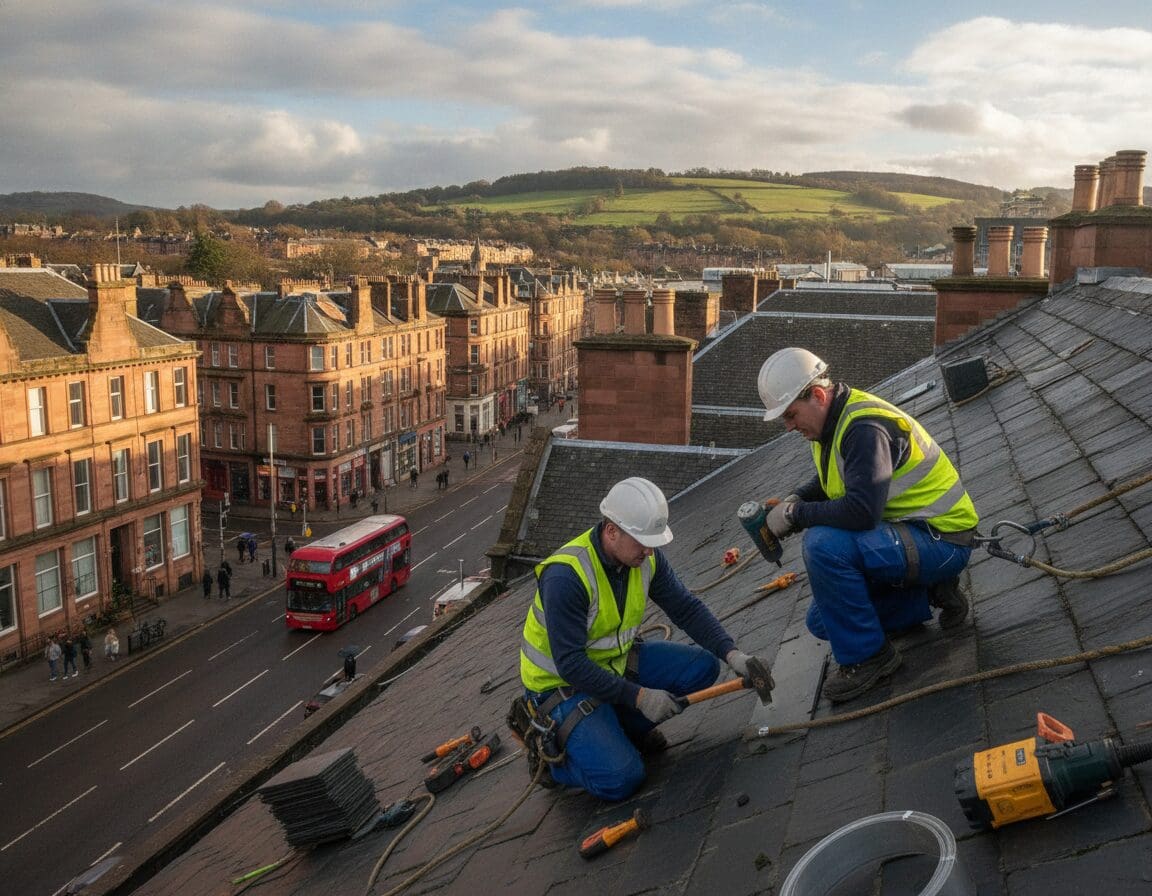
Safety matters when a roofer climbs on your building. Professionals use fall protection and follow HSE guidance and the Working at Height Regulations to minimise risk.
Types of services available: roof repairs in Glasgow and new roof installations
Roof repairs in Glasgow range from patching leaks and replacing slipped slates to re-bedding ridge tiles and renewing flashings. These jobs restore weatherproofing and extend a roof’s life.
New roof installations are needed when a roof is aged or heavily damaged. Re-roofing replaces coverings and often the underlay and battens, delivering a longer-term solution.
Reputable roofers Glasgow offer emergency repairs and temporary weatherproofing after storms. They provide planned replacement works with realistic timescales, taking Glasgow’s wind, rain and freeze–thaw cycles into account.
Many companies also handle storm damage repair, assist with insurance claims, maintain rooflines and offer periodic maintenance contracts.
Materials and specialisms: slate and tile roofing, flat roof specialists, guttering soffits and fascias
Slate and tile roofing remains traditional across Scotland. Natural slate can last over a century with correct care. Man-made tiles and concrete options cost less but have shorter lifespans. Regular maintenance includes replacing broken slates and re-bedding ridge mortar.
Flat roofs use materials such as EPDM rubber, torch-on felt and GRP fibreglass. Ponding and membrane punctures are common issues. Engage flat roof specialists to ensure correct falls and detailing that prevent water accumulation.
Guttering soffits and fascias form the roofline that protects walls and foundations. Proper drainage prevents water damage. Popular materials include uPVC and aluminium. Blocked or failing gutters often cause secondary roof and masonry problems.
Lead work and other flashings must be fitted correctly around chimneys, skylights and abutments. Poor detailing in these areas remains one of the most frequent causes of leaks.
Domestic and commercial roofing considerations
Domestic roofs often need complex detailing for chimneys and valleys. If your property sits in a conservation area or is listed, planning permission or listed building consent may be required for repairs or new roof installations.
Commercial and industrial roofs tend to be larger and flatter. They commonly use single-ply membranes or metal decking. Work may need coordination with roof-mounted equipment such as HVAC and longer lead times.
Hire contractors experienced in domestic and commercial roofing who understand CDM compliance and can prepare site safety plans. Insurance and warranty terms can differ markedly between domestic and commercial projects, so check liabilities and coverage before work begins.
How to find and vet trusted roofing experts, including roofers in Glasgow
Finding reliable roofing help starts with local knowledge and careful comparison. Begin by asking neighbours, estate agents and community groups for names. Check social media for Glasgow neighbourhood recommendations and note repeat mentions.
Where to look
Use established online directories such as Checkatrade, Trustpilot, Rated People and Yell to widen your search. Look for consistency across platforms rather than single glowing reviews. Visit company sites to assess quality. Fort Roofing on fortroofing.co.uk, for example, should show services, coverage and project examples if they operate in your area.
Checking credentials
Insist on seeing current Public Liability Insurance and Employers’ Liability certificates. Confirm membership of trade bodies like the NFRC or the Federation of Master Builders. Manufacturer approvals from firms such as Marley or IKO show training and warranty eligibility. For listed buildings, ask about conservation experience and relevant consents. If workers enter occupied homes, request DBS checks.
Reviewing past work
Ask to see a portfolio of recent projects similar to yours, with before-and-after photos and contactable references where possible. Check reviews on Google, Trustpilot and Facebook to spot patterns in punctuality and aftercare. Case studies that detail complex repairs or heritage re-roofing are useful evidence of skill when reviewing past work.
Verifying quotes and written estimates
Obtain at least three written quotes that break down materials, labour, scaffolding, waste disposal and VAT. Ensure each quote includes timescales, start and finish dates and contingency allowances for discoveries such as rotten timbers. Check payment schedules, acceptance terms and cancellation policies. A formal contract or written scope of works protects you and makes clear how on-site changes will be authorised.
When comparing Glasgow roofers, balance price with proof of competence. Use checking credentials and reviewing past work to shortlist firms who offer reliable roofing solutions for every property. Clear documentation and a professional online presence help you choose trusted roofing experts who meet your needs.
Questions to ask and red flags to watch for
When you invite a roofer to assess your property, be prepared with clear queries. A short list helps you compare companies and spot issues early. Use this time to check their professionalism and fit for your job.
Key questions to ask during the initial consultation
Ask for the full business name, registered address and contact details. Find out expected start and completion dates and who will be on-site each day.
Request specifics on the proposed solution: materials brand and specification, ventilation, insulation improvements and a method statement for complex work.
Enquire about safety and site protection, such as scaffolding, dust sheets and footpath protection. Ask how they will handle unexpected findings and whether they will liaise with building control if required.
Understanding warranties, guarantees and post-installation support
Distinguish between workmanship guarantees from the contractor and manufacturer warranties for materials. Workmanship terms commonly range from one to ten years while material warranties can be much longer.
Confirm how warranties and guarantees are administered. Ask if the contractor will register manufacturer warranties on your behalf and provide written paperwork.
Check aftercare options. Ask about follow-up inspections, maintenance plans and response times for call-outs. For insurance-backed guarantees, verify the issuing body and request the terms in writing.
Payment terms, deposits and avoiding unrealistic low-cost offers
Discuss payment terms and deposits up front. A typical deposit for materials and mobilisation is between ten and thirty per cent depending on the job size.
Insist on a staged payment schedule tied to milestones, such as scaffolding erection, membrane fitting and final completion. Hold a final retention until the work meets your satisfaction.
Be cautious of very low quotes. Unusually cheap offers can signal poor materials, inexperienced labour or later extras. Check accepted payment methods and ensure you receive invoices and receipts.
Identifying red flags when hiring Glasgow roofers
Watch for refusal to provide written estimates or contracts and pressure for large upfront cash payments. Beware of urgent sign-up requests and vague answers about insurance or warranties.
Be wary of unsolicited visits or door-to-door pressure and contractors who claim they are just in the area. Look for a traceable local landline, consistent company details and verifiable references.
If you spot any of these red flags when hiring Glasgow roofers, pause and seek alternative quotes. Contact Citizens Advice or local trading standards for guidance if something feels off.
Finding the right roofers in Glasgow
Choosing the right roofers in Glasgow starts with understanding exactly what your property needs. Whether you require roof repairs, a complete roof replacement or specialist work on slate, tile or flat roofs, a clear assessment helps you find a contractor with the right experience and expertise.
Before making a decision, take time to compare several written quotes, verify insurance and professional accreditations, and review previous projects and customer feedback. Reputable companies are happy to explain the materials they use, the warranties they provide and the aftercare you can expect once the work is complete.
Working with experienced local Glasgow roofers offers additional advantages. They understand the area’s weather conditions, local building regulations and the roofing materials best suited to properties in the region. Investing in quality workmanship and long-lasting materials helps protect your home, reduces the likelihood of future repairs and provides greater peace of mind for years to come.