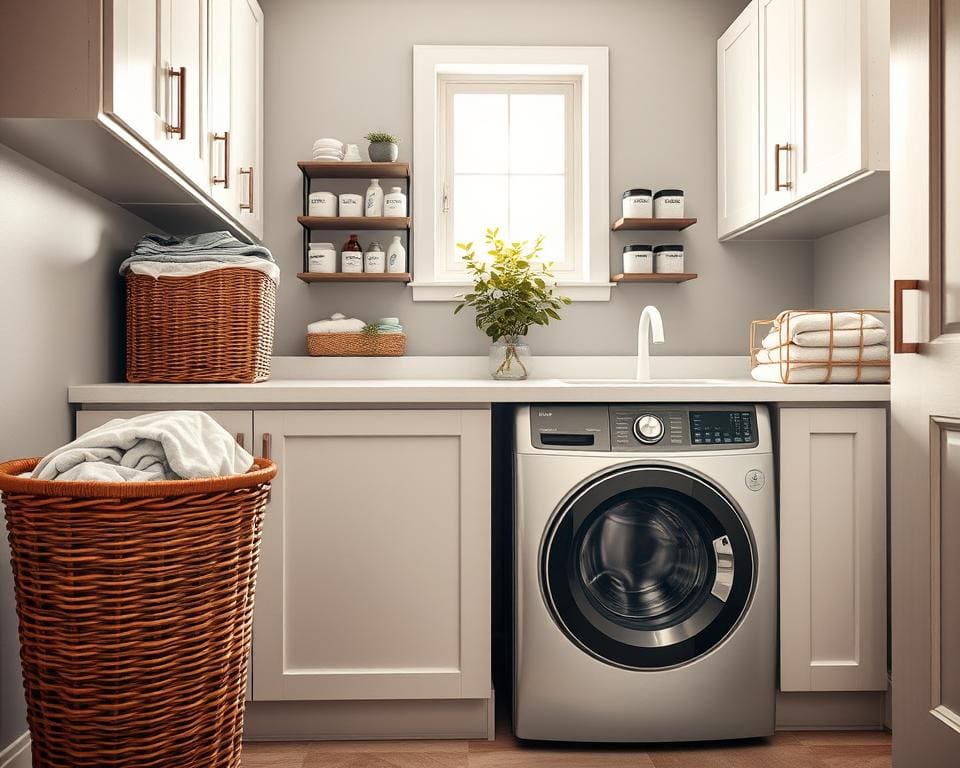
Designing a functional laundry room saves you time and reduces daily friction. In the UK, a well thought-out laundry room design turns a cramped utility into an efficient laundry space that makes washing, drying, sorting and storing much easier.
By functional, we mean a space laid out to streamline tasks while remaining durable, safe and pleasant to use. That covers everything from the laundry layout and choice of washer and dryer to worktops, storage and durable finishes.
This guide is for homeowners, renters with permission to modify, landlords and anyone renovating or building new property in the United Kingdom. You will find practical utility room ideas and clear laundry room planning steps you can apply whether you have a small alcove or a full utility room.
Section summaries: first, we explain planning your laundry layout and flow. Next, we cover essential appliances and installation needs. Then we look at storage, surfaces and organisation. Finally, we discuss lighting, finishes and styling to make the room enjoyable to use.
When you design an efficient laundry space you can expect quicker wash cycles thanks to a better workflow, fewer creased items with adequate drying and folding zones, and lower accident risk through correct electrics and plumbing. A well fitted utility can also add measurable value to your property.
Keep UK factors in mind: many British terraced houses and flats have tight space constraints, and building regulations govern plumbing and electrics. Look for appliance energy ratings under the UK/EU labelling system when selecting kit.
For appliances and fittings consider established UK suppliers such as Bosch, Miele, Samsung, LG for washers and dryers; Howdens and IKEA for cabinetry; Wren Kitchens for work surfaces; and John Lewis or B&Q for fittings and materials.
A basic functional laundry nook can be achieved on a modest budget. A fully fitted utility with high‑end appliances and bespoke cabinetry costs more, so plan a budget and obtain quotes before you commit.
Planning your functional laundry room layout
Start with a clear space assessment to make sure your laundry room layout works for daily use. Measure floor area, ceiling height, door swings and any alcoves or obstructions such as boilers or ventilation ducts common in UK homes. Note window positions and where service access will be needed for maintenance.
Think about utility room flow when you place appliances and storage. Consider whether a sliding or bi-fold door saves space and check clearance for front-load washers and dryers. Plan routes so you do not block traffic between entry, appliances and storage.
Assessing available space and flow
Account for access behind freestanding units and panels for built-in installations. Allow 60–75cm clearance for open appliance doors and room for a heat-pump unit or vented dryer where external walls permit. If your laundry shares space with a kitchen, hallway or garage, map how chores will sit alongside other uses without disruption.
Choosing a practical work triangle for washing, drying and ironing
Apply the work triangle laundry idea by grouping washer, dryer and a folding or ironing surface close together to reduce steps. Aim for a compact layout that suits your routine and entry point to the room.
For stacked units check loading height and safe access. Set the folding or ironing surface at 85–95cm to reduce strain. Position a sink near the washer for easy pre-treatment and keep a pull-out or stored ironing board adjacent to the folding area for quick transitions.
Separating clean and dirty zones to prevent cross-contamination
Create clear laundry zoning with an arrival and sorting area for soiled items, a washing and drying zone, and a clean folding and storage zone. Use labelled or colour-coded hampers to separate whites, colours and delicates at source.
Place a utility sink between dirty and clean zones so you can hand-wash or treat stains without carrying soiled items through clean storage. Choose sealed porcelain tiles or vinyl with welded seams to limit bacteria harbouring and make cleaning straightforward in damp UK conditions.
Essential appliances and fittings for a functional laundry room
Choose appliances and fittings that suit your routine and space. Good decisions on washer dryer selection and the wider range of laundry appliances UK will save time, cut bills and reduce hassle during daily chores.
Selecting the right washer and dryer for your household
Match capacity to your household. Singles and couples do well with 6–8kg washers, while families often need 8–12kg machines. Pick a dryer that equals or slightly exceeds washer capacity to avoid damp washes.
Look at drum types and useful programmes. Variable spin speeds, short cycles and steam options cut creases. Allergy and hygiene settings help if you have young children or sensitivities.
Energy performance matters. Seek high-rated models on current UK energy labels and choose low water-use washers. For drying technology, heat-pump dryers offer best efficiency for many UK homes, though they cost more up front.
Noise levels affect where you place machines. Brands such as Miele, Bosch and Samsung offer models with low dB ratings suited to spaces near living areas. Consider make and model availability when browsing laundry appliances UK.
Built-in versus freestanding appliances: pros and cons
Built-in appliances give a neat, integrated look and save visual bulk in compact rooms. They work well beneath worktops and inside cabinetry for modern British interiors.
The trade-off is installation complexity. Integrated dryers may need specific ventilation and matching sizes make future replacement trickier. Weigh aesthetic gains against practical limits when deciding built-in vs freestanding.
Freestanding machines offer flexibility and easier swap-out. They often provide better ventilation for vented dryers and tend to cost less initially. Plan for side clearances and ways to hide hoses and cables if you prefer this route.
Stacked washer-dryer setups suit narrow cupboards or tall alcoves. Side-by-side layouts work best where you need counter space beside machines. Under-counter placements fit neatly beneath a 90cm worktop for a streamlined laundry surface.
Plumbing and electrical considerations for safe installation
Follow UK rules for washer dryer installation and get a registered tradesperson for complex work. Electrical alterations may fall under Part P and must be done by a qualified electrician. Any gas or heating changes need a Gas Safe-registered engineer.
Check water supply and drainage before buying. Ensure reliable cold and, if required, hot feeds. Fit a proper waste outlet with a trap and air gap to avoid backflow. Add an isolation tap for straightforward maintenance.
Power needs vary by appliance. Most washers run from a standard 13A socket. Some dryers need dedicated circuits or higher-rated connections. Always follow manufacturer guidance and label circuits if needed.
For vented dryers plan a short duct to an external wall, with few bends and insulated ducting to limit condensation. Condensing models may need a condensate drain or pump when below drain level. Fit a drip tray with a drain if water damage is a risk.
Electrical safety is essential in damp areas. Use RCD-protected circuits and IP-rated fittings where splash can occur. Consider smart leak detectors and automatic shut-off valves from established brands such as Honeywell or Drayton to protect against floods and reduce long-term repair costs.
Storage, surfaces and organisation to improve efficiency
Make the most of your utility room with smart storage and hardwearing surfaces. Good planning helps you move from washing to drying and folding without wasted steps. Think about how you use the space, then pick solutions that match your routine and budget.
Cabinetry and shelving can transform a cramped closet into an efficient workspace. For small rooms, use tall, slim units and wall-mounted shelves to take advantage of vertical space. Floating shelves above machines keep essentials within reach without crowding the work area.
In larger utility rooms you can fit base units, wall cupboards and tall larders for linen. Choose moisture-resistant MDF or laminated plywood with durable hardware from brands such as Blum or Häfele, stocked by Howdens and Wickes. Custom utility room cabinets let you hide appliances and fit built-in hampers while staying consistent with standard 600mm module sizes from IKEA or Howdens.
Worktops and folding stations give you a proper place to sort and fold. A dedicated surface above front-loaders or beside them speeds up chores. Options range from budget laminate to solid-surface Corian or quartz. Aim for a folding surface at hip height, roughly 85–95cm, to reduce strain.
Consider adjustable-height sections if several people use the room. Fit a small rail above the worktop and add a pull-out drying rack in cabinets for delicates. Retractable airers and ceiling-mounted pulley rails suit UK homes, and heated rails help in damp weather.
Smart storage ideas keep laundry moving smoothly. Pull-out hampers with compartments let you sort at source and pair well with cabinet runners from Häfele. Use stackable baskets or colour-coded tubs to encourage family sorting and make transport easier.
Labelled wire baskets or clear plastic bins make contents visible and speed retrieval. Waterproof labels and easy-clean materials cope with damp utility rooms. Add a pegboard for tools, magnetic rails for clothespins and drawer organisers for detergents.
Reserve a secure lockable cabinet for cleaning chemicals and store larger items like an iron or vacuum in a tall unit. These small choices improve safety and free up the central work area for faster, neater laundry tasks.
Design, lighting and finishes to make the room enjoyable to use
Choose light, reflective colours to open up smaller UK spaces. Pale neutrals, soft greys or muted pastels reflect daylight and work well with high-gloss cabinetry to bounce light around. Add personality with a patterned tile splashback or a vinyl-coated wallpaper feature wall behind a utility sink; these options withstand humidity and give the room character.
Layer your laundry room lighting for both task and ambience. General LED downlights or flush fittings provide broad illumination while under-cabinet LED strips and a dedicated task light over the worktop help with stain treatment and folding. Use cool white LEDs (around 4000K) for accuracy when treating stains and switch to warmer tones (2700–3000K) if the space doubles as a mudroom to create a pleasant laundry space.
Pick moisture-resistant, non-slip flooring and durable worktop finishes. Porcelain tiles, luxury vinyl tiles (LVT) or sealed stone resist damp and are easy to clean; LVT with underfloor heating adds warmth. Stainless steel or composite sinks and splash areas stand up to bleach and detergents. Regular maintenance — descaling machines, cleaning dryer filters and wiping splashbacks — will keep utility room finishes looking and performing well.
Add small comforts to make chores nicer. A compact stool for mending, charging points for cordless irons, humidity-tolerant plants such as Boston fern or spider plant, and moisture-resistant framed artwork lift laundry decor UK without much effort. Consider smart integrations like Samsung SmartThings or LG ThinQ appliances and smart lighting to streamline routines, and consult tradespeople and suppliers to match samples to your actual room light and budget.