A modern kitchen blends streamlined design with practical use. It puts efficient workflow, integrated technology and carefully chosen materials at the heart of daily life. Contemporary kitchen design favours clean lines, durable surfaces and appliances that slot neatly into the space so your kitchen works as well as it looks.
This article helps you choose kitchen layouts that boost usability, aesthetics and resale value in the UK. You will learn how to match a kitchen layout UK to your cooking habits, household size and property type, whether you live in a flat, terraced house, semi-detached or new-build. The aim is to give clear, usable modern kitchen ideas that suit real homes.
Current trends shaping contemporary kitchen design include open-plan living, multifunctional islands and the popularity of integrated appliances from Bosch, Siemens and Miele. There is also growing interest in sustainable choices, such as energy-efficient appliances and FSC-certified timber, so your layout can support greener living.
Later sections expand on key considerations: workflow and the work triangle, balancing storage with style, lighting and finishes, creating flow in open-plan spaces, clever solutions for compact homes and practical layout options like galley, L-shape, U-shape, island and peninsula. These topics will help you decide which kitchen layouts best meet your needs.
Before you start, measure your space accurately and set a realistic budget that includes appliance upgrades, lighting and professional installation. Remember UK rules on ventilation, gas safety for fitted gas appliances and planning permission if structural changes affect external walls or listed buildings.
Designing a modern kitchen for functionality and style
Start by setting clear goals for your kitchen workflow so cooking, cleaning and socialising feel natural. An open layout with ergonomic placements keeps movement efficient. Consider how island seating, prep space and traffic routes will work together to support daily tasks and occasional entertaining.
Planning workflow and the kitchen work triangle
The classic kitchen work triangle links sink, hob and refrigerator to reduce unnecessary steps. Aim for triangle leg lengths between 1.2m and 2.7m, with a total perimeter of roughly 4m to 8m. In larger open-plan kitchens you can adapt the concept into multiple work zones for prep, cooking and cleaning.
Place the sink near existing plumbing and waste outlets to cut installation costs. Position the hob where you can fit adequate extraction; weigh the benefits of recirculating versus ducted hoods. Keep the fridge accessible from the main circulation route so it does not interrupt active cooking zones.
Choose appliances with modern ergonomics. Induction hobs heat quickly and add safety, while integrated fridge freezers from brands like Bosch or Samsung give a streamlined look. Add secondary units such as a microwave drawer, wine fridge or a dedicated coffee station if you routinely cook with others.
Balancing storage and aesthetics
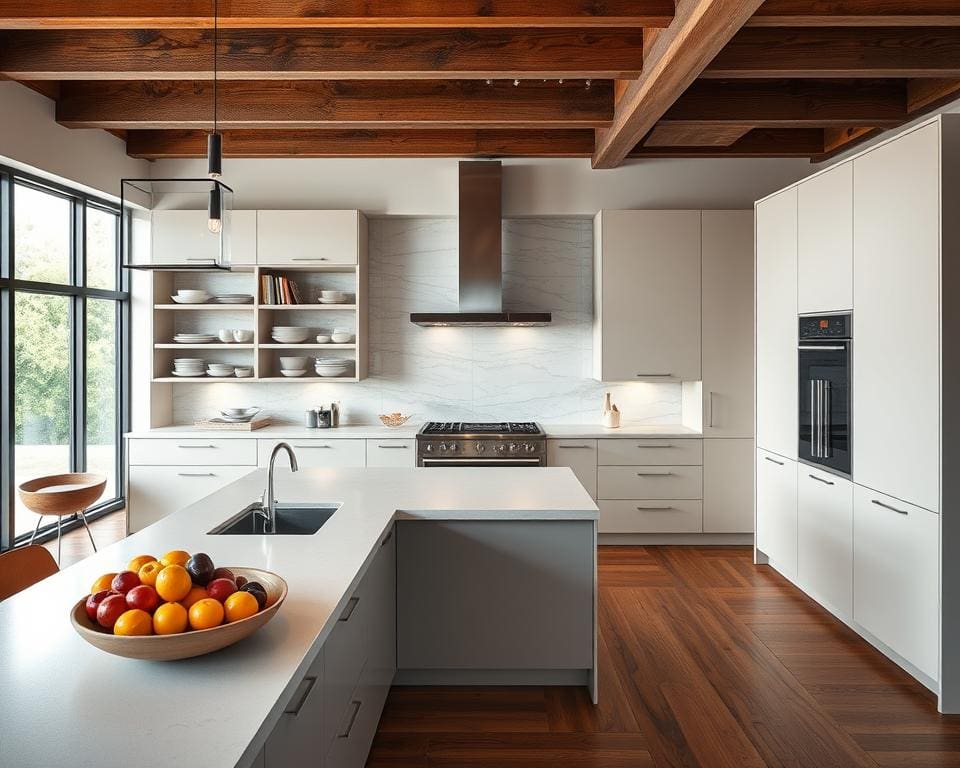
Good modern kitchen storage mixes concealed cupboards with a few curated open shelves to keep the visual mood calm. Handleless cabinets and integrated appliances create smooth sightlines. Use full-height larders and deep drawers for cookware to reduce bending and searching.
Pull-out corner units, whether carousel or Le Mans systems, reclaim wasted space. Fit drawer organisers, built-in bin systems and pull-out spice racks to keep surfaces tidy. Appliance garages hide mixers and toasters without sacrificing quick access.
Select durable materials that suit your look. Matt lacquered or thermoformed doors feel contemporary. Worktops in engineered quartz from suppliers like Caesarstone or Silestone resist stains and clean easily. For practical guidance and inspiration you can read more about practical design choices here.
Lighting and finishes for a contemporary feel
Layer lighting to create a versatile space. Combine ambient recessed downlights with task under-cabinet LED strips and pendant fixtures above an island. Choose warm white LEDs (2700–3000K) with a high CRI so food colours appear natural under contemporary kitchen lighting.
Pick kitchen finishes UK homeowners trust for durability and easy care. Toughened glass splashbacks and porcelain tiles resist moisture and wipe clean. Anti-fingerprint stainless steel works well in busy houses. Natural timbers like oak add warmth against matte cabinetry.
Think about acoustics and ventilation. Soft-close doors and drawers cut noise. Adequate mechanical extraction may be required to meet Building Regulations and to keep the room fresh. Small practical choices in finishes and fittings will improve daily life while keeping a modern look.
Open-plan and small-space layout strategies
Designing an open-plan kitchen that feels cohesive with your living area starts with simple rules. Align sightlines, choose matching flooring and a complementary colour palette, and treat an island or peninsula as a bridge rather than a barrier. These open-plan kitchen ideas help rooms feel larger and more sociable while keeping everyday tasks straightforward.
Creating flow between kitchen and living areas
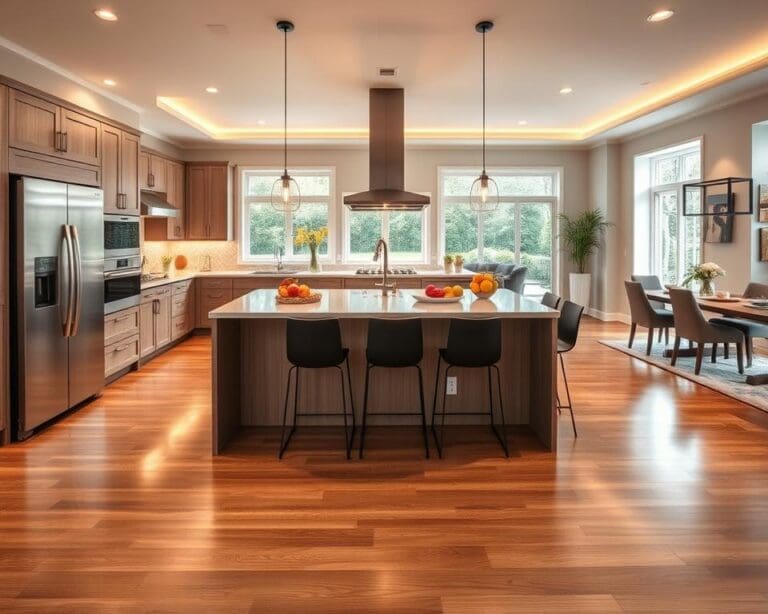
Place seating on the living-facing side of an island so guests and family can chat while you cook. Aim for 1.2–1.5m circulation space around an island for comfortable movement in typical UK homes. Choose island layouts that hide bins or an integrated oven and offer storage on the kitchen side for neatness.
Control odours and noise with a powerful extractor hood or a downdraft system. Soften sound transmission with curtains, upholstered furniture or acoustic panels where needed. Keep cabinetry and furniture finishes co‑ordinated to preserve visual continuity across the open area.
Space-saving solutions for compact homes
For narrow or small properties, a galley or single-wall layout often works best. Use tall, full-height units to maximise storage and keep worktops clear. L-shape kitchens free up living space while maintaining the work triangle’s efficiency.
Choose multifunctional elements to make every square metre count: fold-away tables, pull-out worktops and extendable breakfast bars are practical. Opt for slimline dishwashers, combination ovens and compact induction hobs to reduce appliance footprint.
Use reflective splashbacks or glass, vertical storage and light, uniform colours to increase perceived depth. Integrating seating with storage underneath helps keep clutter out of sight and rooms feeling airier with compact kitchen solutions.
Zoning and movement in an open-plan environment
Create distinct zones without walls by varying ceiling treatments, grouping pendant lights or changing flooring patterns between cooking, dining and lounging areas. A peninsula or island can mark a boundary while keeping the space open.
Keep main circulation routes unobstructed and position doors so foot traffic does not cut through your key work zones. Consider accessibility for all ages by avoiding sharp island corners and allowing adaptable worktop heights where needed.
For reassurance when planning kitchen zoning UK, consult recognised retailers and designers such as Magnet or Howdens, or a local independent kitchen studio to model movement and clear sightlines before you commit to a build.
Layout options and practical considerations for your kitchen
When choosing kitchen layout options, start by matching form to footprint. A galley kitchen suits narrow homes and gives efficient linear storage and minimal steps between prep zones, but it limits social interaction unless you open one end to the living space. Single-wall kitchens work well in flats and studios; pair them with tall storage and a compact island or folding table, and pick slimline integrated appliances to keep circulation clear.
An L-shaped kitchen is versatile for both open-plan and separate rooms, creating a natural place for dining or a kitchen island UK while supporting an effective work triangle. For larger or busier households, a U-shaped kitchen delivers abundant worktop and storage and allows distinct work zones; aim for a walkway of about 1.2–1.5m between opposing runs to maintain comfort and safety. Islands and peninsulas add social and prep space — allow at least 1.2m clearance around an island and consider whether you’ll integrate a hob, sink or seating.
Practical considerations influence your final choice. Budget for rewiring, plumbing moves, extraction and structural work; removing load-bearing walls can require an architect and Building Regulations approval. Locate services early and, where possible, use existing service walls to cut cost and timescale. Follow UK safety rules: use Gas Safe-registered engineers for gas work, observe electrical standards and ensure adequate ventilation with certified installers.
Plan for longevity and resale: choose neutral, durable finishes and flexible layouts that appeal to buyers, and invest in quality cabinetry and appliances from reputable UK suppliers. Trial layouts with taped outlines to check clearances, prioritise daily ergonomics (store frequently used items at waist or eye level and place the dishwasher beside the sink) and think ahead for charging points, recycling space and potential mobility changes. For flooring choices that suit busy kitchens and transition areas, see practical material guidance on modern options at what flooring is best for modern.