This guide helps you choose outdoor furniture suited to UK climates and living patterns. You will find practical advice on patio furniture and garden furniture for small balconies, paved patios, turf gardens and wetter coastal sites.
We focus on comfort, longevity and low maintenance. The right pieces give you usable living space, boost well‑being and can enhance your property’s appeal. Expect recommendations that favour durable outdoor furniture and weatherproof garden furniture where it matters most.
Our approach is data‑driven. We draw on product tests, brand reputations such as Cane-line, Kettler, IKEA, John Lewis & Partners and Hartman, plus material science for teak, aluminium, synthetic rattan, steel, FSC‑certified wood and HDPE. We also factor in common UK weather patterns like frequent rain and seasonal temperature swings.
Later sections evaluate options by space and usage, material performance, style, price brackets from value to premium, and seasonal care. If you follow them in order — assessing your space, comparing materials and styles, choosing by need and budget, then learning care and protection — you will be ready to buy the best outdoor furniture UK offers with confidence.
Choosing the Right Outdoor Furniture
Start by taking simple measurements so you can measure outdoor space accurately. Note length, width and any obstacles such as steps, planters or doors. Sketch a scaled patio layout or use a basic online planner to test a garden seating plan before you buy.
Think about how you will use the area. If you dine outside often, choose a sturdy dining set. If you relax and sunbathe, focus on loungers or a modular sofa. For compact terraces or balcony furniture, bistro sets, folding chairs and vertical planters work well.
You should allow clear traffic flow. Leave at least 60–90 cm for walking around seating and dining areas so chairs can be pulled out comfortably. For barbecues or outdoor kitchens, plan safe clearance from flammable surfaces and good ventilation.
Weight and portability matter. Renters or those who store furniture seasonally will favour aluminium patio furniture or foldable pieces. For fixed paved patios, heavier cast-iron or concrete-look tables resist wind but are hard to move.
Consider storage and accessibility. If you have limited space, pick stackable or foldable items and water-resistant cushions. Check where you will keep covers and cushions during wet months to avoid mildew.
Assessing your space and how you use it
Measure and zone your outdoor area into dining, lounging, cooking and play spaces. Use those zones to create a garden seating plan that fits your routine and visitors.
Outdoor furniture sizing should match the zone. Standard dining tables are about 72–75 cm high if you want continuity with indoor dining. Keep sightlines open so the space feels larger than it is.
Materials compared: durability and maintenance
Compare outdoor furniture materials for longevity and upkeep. Teak garden furniture lasts for decades and needs minimal care when left to silver. You can re‑oil if you prefer the original finish.
Hardwoods such as iroko are durable but need sealing. Softwoods like pine must be treated more often. Aluminium is lightweight, rustproof and suits UK weather well.
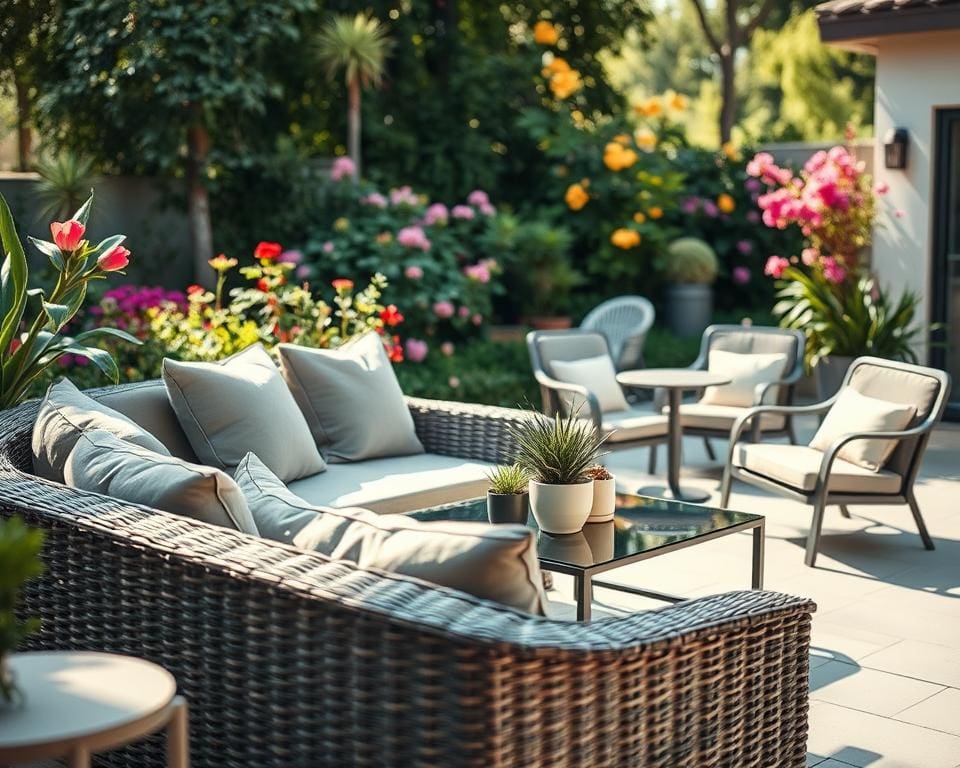
Powder-coated steel gives strength but can chip and rust if scratched. Stainless steel resists corrosion but adds weight. Synthetic rattan offers a modern look with low upkeep; consider rattan vs synthetic rattan when choosing lounge sets.
HDPE and quality plastics are weatherproof garden materials that clean easily. Natural rattan and wicker work best in covered areas. For cushions, pick Sunbrella or other UV-stable fabrics with quick‑dry foam.
Look for sustainable choices such as FSC-certified timber, reclaimed teak and recycled aluminium frames. Check manufacturer care guides from brands like Hartman and Cane-line for specific instructions.
Style and design matching your home
Match outdoor furniture styles to your property’s architecture. Contemporary homes pair well with minimalist aluminium frames and modern garden furniture. Period cottages suit traditional patio furniture in painted hardwood or wrought iron.
Choose a neutral base—grey aluminium, black frames or natural teak—and personalise with cushions and rugs. Think about matching indoor and outdoor design so transitions feel seamless.
Consider garden furniture colour trends when selecting fabrics and finishes. Lighter hues hide pollen and salt differently to darker tones. UV-stable finishes and quality materials help colours last.
Scale matters. Make sure table heights and chair proportions align with interior pieces if you aim for cohesion. Add practical accessories such as parasols, integrated storage benches and lighting to complete the look.
Outdoor furniture for specific needs and budgets
Choosing outdoor pieces means balancing space, style and price. You can match garden seating options to how you live outside, from casual breakfasts to big family dinners. Think ahead about cushions, weatherproofing and whether you want a permanent layout or flexible seating for guests.
Dining sets and seating options
For dining look at bistro sets for tiny balconies and four‑ to eight‑seater dining sets for family meals. Extendable tables give flexibility for extra guests. High‑bar tables suit standing drinks and socialising.
Garden chairs come in stackable plastic and aluminium for easy storage. Patio benches work well as shared seating or storage benches to hide cushions and tools. Outdoor sofa sets and modular sofas let you change layouts. Include chaise longues or sunbeds for dedicated relaxation.
Tabletops vary from tempered glass and ceramic for easy cleaning, to teak or hardwood for a natural look. Aluminium tops are lightweight and practical. Stone or concrete‑effect tops add weight and a luxury feel.
Ergonomics matter. Aim for dining chair seat depths of about 45–55 cm and sofa depths of 80–100 cm. Check cushion thickness and back support. Try pieces in store or confirm return policies from retailers such as John Lewis & Partners, Wayfair and Made.com.
Space-saving and multi-functional pieces
Space-saving garden furniture includes bistro sets, wall‑mounted foldaway tables and compact modular sofas. Balcony furniture ideas include foldaway chairs and small benches with storage.
Multi-functional outdoor furniture ranges from storage benches and bench seating with planters to convertible coffee‑to‑dining tables. Look for extendable tables and modular pieces that become daybeds or extra seating.
For foldability choose lightweight aluminium or hollow‑frame PE rattan. Check stainless steel hinges and gas‑strut systems on convertible items. Robust locking mechanisms reduce wobble when you reconfigure pieces frequently.
Practical tips: prefer weatherproof internal storage with drainage and breathable fabrics to avoid mildew. Verify weight limits for hanging chairs and secure fixings for wall‑mounted foldaway tables.
Best value and premium choices
Budget garden furniture UK often uses powder‑coated aluminium, HDPE and basic PE rattan. Expect shorter warranties and possible fading, but good options exist at Argos, IKEA, Dunelm and B&Q.
Mid‑range pieces use better aluminium frames, higher‑density synthetic rattan and FSC‑certified timber. Branded fabrics such as Sunbrella improve longevity. Retailers to consider include John Lewis & Partners, Wayfair and Made.com.
Premium patio furniture and luxury garden furniture brands such as Cane‑line, Gloster, Kettler and Dedon use premium teak, anodised aluminium and handwoven synthetic rattan. These items carry longer warranties and are easier to resell.
To find the best value outdoor furniture compare warranties, availability of spare parts and aftercare. A higher initial cost can be economical over time if the piece lasts longer and retains resale value on sites like Facebook Marketplace and Preloved.
Care, protection and seasonal considerations for outdoor furniture
Routine outdoor furniture care starts with simple cleaning tailored to each material. For aluminium and PE rattan, use a mild detergent and warm water, rinse thoroughly and dry to stop mould forming. Teak benefits from dedicated teak cleaners; apply teak oil only if you want to preserve the original golden tone. For stainless steel, a light metal polish keeps surfaces bright and helps protect against corrosion.
Cushions and fabrics need extra attention. Remove covers for washing where the label permits, or use specialist upholstery cleaners for stubborn marks. Treat fabrics with a water‑repellent spray and choose quick‑dry foam if you buy replacements. Store cushions in a dry space or a waterproof chest during wet spells; drip trays under seat pads reduce damp transfer and speed drying.
Use breathable, well‑fitting covers rather than non‑breathable plastic, which traps moisture and encourages mildew. Look for tie‑downs to secure covers in typical UK winds. If you cannot access seasonal furniture storage, stack pieces on slightly raised supports to allow airflow and drainage, and cover them with a breathable sheet designed for outdoor use.
When winterising patio furniture, move lightweight pieces into a shed or garage if possible. For heavy rain and frost, protect or store moveable items and avoid oiling teak just before winter; clean it and let it weather naturally or store indoors. Check joints, screws and welds regularly, touch up powder‑coat chips with suitable paint and replace worn rope or slings promptly to protect garden furniture long term.
For tougher problems, treat mould with a dilute bleach solution or a specialist mould cleaner, testing first on an inconspicuous area. Coastal properties should favour marine‑grade stainless steel and rinse salt spray regularly. Finally, invest in durable materials such as aluminium, high‑grade PE rattan or teak, and consult manufacturer care guides from brands like Kettler, Cane-line and Hartman for tailored advice on cleaning garden furniture UK, seasonal furniture storage and outdoor furniture care.