Planning a bathroom renovation can feel overwhelming, but a clear roadmap keeps costs down and avoids common pitfalls. This guide focuses on bathroom remodel planning for homeowners, landlords and investors across the UK. It will help you set realistic budgets, manage timelines and make design choices that deliver long‑term value.
Begin with a simple bathroom renovation checklist: establish priorities, note structural constraints and identify required approvals from your local council building control. Early decisions about layout, ventilation and waterproofing prevent expensive rework later. Refer to British Standards such as BS 5385 and guidance from the Chartered Institute of Plumbing and Heating Engineering to ensure compliance.
Next, set a budget that includes contingency funds and a clear schedule that accounts for lead times on materials and trades. Good bathroom remodel planning means distinguishing must‑haves from nice‑to‑haves so you can renovate bathroom UK properties efficiently without overspending.
Throughout this article you will find practical steps to avoid renovation mistakes, choose durable fixtures and manage tradespeople. By following a structured approach you increase the chance of a smooth project and a bathroom that meets both style and regulatory standards.
Preparing your budget and timeline for a successful bathroom renovation
A clear plan saves time and money. Before work begins, set a realistic renovation budget UK and sketch a renovation timeline that fits your household. Small choices early on shape the overall bathroom renovation cost and reduce the chance of costly surprises.
Setting a realistic budget with contingency funds
Start by researching typical costs for your area. Mid-range refurbs in the UK often sit between £5,000 and £12,000, while luxury overhauls can exceed £20,000. Include fixtures and fittings, tiling, plumbing, heating, joinery, labour, waste disposal and snagging in your estimate.
Build a renovation contingency of 10–20% of the total budget. Older properties commonly reveal hidden defects such as rot or asbestos, so err towards the higher end of the range. Consider finance options like savings, remortgage, home improvement loans or 0% offers and weigh their long-term cost.
Prioritising must-haves versus nice-to-haves
List essentials first: safe electrics, sound waterproofing, effective ventilation and functioning drainage. Rank desirable items separately, such as designer tiles or bespoke cabinetry. This helps you make trade-offs if the bathroom renovation cost climbs.
Value-engineer where you can. Invest in core elements that last, like reliable plumbing and quality installation, then economise on surface finishes. For resale appeal in the UK market, choose neutral, high-quality fittings over overly personalised trends.
Estimating labour and material lead times
Plan typical labour stages: demolition 1–3 days, plumbing and electrical rough-in 2–5 days, plaster and floor prep 2–7 days, tiling 3–7 days, fixture installation 1–3 days and finishing 2–5 days. A full refit commonly takes 2–6 weeks depending on scope.
Account for lead times for bathroom fixtures. Baths, shower enclosures, bespoke vanity units and specialist tiles can take 1–8 weeks to arrive. Order long-lead items early to avoid site idle time. Seasonal demand affects both supplies and contractors, so factor that into your renovation timeline.
Planning for unexpected costs and delays
Hidden water damage, old electrics, late deliveries and contractor availability are common causes of delays. Mitigate risk by commissioning pre-start surveys for plumbing and electrics where feasible and by keeping a time buffer in your schedule.
Agree change-order procedures and record any scope changes with their cost impact. Confirm contractors hold liability insurance and offer guarantees. A clear communication plan with regular check-ins helps you control the renovation budget UK and the renovation contingency while tracking progress against the renovation timeline.
bathroom renovation: design choices, layout and compliance
When you plan a bathroom, think about space, function and long-term value. Good bathroom design UK balances practical needs with aesthetic choices. Start by assessing your pipe runs and waste outlets to avoid costly rework. Keeping drains where they are cuts labour and structural risk.
Choosing a layout that maximises space and flow
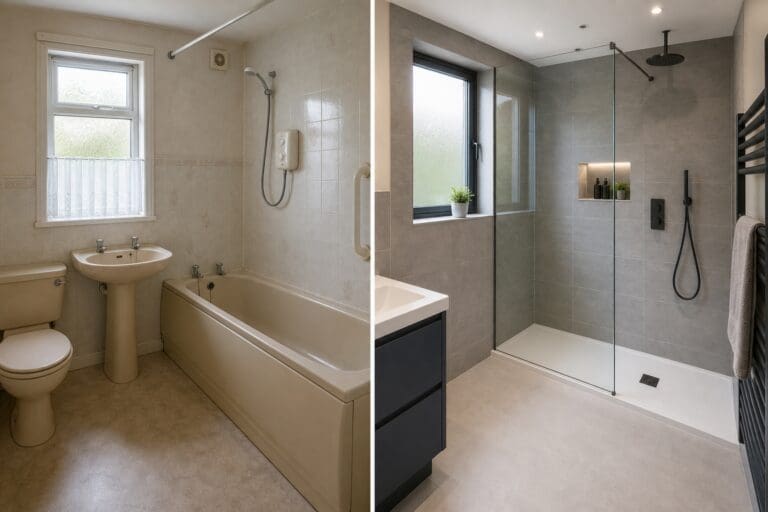
Pick a layout that suits how you use the room. Wall-hung WCs and compact vanity units free floor space and give a lighter feel. Wet-room-style solutions open a small bathroom visually, but they need proper waterproofing and a correct fall to the drain.
Think about clearances. Aim for around 600mm in front of basins and ensure comfortable access to the shower or bath. Check door swings and storage positions so they do not obstruct movement. Good lighting and mirrors increase perceived space; where possible add rooflights or larger windows while respecting privacy rules.
Selecting durable finishes and fixtures for longevity
Choose durable bathroom materials that resist moisture and wear. Porcelain floor tiles offer longevity and low maintenance. Use non-slip finishes in wet zones to reduce accidents.
Specify reliable tanking systems such as Wedi or Schlüter, or a cementitious waterproof membrane carried out by a trained installer. Invest in trusted sanitaryware and brassware brands like Roca, Villeroy & Boch, Grohe and Hansgrohe to reduce future failures.
Consider heating and ventilation early. Underfloor heating must suit the floor build-up and tile adhesive. Fit an extractor fan with the correct extraction rate to prevent mould. For larger projects, mechanical ventilation with heat recovery can help with indoor air quality.
Accessibility and future-proofing considerations
Design with lifetime use in mind. A step-free threshold, level-access shower tray and lever handles make a space easier to use for everyone. Reinforce walls behind showers and WCs so you can add grab rails later without disruptive work.
Create adaptable zones. Prepare for a wet-room conversion even if you delay installation. Choose wipe-clean surfaces and concealed fittings to cut maintenance as you age. These steps make an accessible bathroom that retains market appeal.
Understanding building regulations, planning permission and approvals in the UK
Know when you must comply and when to notify authorities. Structural changes, new soil stacks and electrical work need to meet UK building regulations bathroom rules and often require building control sign-off. You can use a competent person scheme, such as NICEIC or Certsure, for some electrical work.
Follow guidance on bathroom electrical zones and use appropriately IP-rated fittings. Most internal refurbishments do not need planning permission. External alterations, loft conversions or works to listed buildings will need consent from your local planning authority.
Keep documentation. Completion certificates, manufacturer warranties and installation records help with resale and insurance. Engaging a conservation officer early is sensible when you work in a listed building or conservation area.
Hiring tradespeople, managing the project and avoiding common pitfalls
When you hire bathroom fitter UK or a bathroom contractor, start with thorough vetting. Use recommendations and trusted directories such as Which? Trusted Traders, Checkatrade, Rated People or the Federation of Master Builders. Ask for recent references, view completed bathroom projects and confirm memberships with bodies like CIPHE or NICEIC. Check Public Liability Insurance and request proof of cover before work begins.
Obtain at least three written quotes that itemise materials, labour, timescales and exclusions. Beware unusually low prices that may cut corners. Put everything in a written contract specifying scope of works, materials, payment schedule and a change-order process. Typical payments are a deposit of 10–30%, staged payments tied to milestones and a small retention until completion. Secure written warranties for workmanship and keep supplier guarantees and certification for electrical and plumbing work.
Decide who will handle managing renovation project duties. For modest jobs you might coordinate trades yourself, but a professional project manager can reduce delays on complex refurbishments. Set a clear routine for communication — daily updates during critical phases and weekly meetings otherwise. Keep a project diary and take photos at key stages such as pre-tanking, waterproofing and underfloor heating. Plan storage, delivery access and site cleanliness in advance.
To avoid renovation pitfalls, specify exact products, finishes and colours and insist on certified waterproofing systems and correctly sized extractors. Schedule work around long-lead items so a late vanity unit or shower screen does not halt progress. Control changes with formal change orders and retain the right to withhold final payment until defects are rectified. On completion, compile a snagging list, obtain building control and competent person certificates, and provide aftercare advice on cleaning, grout sealing and servicing to protect your investment.