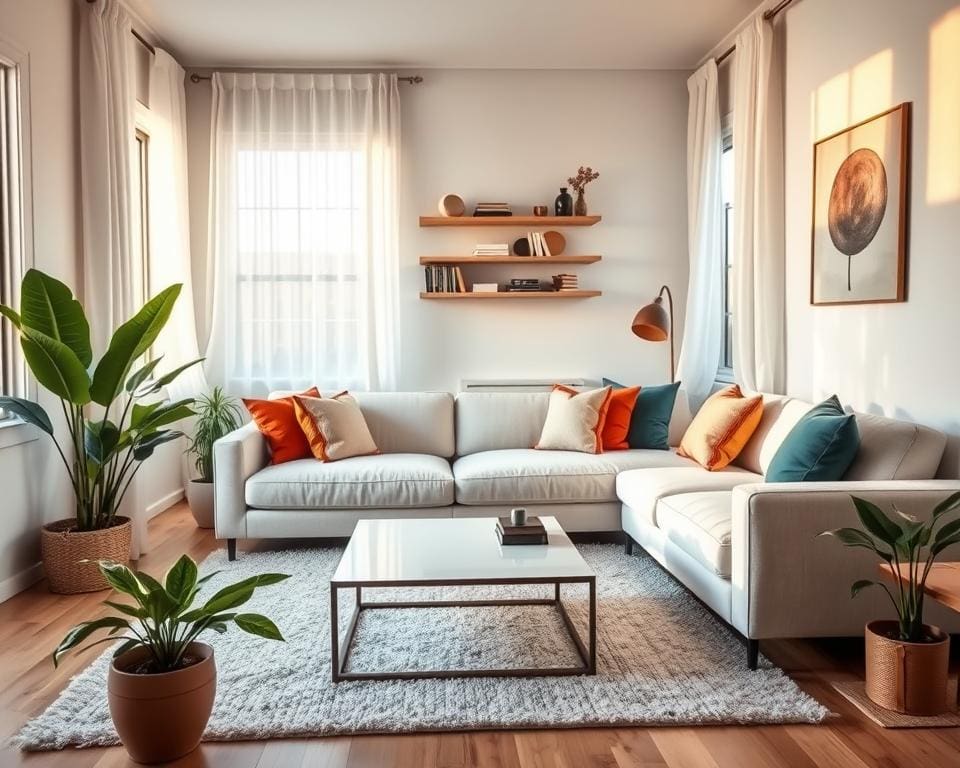
If you live in a terraced house, a studio flat or a compact apartment, making a small living room feel bigger is possible without major building work. This short introduction outlines practical, design-led strategies that blend visual psychology with simple home improvements to help your small lounge look brighter, airier and more inviting.
The advice here suits homeowners and renters across the United Kingdom who want cost-effective, achievable changes. You can try quick wins — decluttering, repositioning furniture and swapping to brighter bulbs — or plan longer-term investments like bespoke shelving or a slimline sofa from John Lewis, IKEA or Habitat.
Core principles include using light and colour to maximise perceived space, choosing the right scale and proportion for furniture, adding reflective surfaces and mirrors, and arranging pieces to improve flow. These space-saving living room tips and small lounge ideas come from evidence-based visual tricks and practical tactics used by designers and retailers.
By the end of the article you should be able to plan a coherent approach: from immediate tweaks to considered purchases that will make your open small living room feel significantly larger and more functional. Start with simple changes and build to the solutions that suit your budget and lifestyle.
Understanding visual tricks to enlarge a small living room
You can make a compact lounge feel airy without major works. Small adjustments to light, colour, scale and surfaces change how you perceive space. These visual tricks small living room ideas rely on simple choices you can test in a weekend.
How light and colour influence perceived space
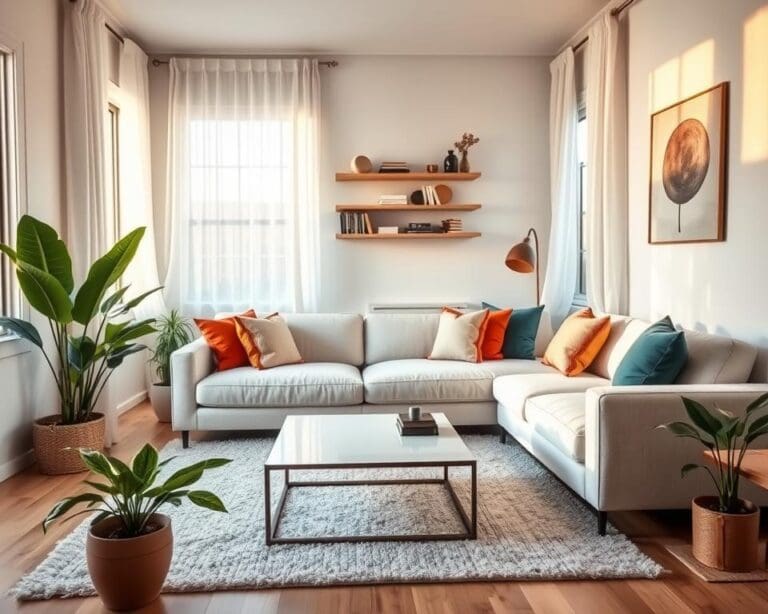
Natural light is the most powerful tool you have. Sit your sofa near windows and swap heavy curtains for light, translucent options from Dunelm or B&Q so daylight fills the room.
Choose paint with a higher light-reflectance value to make walls recede. Pale neutrals, soft greys and warm whites from brands like Farrow & Ball or Dulux bounce light and lift the ceiling.
Keep the ceiling and trim a shade lighter than the walls. A satin or eggshell finish on the ceiling will reflect extra light and add a sense of height in a colour and light small room scheme.
Using scale and proportion to avoid overcrowding
Pick furniture that fits the room’s footprint. A compact two-seater or a slimline sofa with exposed legs creates breathing space compared with bulky pieces.
Leave clear circulation routes of at least 60–90 cm for walkways. IKEA and MADE offer dimension guides to help you plan practical layouts based on scale and proportion lounge principles.
Resist filling every corner. Thoughtful negative space around key items keeps the room feeling open and intentional.
Optical illusions with mirrors and reflective surfaces
Mirrors can double perceived depth when placed opposite a window. A large floor mirror reflects views and spreads daylight across the room, a top trick among mirrors for small rooms.
Introduce reflective finishes like lacquered cabinets, metallic lamps or glass-topped tables to reduce visual weight. These reflective surfaces living room elements allow sightlines to continue, making the space seem larger.
For impact, consider mirrored panelling or slim mirrored tiles behind shelving to add depth without overwhelming the room. Use the effect sparingly to keep balance and character.
small living room layout and furniture strategies
Start by thinking of your small living room layout as a series of purposeful zones. A clear plan helps you choose pieces that work harder for you. Small changes to furniture placement and type will open sightlines and create a calmer, more usable space.
Pick furniture that does two jobs. A modular sofa such as IKEA FRIHETEN can turn into a guest bed when needed. Ottomans with internal storage and lift-top coffee tables give you surface area and hidden space without bulk. Nesting tables tuck away neatly when not in use.
Best seating arrangements for flow and openness
Float your main seating slightly off the walls to allow a walking route behind sofas and chairs. In narrow rooms, place seating along the longest wall and leave clear paths on one side. For square layouts, an L-shaped grouping opens the centre and keeps traffic flowing.
Storage solutions that keep the room uncluttered
Use vertical storage to free floor space. Floor-to-ceiling shelving or wall-mounted cabinets draw the eye upwards and add personality. Closed cupboards hide daily clutter, while a few open shelves display curated items without overwhelming the room.
Think multi-zone storage. A slim console with drawers behind a sofa, under-seat boxes and floating shelves above a radiator combine to keep surfaces tidy. Consider fitted options from local carpenters if you need a made-to-measure result.
Using rugs and furniture placement to define zones
Rugs to define zones help you anchor seating and separate activities in one shared room. Choose a rug large enough for the front legs of sofas and chairs to sit on it so the layout feels cohesive. Align rugs and furniture with main sightlines, such as the window, to emphasise depth.
Layer textures and stick to a limited palette across rugs and upholstery to avoid visual fragmentation. This approach keeps your living area functional and calm, even when it serves many purposes.
Lighting, colour palette and wall treatment ideas
Start by clearing sightlines to let light travel across the room. You can use slim curtain poles from Habitat and sheer blinds to lift the window visually. Place mirrors opposite windows and choose pale upholstery to reflect daylight, aiding your plans for maximising natural light lounge without cluttering the sill.
Think in layers when you plan lighting small living room schemes. Combine a bright ceiling light for general use with adjustable floor lamps for reading and picture lights to highlight art. This layered lighting approach stops corners from falling into shadow and makes the room feel more open.
Use warm LED bulbs around 2700–3000K for a cosy feel, while keeping lumen output strong enough to avoid dimness. Position table lamps on side tables and a slim floor lamp behind sofas to spread light laterally, which supports your layered lighting layout and keeps the space inviting.
Choose cool, pale paints to help surfaces recede. Soft blues, greys and greens create depth, while tonal layers of the same colour add interest without breaking the room up. Gentle contrasts between walls and trim prevent compartmentalisation, so your colour schemes small room work to widen sightlines rather than fragment them.
Consider vertical wall treatments to raise the eye. Narrow panelling, slim mouldings and vertically orientated wallpaper patterns give a sense of height without heavy ornament. Place artwork slightly higher than usual and use a slim picture rail or uplights to draw gaze upwards, making ceilings appear taller.
Opt for narrow shelving and wall-mounted lighting to keep the floor clear. Picture lights and LED strips behind shelves add depth and focus without eating space. These wall treatments living room choices add texture and interest while supporting a tidy, airy feel that helps small rooms breathe.
Practical styling tips and maintenance for a bigger-feeling room
To keep your small living room feeling roomy, adopt a simple, cohesive palette and limit competing patterns. Use one or two accent colours and lightweight textiles such as linen throws and sheer curtains to lower visual weight. Choose purposeful accessories — a sculptural lamp, a neat stack of books and a small plant like a snake plant or pothos — so each item adds personality without creating a clutter-free living room problem.
Make storage work for you with multi-functional pieces and vertical shelving. Storage benches and ottomans hide everyday items while wall-mounted shelves free up floor space. For product ideas and measurements to suit narrow UK homes, check practical guides and retailer dimensions at what furniture fits best in a small living before you buy to avoid oversized purchases.
Set simple maintenance habits to maintain small lounge comfort. Do a weekly declutter sweep using labelled baskets or trays, rotate decorative items seasonally, and clean windows monthly to let light in. Keep an eye on upholstery and rugs so repairs are quick — a tidy, well-maintained room always reads larger and more inviting, helping with easy upkeep small room routines.
Before you finish, confirm clear sightlines to windows and doorways, layered lighting for evening use and visible floors with low-profile furniture. Be bold with temporary layouts, moveable storage and paint samples as you experiment — styling small spaces is about finding the mix that works for your daily life while keeping a lasting, clutter-free living room feel.