Modern kitchen upgrades that improve everyday living are not only about a smart-looking finish. The best improvements make cooking easier, storage calmer, cleaning quicker and family routines smoother. In many UK homes, the kitchen is also a dining area, homework spot, social space and morning command centre. A well-planned upgrade should support all of that without making the room feel complicated or over-designed.
Why modern kitchen upgrades that improve everyday living matter
A kitchen can look beautiful and still be frustrating. Doors may clash, worktops may be crowded, sockets may sit in the wrong place, and storage may be too deep to use properly. Modern upgrades are most successful when they solve these ordinary problems first.
Everyday living improves when the room matches real habits. A household that batch-cooks needs generous preparation space and freezer access. A family with young children may value wipe-clean surfaces, rounded edges and easy breakfast storage. A keen baker may need a cool worktop area, accessible trays and a place for heavy mixing bowls.
The main aim is not to follow every design trend. It is to create a kitchen that feels easier on a wet Tuesday evening, a busy school morning and a quiet Sunday lunch. That practical test is often the best guide.
Layout improvements that make the kitchen easier to use
The layout is the foundation of a functional kitchen. Even modest changes can improve how smoothly the space works.
Rethinking the working zones
Traditional kitchen planning often refers to the sink, hob and fridge as a triangle. That idea can still be useful, but modern homes often need broader zones. Many kitchens now work better when planned around tasks.
Useful zones include:
- Preparation zone: clear worktop space, knives, chopping boards, mixing bowls and food waste access.
- Cooking zone: hob, oven, pans, utensils, oils and heatproof landing space.
- Cleaning zone: sink, dishwasher, bins, cloths and cleaning products.
- Serving zone: plates, cutlery, glasses and an easy route to the dining table.
- Hot drinks zone: kettle, mugs, tea, coffee and a nearby socket.
Keeping related items close together reduces unnecessary movement. It also makes the kitchen easier for more than one person to use at the same time.
Improving flow and clearance
A modern kitchen should allow people to pass through without disturbing the cook. This is especially important in open-plan spaces, where the kitchen may connect to a garden, dining table or living area.
Good flow depends on enough clearance around key points such as the oven, dishwasher and fridge. Doors and drawers should open without blocking the whole room. In smaller kitchens, sliding, pocket or bi-fold cabinet solutions can sometimes help, but the simplest answer is often better placement.
Islands and peninsulas are popular, yet they are not right for every room. If they reduce movement or create narrow walkways, they may make daily life harder. A compact breakfast bar, slim table or extra run of worktop can sometimes be more useful than a large island.
Storage upgrades for a calmer, tidier kitchen
Storage is one of the most important parts of a modern kitchen. The aim is not simply to have more cupboards. It is to have storage that is easy to reach, easy to organise and suited to the way the household lives.
Drawers instead of deep cupboards
Deep base cupboards can become awkward because items disappear at the back. Wide drawers often work better, particularly for pans, crockery, dry goods and food containers. They pull the contents towards you, which means less bending and searching.
Internal drawer dividers add another layer of order. Cutlery, utensils, spices, lids and baking tools can all have a fixed place. When a kitchen is easy to put back together, it is more likely to stay tidy.
Tall storage and larder units
A tall larder unit can transform a kitchen, especially where wall cupboards feel cluttered or hard to reach. Full-height storage is useful for dry food, breakfast items, small appliances and cleaning supplies, provided these are safely separated where needed.
Pull-out larders offer excellent visibility, but they should be chosen carefully. Very narrow pull-outs can be helpful for bottles and spices, while wider versions may become heavy when full. Shelved larders with internal drawers or baskets can be a practical alternative.
Other storage upgrades worth considering include:
- Corner units with pull-out shelves rather than inaccessible dark spaces.
- Tray dividers for baking sheets, chopping boards and serving platters.
- Appliance garages to hide toasters, blenders and coffee machines when not in use.
- Integrated bins for recycling, food waste and general waste.
- Slim storage near the hob for oils, spices and cooking utensils.
The best storage reduces visual noise. Clear worktops can make the whole kitchen feel larger, cleaner and more restful.
Worktops, surfaces and finishes for real life
Surfaces carry a lot of responsibility in a kitchen. They need to handle water, heat, crumbs, spills, chopping, homework, bags, pets and daily cleaning. A modern upgrade should balance appearance with durability.
Laminate worktops have improved in design and remain a practical option for many households. Compact laminate, solid surface, quartz, timber and stone each offer different benefits and care needs. There is no single best choice for everyone. The right surface depends on budget, maintenance expectations and how the kitchen is used.
Splashbacks also have a strong effect on daily cleaning. Tiles can look characterful, but grout may require more upkeep. Glass, stainless steel, acrylic and large-format panels can reduce joins and make wiping easier. Behind hobs and sinks, easy-clean finishes are especially useful.
Flooring deserves the same practical thinking. Kitchen floors need to cope with moisture, dropped utensils and frequent foot traffic. Porcelain tiles, luxury vinyl tile, engineered timber and suitable laminates are common choices, but installation quality matters. A floor that is hard-wearing, comfortable and easy to clean can improve the room every day.
Colour and texture affect how the kitchen feels. Soft neutrals, muted greens, warm woods and matt finishes can create a calm space. Gloss finishes may bounce light around but can show fingerprints more clearly. Very dark colours can look striking, though they may reveal dust, crumbs and water marks. Practical beauty often comes from choosing finishes that suit real life, not just a showroom.
Lighting upgrades that change the mood and function
Lighting is one of the most overlooked kitchen upgrades, yet it can make a dramatic difference. A single central ceiling light rarely supports all kitchen tasks well. Modern kitchens benefit from layered lighting.
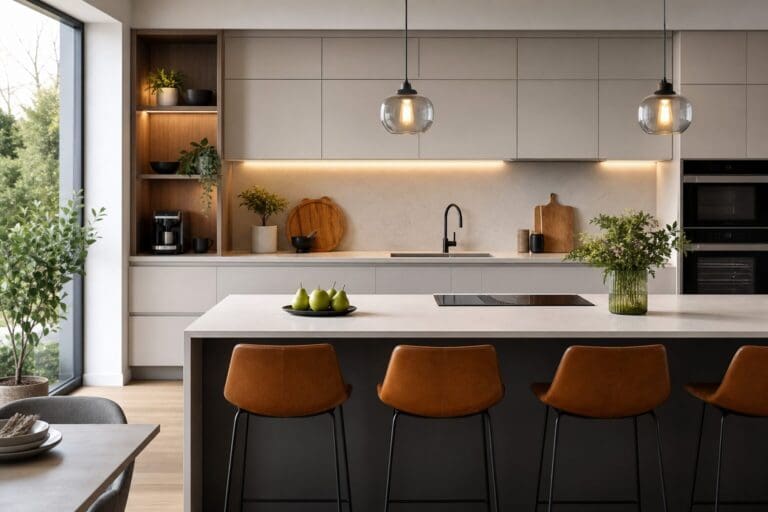
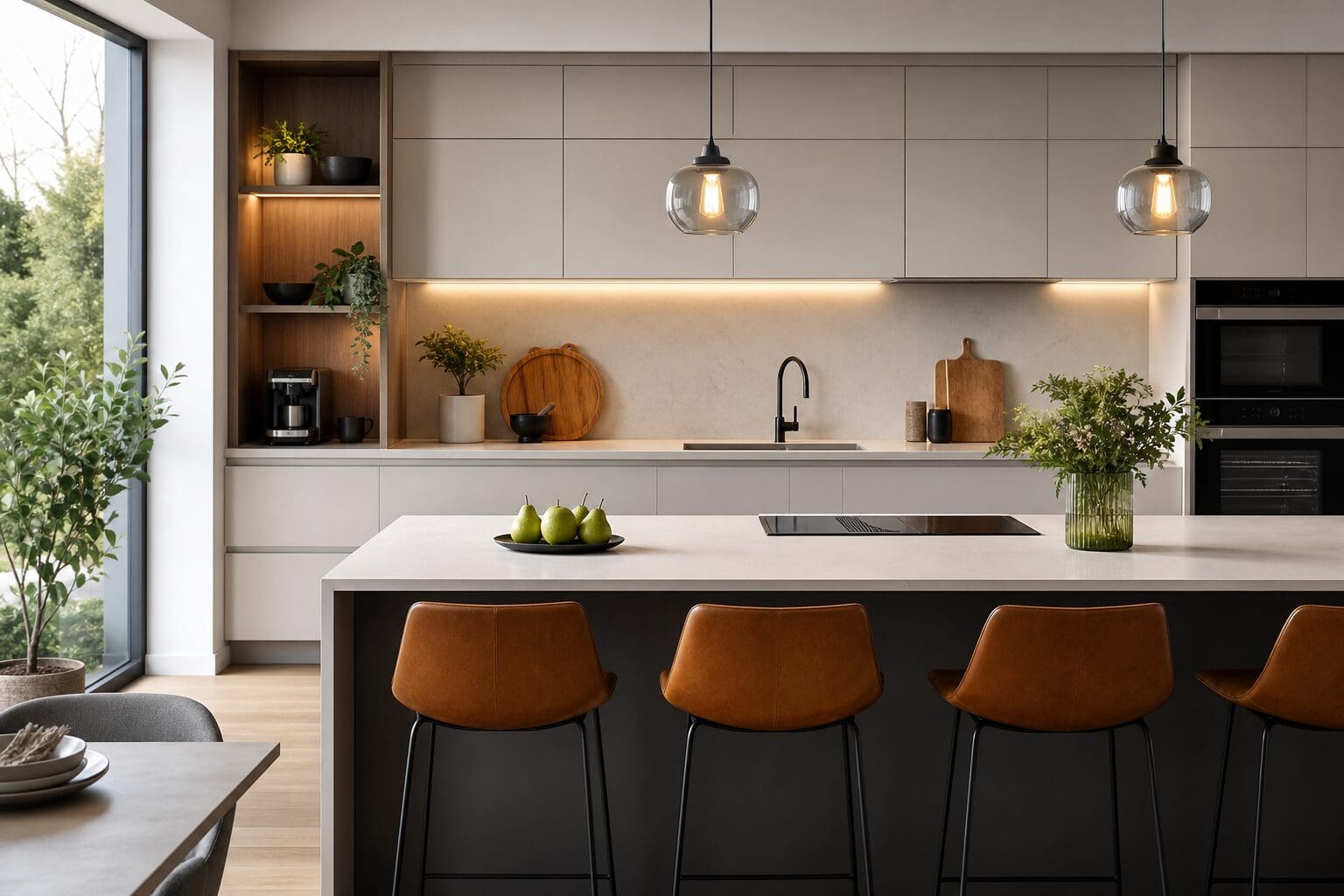
Task lighting should illuminate worktops, sinks and hobs. Under-cabinet lighting is particularly useful because it reduces shadows while chopping or reading recipes. Ceiling spotlights can help, but their position should be planned around where people stand, not just where units sit.
Ambient lighting creates general brightness and a comfortable atmosphere. Pendant lights over a dining table or island can add warmth and focus, provided they do not block sightlines. Wall lights, shelf lighting and dimmable fittings can soften the space in the evening.
Accent lighting is optional, but it can highlight open shelving, alcoves or architectural details. It should not make the kitchen feel like a display cabinet. The most successful lighting feels natural, flexible and easy to control.
Light temperature matters too. Very cool lighting can feel harsh in a home, while very warm lighting may not be ideal for food preparation. A balanced approach, with brighter task lighting and softer dining lighting, usually works well.
Appliances and technology that earn their place
Modern kitchen technology should make life easier, not more fiddly. The best upgrades are the ones that solve a regular problem or save repeated effort.
Induction hobs are popular because they heat quickly, respond well and have a flat surface that is easy to wipe. They require suitable pans and appropriate electrical installation, so they need proper planning. Ovens with clear controls, reliable temperature settings and easy-clean interiors can also make daily cooking less demanding.
Dishwashers are not just about convenience. They can keep worktops clear and reduce the feeling of mess after meals. A well-positioned dishwasher near the sink and crockery storage makes unloading easier.
Fridge-freezer choices should reflect shopping habits. Some households need more fresh food space, while others rely heavily on frozen meals or batch cooking. A second under-counter fridge is not always necessary, but drinks storage or a pantry fridge can be useful in busy homes if space allows.
Smart appliances can be helpful, but they should not be included simply because they are available. Remote controls, app settings and connected features are only worthwhile when they support real routines. Simple, reliable appliances with intuitive controls often provide the most lasting value.
Ventilation is another upgrade that improves comfort. A good extractor helps reduce cooking smells, steam and grease. In open-plan kitchens, this is especially important because odours can drift into living areas. The right solution depends on the layout and whether ducting is possible.
Comfort, accessibility and family-friendly details
A kitchen should feel comfortable for the people who use it every day. Small design decisions can improve accessibility, safety and ease.
Handles are a good example. Handleless cabinets can look sleek, but they may not suit everyone. Proper handles can be easier for children, older adults and anyone with reduced grip. Rounded profiles and smooth edges can also make a busy kitchen feel safer.
Worktop height is another practical consideration. Standard heights suit many people, but not all. In some homes, a lower baking area, seated preparation spot or varied surface height can be useful.
Sockets should be plentiful and sensibly placed. Modern kitchens often need power for kettles, toasters, chargers, mixers, air fryers and laptops. Pop-up sockets can be useful in some areas, although fixed wall sockets are often simpler and more robust.
Acoustics matter in open-plan rooms. Hard surfaces can make sound bounce around, especially with children, pets and extractor fans. Soft furnishings nearby, rugs in adjoining areas, curtains and upholstered dining chairs can help soften noise without changing the kitchen itself.
Family-friendly details might include a breakfast cupboard, a low drawer for children’s cups and bowls, a noticeboard, a charging drawer or a washable paint finish near dining areas. These additions are not glamorous, but they can make daily routines much easier.
Sustainable choices without unnecessary complication
Sustainability in the kitchen is not only about buying new eco-labelled products. Often, the most sustainable upgrade is one that lasts, functions well and avoids waste.
Keeping a good existing layout can reduce disruption and material use. Replacing doors, handles, worktops or lighting may be enough if the cabinet carcasses are sound. Repairing, repainting or refacing can refresh the space without a full replacement.
Durable materials are also important. A cheap surface that fails quickly may cost more in the long run, both financially and environmentally. Choosing timeless finishes can reduce the urge to replace the kitchen when trends change.
Energy-efficient appliances can support lower energy use, but they should be correctly sized. An oversized fridge or rarely used appliance may not be the most sensible choice. Good ventilation, LED lighting and water-saving taps can also contribute to a more efficient kitchen.
Waste sorting is a practical sustainability upgrade. Clear, accessible bins for recycling and food waste make better habits easier. If the system is awkward, it is less likely to be used consistently.
Frequently Asked Questions
What are the best modern kitchen upgrades for a small UK kitchen?
The most useful upgrades are often improved lighting, drawer storage, slim appliances and clearer worktop space. Pale colours, reflective surfaces and well-planned vertical storage can also help a compact kitchen feel more open.
Do modern kitchen upgrades always require a full renovation?
No, many effective upgrades can be made without replacing the entire kitchen. New lighting, handles, taps, internal storage, splashbacks or worktops can noticeably improve everyday use.
Which kitchen upgrade makes the biggest difference to daily cooking?
Better task lighting and a more organised preparation zone often make the biggest immediate difference. Having clear worktop space, sharp tools and ingredients nearby makes cooking feel calmer and quicker.
Are smart appliances worth adding to a modern kitchen?
Smart appliances are worthwhile only when their features match your routine. If the technology adds convenience, clarity or energy awareness, it can help; if not, simple controls may be better.
How can a kitchen feel modern without becoming too trendy?
Choose clean lines, practical materials and a balanced colour palette rather than short-lived statement finishes. Timeless storage, good lighting and durable surfaces will usually feel modern for longer.
Final thoughts on everyday kitchen improvements
A successful modern kitchen is not defined by one dramatic feature. It is built from thoughtful choices that make ordinary moments easier: a drawer that opens smoothly, a light that falls in the right place, a surface that wipes clean, and storage that makes sense.
Modern kitchen upgrades that improve everyday living should support how a household really cooks, eats, cleans, talks and moves through the day. When function and comfort guide the design, style follows more naturally. The result is a kitchen that looks current, feels welcoming and works hard without demanding attention.