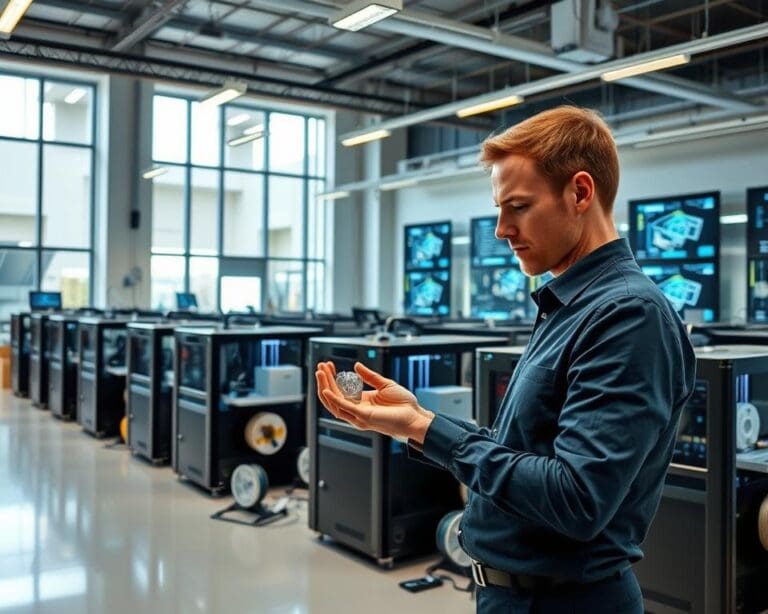
3D printing manufacturing is an additive process. You create a digital model, then build the physical part layer by layer. The material may be deposited, cured or fused, depending on the chosen process.
This differs from subtractive manufacturing, where machines remove material through milling, turning or drilling. It also differs from formative manufacturing, which shapes material with moulds, dies or presses. These methods remain vital, but additive manufacturing gives you more flexibility when designs change.
With digital manufacturing, you can adjust dimensions, geometry and performance features in a design file. You do not need to redesign costly tooling for every revision. This can shorten development time and make testing more efficient.
Industrial 3D printing can support the full manufacturing lifecycle. You can use it for concept models, functional prototypes, tooling, customised products, spare parts and end-use components. It also works alongside engineering design tools, CNC machining and rapid tooling.
These benefits make 3D printing relevant to modern manufacturing. Faster product development, greater design freedom and lower material waste can improve the way you bring products to market. You can also produce low-volume or customised parts without the high tooling costs linked to some conventional methods.
Across the UK, aerospace, automotive, healthcare, construction and engineering firms are assessing additive manufacturing UK capabilities. Specialist equipment makers are also exploring advanced manufacturing technologies for lighter parts, shorter lead times and more responsive supply chains.
However, 3D printing does not replace every established process. Your decision should consider part size, production volume, tolerances, material performance, surface finish, certification and total cost. The most effective approach often combines additive and conventional methods.
This article first examines how 3D printing is changing production. It then considers waste reduction and efficiency before reviewing UK applications, technologies and practical implementation factors.
3D printing manufacturing: transforming modern production
3D printing manufacturing gives you a direct route from a computer-aided design (CAD) file to a physical part. You can produce a test model without commissioning moulds, dies or dedicated tooling. This shortens the gap between an early idea and a hands-on review.
How additive manufacturing supports rapid prototyping
With rapid prototyping, you can print 3D printed prototypes from updated digital files. Each version can be checked for fit, form and function. Feedback from testing guides the next design change, which helps you complete several iterations within a shorter development cycle.
This process can reveal weak points before you order production tooling or large material volumes. You may find that a bracket needs more clearance, a casing needs better access or a moving part needs greater strength. Early changes reduce the risk of investing in an unsuitable design.
Shorter development cycles help you respond to customer feedback, revised specifications and new regulations. You can adapt a product when demand shifts or when users request improved performance and personalisation. The same digital model can support testing, review and controlled design updates.
Creating complex parts with design freedom
Additive manufacturing builds parts directly from digital data. This allows you to develop complex geometries, such as lattice structures, internal channels and hollow sections. Integrated hinges, ducts and conformal cooling passages can reduce the number of separate parts in an assembly.
Design freedom supports lightweight components with the strength needed for their use. You can remove excess material, combine several parts into one and shape surfaces for better airflow, heat transfer or fluid movement. These features can be difficult or costly to make through machining, moulding or manual assembly.
Design for additive manufacturing remains essential. Your model must account for build orientation, support structures and layer direction. You must assess wall thickness, shrinkage, thermal distortion, tolerances and post-processing before production. These checks help turn a suitable CAD model into a reliable printed part.
Supporting customised and low-volume production
Bespoke manufacturing lets you create a part for a specific patient, machine, vehicle, aircraft or specialist application. Customised components can include patient-specific medical devices, anatomical models, aerospace brackets and ducting. Automotive teams can use the process for prototypes, replacement parts, jigs and fixtures.
Low-volume production can suit products with uncertain demand or many variants. It can serve components with a long service life but limited annual demand. You avoid the high upfront cost of dedicated tooling while retaining the ability to make parts when they are needed.
A validated digital file can support a form of digital inventory. You may manufacture a replacement or revised component without storing every physical part. Intellectual property, quality checks and certification controls must remain in place throughout this process.
A prototype is not automatically a certified end-use component. Safety-critical applications may require material traceability, inspection, repeatable production and regulatory approval. Functional testing must confirm that the printed part meets the required performance standards before it enters service.
How 3D printing reduces waste and improves manufacturing efficiency
3D printing can help you reduce manufacturing waste by placing material where the component needs it. Traditional machining often starts with a solid billet or sheet, removing excess material to create the required shape. This process can produce chips, swarf and offcuts.
The saving depends on the printing technology, material, part shape and production settings. A well-planned build may use less feedstock than a subtractive process. It does not remove waste completely, since supports, failed builds, test pieces and post-processing can affect the total material used.
Nesting several components in one build volume can improve machine and material use. This approach suits powder-bed systems and some polymer parts. Careful spacing helps you use the available build area without affecting part quality or making removal too difficult.
Design freedom can improve material efficiency in demanding applications. Lattice structures, hollow sections and topology-optimised forms can lower a part’s mass while retaining the strength or stiffness needed for its use. Lighter components may reduce transport or operating energy in aerospace and automotive systems.
These additive manufacturing benefits are strongest when you match the design to the process. A complex, lightweight part may gain more from printing than a simple item with a standard shape. You should assess strength, heat resistance, tolerances and service conditions before selecting a production method.
On-demand manufacturing can limit overproduction and reduce the need for large warehouses. You can produce a spare part when it is required instead of holding many units in stock. This option can support maintenance teams when demand is uncertain or a product has a long service life.
A validated design file can act as a form of digital inventory. It gives you access to an approved part without storing every version as a physical item. Secure file management, version control and clear approval procedures are essential. They help prevent outdated or untested files from entering production.
Local or distributed production can shorten supply routes for suitable parts. Producing near the point of use may reduce transport time and support repairs when conventional deliveries face delays. You still need to check local machine capability, material availability, inspection needs and technical approval.
Part consolidation can support efficient production by combining several separate components into one printed item. This may reduce fasteners, joints and assembly labour. Fewer interfaces can create fewer points of failure, yet the design must remain easy to inspect, clean and repair.
Process monitoring helps you improve production efficiency over repeated builds. Operators can track build temperatures, energy input, layer formation, machine status and material condition. Stable parameters make it easier to identify faults and reproduce an approved part.
Material savings alone do not prove that a process is efficient. You should review machine preparation, print duration, energy use, labour, inspection and maintenance. Failed builds, material recovery and machine downtime can change the cost and environmental impact of a project.
Post-processing may include support removal, depowdering, washing, curing, heat treatment, machining, polishing or surface finishing. Each stage adds time and resources. You need to include these steps when comparing a printed part with one made by casting, forming, machining or injection moulding.
This wider assessment supports sustainable manufacturing. You can compare material use, energy demand, transport, service life, repair options and end-of-life recovery. The best choice may vary between a low-volume replacement part and a standard item made in very high numbers.
Lifecycle and production data can guide your decision. Printing may suit complex geometry, lightweight parts and changing demand. Injection moulding, machining, casting or forming may remain more suitable for high-volume production with stable designs.
Applications and considerations for 3D printing in UK industries
Across 3D printing applications UK businesses use the technology for prototypes, tooling, jigs, gauges, housings and replacement engineering components. Aerospace 3D printing can produce lightweight brackets, ducts, cabin fittings and selected flight parts. You should control material batches, build settings, inspection and certification, especially for safety-critical work. Fine features may achieve tolerances near ±0.05 mm in some polymer processes, while metal powder-bed systems often need finishing to reach their final accuracy.
In automotive additive manufacturing, you can create design models, aerodynamic parts, assembly fixtures, motorsport components and customised vehicle parts. FDM suits many affordable prototypes and tools, while SLS makes strong, complex polymer parts with limited support structures. Metal additive manufacturing supports heat-resistant components and internal channels, but it needs careful powder handling, heat treatment, surface finishing and inspection. Your choice should reflect production volume, strength, surface quality, temperature and wear requirements.
Medical 3D printing supports anatomical models, surgical planning aids, prosthetics, orthotics, dental products and some patient-specific implants. These uses require biocompatibility, hygiene controls, validated processes and clear traceability. Construction 3D printing can assist with scale models, formwork and large architectural parts, but you must consider building regulations, weather resistance, structural performance and site logistics. Resins, composites and thermoplastics offer different levels of detail, stiffness and durability, so material selection must match the finished part.
Before scaling production, assess the full cost of the printer, software, ventilation, safety equipment, post-processing and maintenance. Train operators in CAD preparation, build orientation, powder or resin handling, calibration and safe machine use. Use controlled storage, documented settings, calibrated CMMs or optical scanners, and repeatable acceptance checks; UKAS-accredited calibration can support audit readiness. Precision manufacturing equipment may also connect with CAD/CAM, MES and inspection systems through open standards. Start with parts that offer a clear benefit, then expand after controlled trials prove quality, compliance and reliable total cost.