Construction technology is changing how you plan, design, build and manage property. It includes digital systems, automation, advanced materials and connected equipment. Together, these tools support smarter decisions from the first survey to the final handover.
The future of construction will not be shaped by one invention. Artificial intelligence, robotics, Building Information Modelling, drones, sensors, digital twins and cloud platforms are developing side by side. Immersive tools and low-carbon methods are also influencing new building technology trends across the UK.
This progress matters because your business may face skills shortages, rising material costs and pressure to complete work more efficiently. Smart construction can also support safer sites, clearer records and better control of carbon emissions. Connected tools may help you meet complex regulations while protecting quality and productivity.
However, construction industry technology does not replace professional judgement. Architects, engineers, surveyors, contractors and site managers must still check digital outputs, manage risks and make informed decisions. Reliable data, suitable training and software that works across systems are vital for successful UK construction innovation.
In this article, you will first explore the main technologies used on UK building projects. You will then see how digital construction improves efficiency, safety and sustainability. The final section considers emerging innovations that could influence your future projects. You can also find further context in this guide to technology in skilled trades.
How construction technology is transforming UK building projects
UK construction technology now supports the full project lifecycle. You can use digital tools during feasibility studies, design coordination, procurement, site production, handover and building operation. The strongest results appear when these systems share reliable information across digital construction projects.
A structured model can guide artificial intelligence in construction, drone surveys, digital twins and construction management platforms. Each investment should support a clear outcome, such as less rework, safer work, better quality control, lower waste or more reliable reporting.
Artificial intelligence for planning, design and project management
Artificial intelligence in construction can review project data, identify clashes and improve programme decisions. AI construction planning tools assess labour, materials, access and timing. Predictive analytics can highlight delays before they affect critical work, while AI risk management supports safer planning.
Generative design helps you compare layouts against cost, energy and buildability targets. When linked with construction project management software, the results can inform procurement, site tasks and progress reports. This creates a clearer path from early feasibility work to handover.
Technology still needs skilled judgement. Poor data, incompatible software and limited digital skills can weaken results. You should check how each tool protects commercially sensitive information and meets cybersecurity requirements before using it on live work.
Robotics and automation on construction sites
Construction robotics is changing repetitive and hazardous tasks. Robotic bricklaying can improve speed and consistency, while automated construction equipment supports lifting, cutting and material movement. Site automation can reduce exposure to risk and raise construction productivity when tasks are planned well.
Prefabrication and off-site manufacturing bring further control to the process. Components can be produced in safer factory conditions, checked before delivery and installed with less waste. A connected plan should link factory data with site schedules, quality records and delivery information.
- Use robotics for repetitive tasks that follow clear specifications.
- Connect automated equipment with safety checks and work permits.
- Measure productivity, defects, downtime and worker safety.
Adoption can be difficult for smaller firms. High setup costs, fragmented supply chains and a shortage of trained operators may slow progress. A pilot can test value before you expand site automation across a wider programme.
Building Information Modelling for better collaboration
BIM UK practice gives teams a shared approach to design and information management. Building Information Modelling brings geometry, specifications, costs and asset data into a digital construction model. BIM coordination can reveal clashes before materials reach the site.
Projects using BIM Level 2 and ISO 19650 need clear responsibilities, naming rules and approval processes. This supports collaborative construction between clients, designers, contractors and suppliers. It can improve procurement, reduce rework and create useful records for building operation.
The model should remain practical rather than becoming a static design file. When linked with construction project management software, it can support site inspections, handover data and maintenance planning. You should agree data standards early to limit software conflicts.
Drones, sensors and connected site monitoring
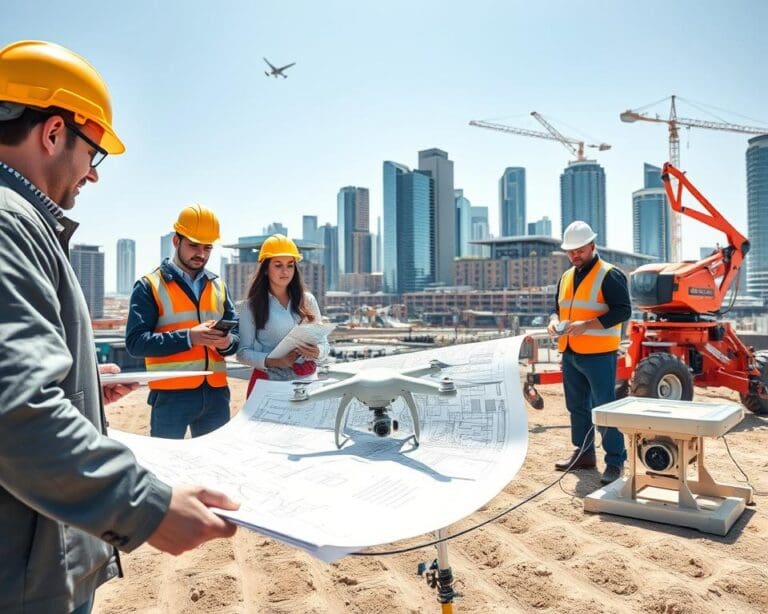
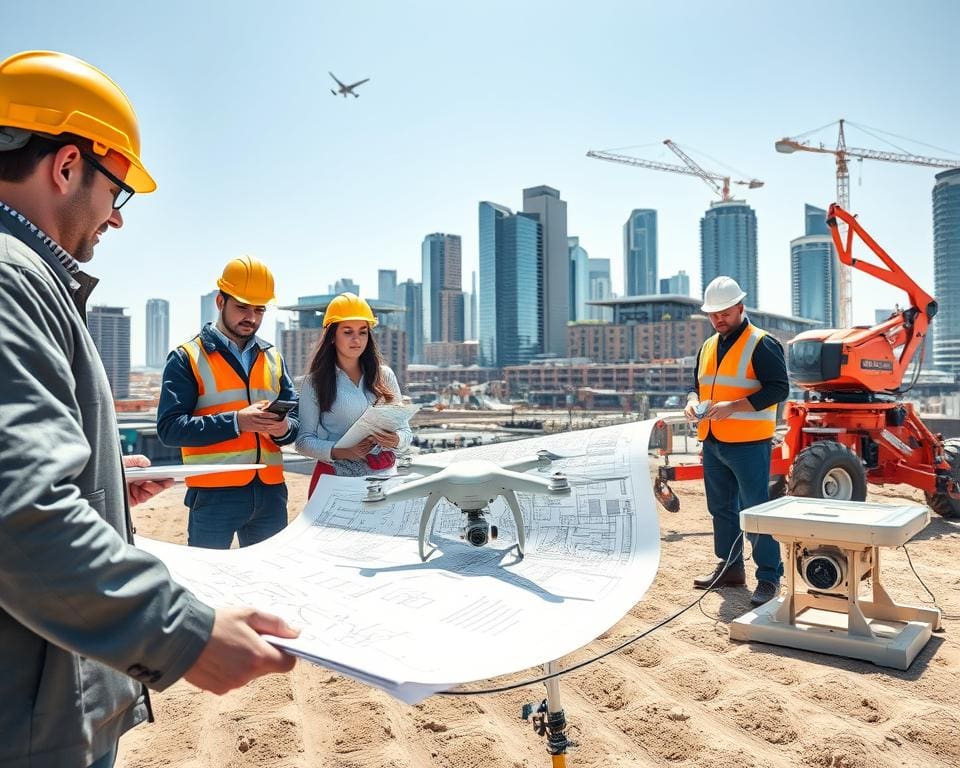
Drones on construction sites provide fast aerial surveying and visual records. Construction drones UK teams use can support quantity checks, roof surveys and remote progress monitoring. Site monitoring technology gives project leaders a safer view of difficult areas without sending workers into avoidable hazards.
IoT construction systems connect construction sensors, gateways and cloud platforms. They can track vibration, temperature, dust, noise, equipment use and storage conditions. These connected construction sites give you timely evidence for quality checks, environmental control and resource planning.
Engineers need to select the right hardware, radio network and security controls for each site. Wi-Fi may suit gateways, while Bluetooth Low Energy, LoRaWAN or NB-IoT can serve remote sensors. Guidance on IoT device development shows why hardware, firmware, connectivity and cloud skills must work together.
A smart construction site depends on reliable data and trained teams. You should test sensors in field conditions, plan secure updates and confirm UKCA or CE requirements where relevant. Clear access rules help protect worker privacy, project data and safe site operations.
Digital tools improving construction efficiency, safety and sustainability
Digital tools create value when they turn project data into clear, timely information. The aim is not to collect data for its own sake. You need information that supports better decisions, safer work and stronger project outcomes.
For UK construction teams, the main priorities are clear: deliver work efficiently, protect people and reduce environmental impact. Good systems can carry information from design into construction and building operation. This helps prevent valuable records from being lost at handover.
Digital twins for real-time project insights
Digital twins in construction connect a digital model with the physical asset. Sensors, inspection records and programme updates can feed live construction data into the model. You can use this view to track progress, spot risks and compare site conditions with the planned design.
Digital twins construction workflows can support construction performance monitoring across complex projects. After handover, the same information can form an asset information model for facilities teams. In smart buildings, this data can guide energy use, plant control and predictive maintenance.
A digital twin can reveal a failing pump before it causes disruption. It can highlight a design clash before work starts. These benefits support whole-life value through fewer repairs, less rework and a longer asset life.
Cloud-based platforms and construction data management
Cloud construction software gives project teams access to current information from offices, sites and mobile devices. A common data environment provides one controlled space for drawings, specifications, approvals and site records. This supports construction data management across the project life cycle.
A project collaboration platform can connect designers, contractors, clients and suppliers. Clear document control reduces the risk of teams using old drawings. Version histories make decisions easier to trace, while permission settings help protect sensitive information.
Strong construction cybersecurity must sit within every digital plan. You should set data standards, access controls and ownership before introducing several systems. Staff training matters too, since a well-designed platform cannot prevent errors caused by poor use.
- Set naming rules for files, models and reports.
- Define who can view, edit and approve information.
- Review data quality at key project stages.
- Train workers before new tools reach the site.
Cloud construction software can involve an initial cost. Its value may come through faster approvals, fewer disputes and more reliable handover information.
Augmented reality and virtual reality for training and design
Augmented reality construction tools place digital information over the physical site. A worker can view hidden services, check a setting-out point or inspect a sequence before installation. This makes augmented reality building design useful for coordination and site checks.
Digital site visualisation helps you explain complex work to people with different levels of technical experience. Mixed reality BIM can bring a model into the room or onto the site. Teams can test access, plant movement and maintenance space before construction begins.
Virtual reality construction training creates a safe setting for high-risk tasks. Workers can practise lifting plans, confined-space procedures and emergency responses without facing live site hazards. Virtual reality construction training can support construction safety training for new starters and experienced teams.
An immersive design review lets clients and project teams walk through spaces before work begins. Early feedback can reduce changes, improve accessibility and strengthen design quality. These tools support decisions when they connect to approved project information.
Technology for reducing construction waste and carbon emissions
Sustainable construction technology can measure materials, energy use and emissions at each stage. A carbon dashboard can help you track embodied carbon in products, transport and installation. This supports construction carbon reduction through informed choices rather than broad estimates.
Low-carbon construction technology includes efficient plant, digital energy modelling and better logistics planning. Energy-efficient construction can reduce demand during operation, which often forms a large share of a building’s lifetime impact. Sustainable building materials can reduce emissions when their supply, durability and reuse potential are understood.
Material tracking records where products are ordered, stored and installed. It can limit over-ordering and support construction waste reduction. Data from the project can guide circular construction, where components are repaired, reused or recovered instead of sent to landfill.
Design teams can compare options before purchase and installation. This supports better use of materials, fewer deliveries and less rework. Clear ownership, reliable data and trained teams help each technology deliver practical value on site.
Emerging construction innovations shaping your future projects
The next stage of emerging construction technology will link artificial intelligence, robotics, BIM, sensors, digital twins and cloud platforms. This joined-up approach can improve planning, quality control and decisions after handover. Future construction innovations will also depend on open data standards, secure digital identities and information that moves safely between systems.
3D printing construction can create complex parts, reduce formwork and support custom or low-volume work. Its wider use will depend on material certification, building regulations, quality checks and proof of structural performance. Smart materials, such as self-healing concrete, phase-change materials and electrochromic glazing, also show promise, but many remain at an early commercial stage and need stronger evidence of durability and value.
Advanced off-site manufacturing may combine volumetric modular systems, robotic assembly and digitally controlled production lines. These methods can improve consistency and reduce activity on site, although they require early design decisions, standard interfaces and careful transport planning. Autonomous construction will develop through machine control, automated surveying and connected plant, with safety cases, supervision, reliable connectivity and site integration guiding practical adoption.
Smart buildings and infrastructure will use sensors, building-management systems and digital twins to track performance and support predictive maintenance. Your projects will need people who understand data, automation, cyber security, digital engineering, carbon assessment and traditional building skills. Before adopting any sustainable building innovation, define the problem, test it at a controlled scale, check whole-life cost and carbon, confirm legal duties, train users and set clear measures; across UK construction trends, a reliable common data environment or digital inspection process may deliver more value than a poorly integrated experiment.