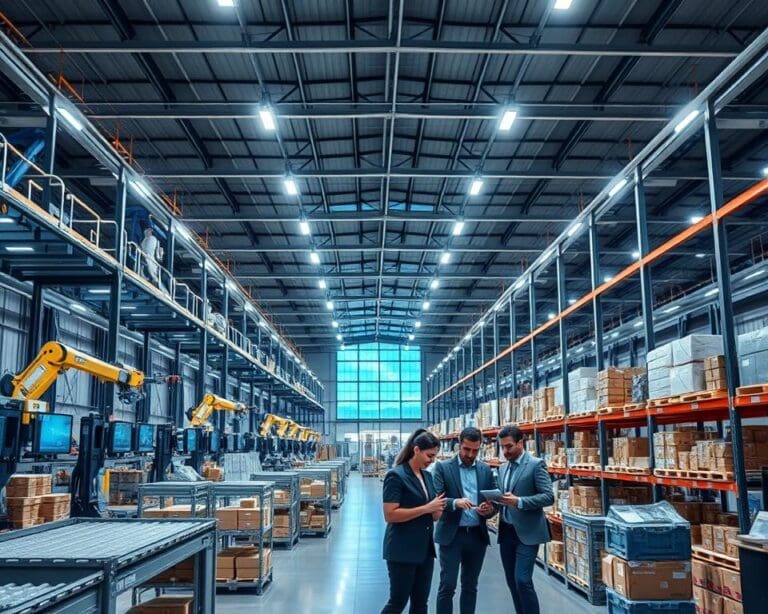
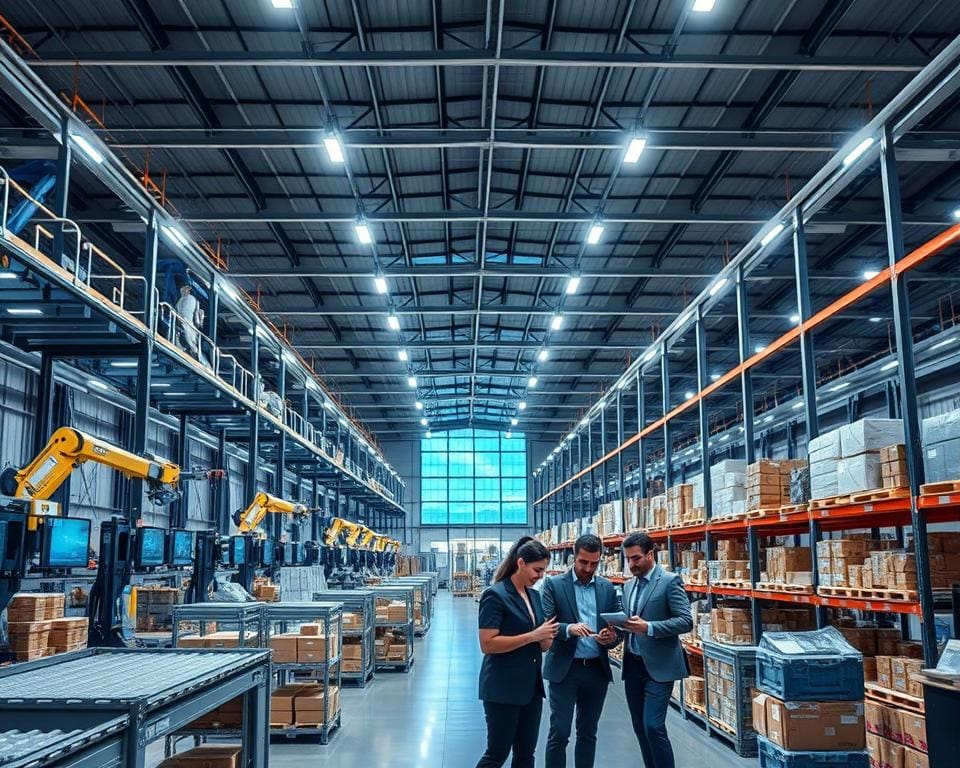
Warehouse technology now links software, automation, robotics, data systems and safety equipment. Together, these tools improve how you receive, store, pick, pack and dispatch goods.
Your warehouse must meet rising customer expectations, shorter delivery windows and wider product ranges. Seasonal demand adds pressure, while operating costs must remain under control. These challenges make warehouse efficiency a key business priority.
The right solution can give you more accurate stock records, better use of storage space and faster goods movement. It can also raise warehouse productivity, reduce picking errors and support safer work. These gains help you deliver orders more reliably.
Technology should support your warehouse strategy, not replace it. Your choice should reflect order volumes, product features, floor space, labour needs, budget, service agreements and plans for future growth. UK warehouse technology must also suit the practical demands of your site.
The strongest results often come from connected systems rather than isolated equipment. A warehouse management system, for example, can link stock data with automated storage, mobile robots, barcode scanners and transport systems. This creates the foundation of a smart warehouse and supports more consistent modern warehouse operations.
This article explains how warehouse automation can improve storage, picking, packing, inventory control, safety and delivery performance. You will see how each technology works, where it adds value and what to consider before implementation.
How warehouse technology improves storage and space utilisation
Modern warehouse technology gives you better control over stock, locations and daily movement. A connected warehouse management system can support warehouse space utilisation by matching storage methods to the way your goods move.
Warehouse management systems for accurate stock visibility
A warehouse management system, or WMS, creates a central record of stock, locations, movements, replenishment tasks and order status. It can connect goods-in, storage, picking, dispatch and returns within one controlled process.
During receiving, your WMS records incoming goods and checks them against purchase orders. It can issue put-away instructions based on product dimensions, turnover rate, weight, handling needs and compatibility with other products.
- Goods-in and receiving
- Put-away and location management
- Stock transfers and replenishment
- Cycle counting and stock checks
- Picking and dispatch control
- Returns processing
Accurate, location-level stock visibility reduces the time your team spends searching for products. It can highlight differences between recorded stock and physical stock, helping you address errors before they affect customer orders.
Real-time or near-real-time updates rely on accurate scanning and disciplined processes. Reliable connectivity and sound integration with handling equipment, finance systems and order platforms are just as important.
Automated storage and retrieval systems for higher capacity
An automated storage and retrieval system uses computer-controlled equipment to place and retrieve goods with limited manual intervention. Known as ASRS, this form of storage automation can make better use of vertical space and create consistent storage patterns.
Common formats include pallet cranes, tote cranes, high-density shuttle systems, vertical lift modules and carousels. Robotic tote-handling systems can bring containers to a workstation for goods-to-person picking.
Vertical ASRS can increase capacity within a smaller footprint. This suits urban fulfilment centres, multistorey sites and warehouses where land is expensive or available space is restricted. AutoStore and SSI Schaefer provide recognised solutions for dense storage, though each system suits different product profiles and site plans.
ASRS can reduce unnecessary travel and support faster retrieval. Your assessment should cover capital expenditure, building height, floor loading, fire protection, maintenance, power requirements, software integration and contingency arrangements.
System design can affect future flexibility. Open interfaces and standard protocols, such as OPC UA or MQTT, make it easier to connect storage equipment with a WMS, warehouse execution software and space-planning tools.
Warehouse robotics for faster movement of goods
Warehouse robotics covers mobile machines and robotic arms that support movement and handling. Mobile robots can transport pallets, totes or shelves between work areas. Robotic arms can support palletising, depalletising and product handling.
Autonomous mobile robots, or AMRs, use sensors, maps and software to navigate changing environments. Automated guided vehicles, known as AGVs, tend to follow predefined routes, markers or guidance systems.
These systems can reduce non-value-adding walking and carrying. Your warehouse colleagues can spend more time on judgement-based work, exception handling, quality checks and customer service.
Robotics works best when you plan routes, storage locations and charging points before installation. Clear pedestrian controls and defined human-machine responsibilities help protect people while supporting efficient movement.
AMR fleets can be expanded as demand changes. When combined with a WMS and suitable warehouse automation technology, they can improve flow without the fixed infrastructure required by some conveyor systems.
Automation technologies that improve picking and packing efficiency
Picking is one of the most labour-intensive warehouse tasks. You must find each product, travel between locations, confirm quantities and prepare every order with care. Warehouse picking automation helps reduce wasted movement while keeping people in control of important decisions.
Automated guided vehicles transport pallets, cages and totes along controlled routes. You can use them for replenishment, goods movement and line-side supply. They can transfer stock between receiving, storage, picking and dispatch areas with less manual handling.
Autonomous mobile robots adapt their routes around people and obstacles. In goods-to-person workflows, they can bring shelves, totes or picked orders to an operator. This cuts walking distances and supports flexible layouts when product demand changes.
These machines are built to support warehouse teams, not replace every role. Trained colleagues still manage exceptions, inspect product condition and handle unusual items. They must supervise safety procedures and respond when a robot or load needs attention. You can read more about technology in logistics jobs to see how these tools fit into wider operations.
Pick-to-light systems use lights and digital displays to guide you to a storage location. The display shows the required quantity, while a button or scanner confirms the task. This method suits high-volume picking with fixed product locations and repetitive orders.
Voice-directed picking uses a headset to provide spoken instructions through each pick sequence. You can keep your hands and eyes free to handle products. Spoken confirmations help check locations and quantities as you work.
Wearable technology includes ring scanners, wrist-mounted computers, smart glasses, headsets and wearable displays. These devices provide task information at the point of work. They can reduce the need to carry a handheld terminal, yet their value depends on noise levels, language needs, accessibility, network quality and staff training.
For packing, automated packing systems can measure an item, choose a suitable carton and dispense packaging materials. The equipment may close the parcel, apply a label, weigh the shipment and record its dimensions. This data can support carrier selection and accurate billing.
Right-sized packaging reduces void fill, material use and parcel volume. Smaller, consistent packages may improve trailer and delivery vehicle use. Scanners, cameras, scales and software can check for missing, incorrect or damaged items before dispatch.
Automated packing can shorten processing times and reduce repetitive manual work. You still need to assess fragile goods, packaging variations, returns and maintenance needs. Manual exception stations give colleagues a safe way to manage items that fall outside standard rules.
Effective order fulfilment automation relies on clean product data and standard work procedures. Clear interfaces help staff follow each task, while strong integration with your warehouse management system and order management platform keeps picking and packing information aligned.
Smart inventory control and real-time warehouse data
Reliable warehouse data gives you a clear view of the stock you hold, its location and its rate of movement. It can show when replenishment is due and help you plan work with fewer delays. This makes smart inventory management a practical tool for better control, not just a digital feature.
Real-time records depend on accurate entries at each stage. Receiving, storage, picking and dispatch must follow clear processes. When staff can trust the data, dashboards and alerts support faster decisions across the warehouse.
Barcode scanning and RFID for accurate stock control
Barcode scanning is an established way to identify products, cartons, pallets and storage locations. Scanning during receiving, put-away, picking and dispatch creates an auditable record of each stock movement. It can reduce manual entry and expose errors before they affect an order.
GS1 standards support consistent identification through product, logistical-unit and location codes. Accurate master data remains vital, whatever scanning equipment you use. Product descriptions, pack sizes and units of measure must match across your warehouse system.
RFID warehouse tracking uses radio signals to read tags fixed to items, cases or pallets. Unlike barcode scanning, RFID does not need a direct line of sight. Suitable readers can identify several tagged objects at once, which may speed up checks at dock doors and storage areas.
RFID needs careful planning. Tag costs, reader placement, metal, liquids, signal interference and read accuracy can affect results. You should assess data volume and decide how much item-level tracking your operation needs before investing.
Internet of Things sensors for live monitoring
An Internet of Things warehouse can use connected devices to monitor conditions and movement. IoT sensors may track temperature, humidity, cold-chain risks, equipment condition, door status, occupancy, location, energy use, shock and vibration.
- Temperature alerts can protect medicines, food and other sensitive goods.
- Door and occupancy data can support security and safer movement.
- Equipment readings can flag wear before a breakdown stops work.
- Shock data can reveal rough handling during internal transfers.
Sensor alerts can help you respond before a deviation causes stock loss, equipment failure or a service problem. You still need clear thresholds, escalation steps and named responsibilities. Monitoring cannot replace human action.
Artificial intelligence and predictive analytics for demand forecasting
Artificial intelligence inventory tools can study historical orders, stock movements, lead times, promotions and seasonal demand. They may draw on external signals to identify changes that are difficult to spot in a spreadsheet.
Predictive analytics can support demand forecasts and replenishment plans. It can guide labour scheduling, product slotting and early checks for slow-moving or excess stock. These insights help you place goods and people where they can have the greatest effect.
Artificial intelligence is only as dependable as the data behind it. Incomplete product records, mixed units of measure and inaccurate stock balances can weaken a forecast. Sudden market changes can affect results too, so your team should review recommendations before acting on them.
Cloud-based platforms for connecting warehouse operations
Cloud warehouse management platforms run through remote infrastructure and use secure internet-connected services. They can connect sites, suppliers and logistics partners through shared operational data. You can view stock, orders and activity across several locations without relying on one local server.
Cloud warehouse management can scale as your operation grows. It may reduce dependence on local hardware, support regular software updates and give authorised users easier access to live information. An overview of cloud-based technology shows how connected systems support modern data work.
Before choosing a platform, assess cybersecurity, access controls, resilience and data protection. Check supplier service levels and recovery plans. You should keep a clear offline procedure for outages, so essential warehouse work can continue when the connection fails.
Real-time data has value when people can act on it. Clear dashboards, useful alerts and trusted forecasts should link to defined tasks. Your warehouse colleagues need to know what action to take, who owns it and how progress will be recorded.
Technologies that make warehouse operations safer and deliveries faster
Warehouse performance dashboards turn daily activity into clear measures. You can track orders received, picked, packed and dispatched, along with picking accuracy, order cycle time, units handled per hour and inventory discrepancies. Dock-to-stock time, on-time dispatch, equipment use, labour needs and available capacity also help you spot pressure points. Use these figures to support timely decisions, not to create unhelpful targets. Each measure needs a clear definition, reliable data and context during promotions, seasonal peaks or unexpected disruption.
Route optimisation software reviews delivery addresses, vehicle capacity, delivery windows, traffic, driver hours and service priorities. It can create more practical routes and support better delivery optimisation. A transport management system can also help you choose carriers, plan shipments, control freight costs, track consignments, manage delivery documents and review carrier performance. When your warehouse management system connects with the TMS, dispatch information moves sooner, load planning improves and customers receive more accurate updates.
Warehouse safety technology can reduce exposure to vehicle traffic, repetitive lifting and hazardous handling. Wearable safety devices may include proximity alerts, lone-worker systems and wearable scanners. Fixed sensors can support pedestrian detection, vehicle warnings, machine guarding, automatic doors, conveyor interlocks and restricted access. Automation still creates risks, such as pinch points, unexpected movement and system failure. Follow UK safety requirements, consult your team, provide training and maintain equipment as the manufacturer and site risk assessment require. The Health and Safety Executive provides guidance on workplace transport, machinery, lifting equipment and risk management.
Effective warehouse systems integration links your WMS with ERP, order management, e-commerce, customer relationship management, carrier and finance platforms. APIs, shared data formats and middleware can reduce manual entry across e-commerce fulfilment technology. Stock levels, prices, customer details, payment status, fulfilment progress and tracking data can then move with less delay. Set clear ownership, protect data, test connections and monitor them over time. The best operation is not always the most automated. Choose technology that solves a defined problem, supports your workforce and can grow with your business.