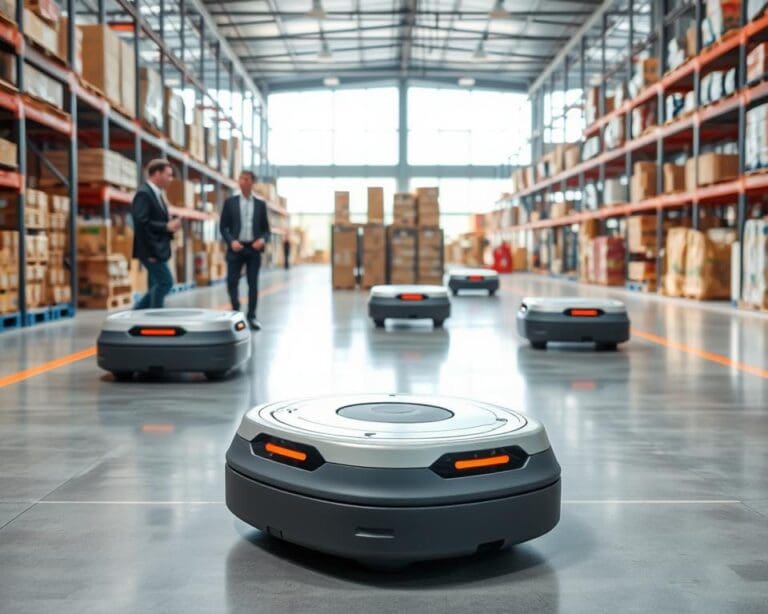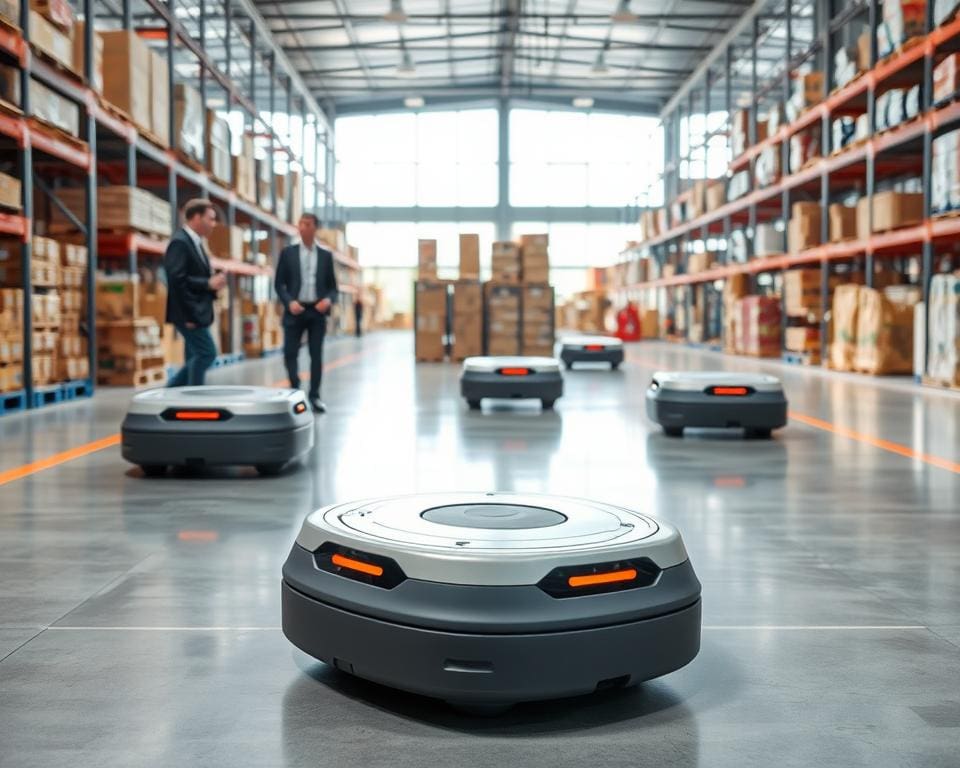
Automated guided vehicles (AGVs) are mobile, programmable systems that transport goods with little direct operator control. You can use them in warehouses, manufacturing sites and distribution facilities to move materials between set locations.
These driverless industrial trucks can carry raw materials, components, pallets, containers and finished goods. They help you manage repetitive transport tasks while reducing congestion and avoidable handling risks.
Unlike conventional forklift trucks, AGVs follow programmed routes or use fixed navigation technology. Autonomous mobile robots usually work differently. They can assess their surroundings and change routes in real time.
Effective internal logistics automation needs more than mobile equipment. You must plan suitable routes, accurate inventory data, clear handover points and strong safety controls. Reliable system integration also supports better data-driven logistics decisions.
When you select the right AGV system, warehouse automation can improve material flow and make daily operations more predictable. This article examines how automated material handling supports logistics efficiency, the main benefits for warehouse operations, system selection and the steps needed for long-term results.
How automated guided vehicles improve internal logistics
Automated guided vehicles (AGVs) give you a controlled way to move goods across your site. They can connect receiving areas, production lines, storage locations, picking stations, packing areas and dispatch points. This creates a clearer internal material flow and supports steady production logistics.
Streamlining material movement across your facility
AGVs follow set routes and complete scheduled missions. This reduces unnecessary travel and repeated forklift journeys. Your team can plan regular deliveries for raw materials, finished goods, totes and cases without relying on constant transport requests.
Common tasks include line-side delivery, raw material replenishment and movement between production cells. Forklift AGVs can carry pallets, while tugger AGVs tow several carts. Unit-load AGVs use integrated platforms to carry containers or cases. This flexibility supports different loads and work areas.
Route design must reflect the way your facility operates. You need to review aisle widths, turning circles, pedestrian crossings, loading points and fire exits. Storage layouts and changes in traffic levels during the working day need careful attention too.
Reducing manual handling and operational delays
Automated warehouse transport removes many routine journeys from manual workloads. Staff spend less time pushing carts, driving forklifts or waiting for a driver to become available. They can focus on picking, quality checks, packing and other tasks that need human judgement.
Before you automate, map your current material flow. This helps you find repetitive journeys, bottlenecks and empty travel. It shows where delays begin and where AGV material movement could provide the greatest benefit.
Traffic-management software can assign missions and set vehicle priorities. It can control intersections and reduce congestion when several AGVs share the same area. Clear loading and unloading points help each vehicle complete its task with fewer interruptions.
Connecting production, storage and dispatch processes
AGVs can link each stage of your operation. A vehicle may collect components from receiving, deliver them to a production line and move completed goods to storage. It can later take those goods to a picking or packing station before dispatch.
This connected approach supports warehouse process automation without forcing every task into one system. Your warehouse management system can create missions based on stock levels, production schedules or dispatch demand. The AGV system can respond with the right vehicle and route.
Good planning keeps the network practical. You should allow space around fire exits, keep crossings visible and review routes near busy workstations. A well-designed system supports automated pallet transport, tote handling and reliable deliveries between storage and production areas.
Key benefits of automated guided vehicles for warehouse operations
Automated guided vehicles (AGVs) can improve the way you move stock, components and finished goods. Their value depends on the layout, vehicle type and quality of the operating plan. The main AGV warehouse benefits include safer movement, faster order flow and more dependable daily performance.
Improving workplace safety and reducing handling risks
AGVs reduce your employees’ exposure to repetitive transport tasks and heavy loads. They can carry goods across long distances, which reduces walking through busy warehouse areas. They can work near vehicle routes when the site uses clear controls and defined crossing points.
Many vehicles include emergency-stop controls, obstacle detection and safety scanners. Audible or visual warnings can alert people near the vehicle. Speed restrictions and controlled stopping zones can help manage movement near doors, crossings, shelving and loading areas.
Good warehouse safety automation starts with a formal risk assessment. You should consider pedestrians, forklift trucks, loading equipment, ramps, maintenance work and abnormal operating conditions. Unstable loads, damaged floors and unauthorised access can still create hazards.
Your organisation should assess its duties under the Health and Safety at Work etc. Act 1974 and the Provision and Use of Work Equipment Regulations 1998 (PUWER). BS EN ISO 3691-4 may apply to driverless industrial trucks, subject to your equipment and operating conditions. Compliance is not automatic when you install an AGV.
- Separate pedestrian walkways from vehicle routes where practical.
- Use physical barriers, clear signs and controlled crossing procedures.
- Set suitable speeds for aisles, corners, ramps and shared areas.
- Restrict access to charging points and maintenance zones.
- Train staff to recognise warnings and respond to stopped vehicles.
Planned inspections and preventative maintenance protect people and equipment. Sensors, batteries, wheels, forks, brakes, charging equipment and control systems must remain in suitable working condition. Your inspection records should identify faults before they affect safe operation.
Increasing efficiency, productivity and throughput
AGVs follow set routes and repeat transport tasks with steady timing. This can reduce waiting between picking, production, storage and dispatch. Staff can spend less time on routine movement and more time on exceptions, quality checks and value-added work.
Targeted automation upgrades, including AGV and AMR projects, can raise output by two to five times at some sites. The result depends on route design, order volume, storage rules and system integration. Careful planning supports logistics productivity without creating bottlenecks at packing stations or goods-in areas.
Goods-to-person systems, vision-guided robots and barcode or RFID checks can improve picking accuracy. Fewer errors may reduce returns, customer complaints and rework. Better stock control can raise warehouse throughput while protecting service quality.
Energy-efficient motors and smarter AMR routing can lower energy use per pick. Real-time data from connected equipment can support route optimisation, predictive maintenance and KPI dashboards. You can use these insights to make faster decisions about labour, stock and vehicle capacity.
Software integration plays a key role in these gains. A warehouse management system (WMS), warehouse control system (WCS) or orchestration platform can reserve locations, trigger replenishment and show inventory status. Open interfaces and standards such as OPC UA and MQTT can support real-time control. Warehouse automation applications can include these connected functions.
Supporting reliable and consistent warehouse operations
AGVs provide reliable material handling when routes, loads and handover points are clearly defined. They can move goods at planned intervals, which makes production supply and dispatch scheduling easier. Your team gains a clearer view of work in progress and transport demand.
AGVs can support automated warehouse operations across multiple shifts. Their performance does not depend on staff availability for every repetitive journey. Supervisors can focus on exceptions, blocked routes, damaged stock and changing customer demand.
Real-time alerts help your team respond to low batteries, route obstructions and equipment faults. Preventative maintenance can limit unplanned downtime. A phased rollout can help you test traffic rules, charging plans and load stability before wider use.
Payback often falls between two and five years, depending on scale and application. Your assessment should include labour savings, accuracy gains, energy use, maintenance and the effect on service levels. A clear baseline helps you measure productivity and operating consistency after deployment.
Choosing the right automated guided vehicle system
Good AGV selection starts with your daily material flows, not a vehicle brochure. Review the loads, routes, floor conditions, traffic levels and storage tasks across your site. This approach helps you match vehicle design and control software to real operating needs.
Comparing guided vehicle types and navigation technologies
A forklift AGV can collect, move and place pallets at floor level or in elevated storage positions. It suits warehouses that need automated pallet handling across receiving, storage and production areas. A tugger AGV can tow several trailers or carts, making it useful for regular milk-run routes between production and storage.
Unit-load AGVs carry pallets, totes, bins or containers on platforms, rollers or other load equipment. Special-purpose AGVs can handle unusual loads, controlled processes or demanding manufacturing conditions. Each type supports a different task, so you should compare the vehicle with your material flow.
AGV navigation systems may use magnetic guidepaths, physical rails, magnetic tape, laser guidance or reflector-based navigation. QR and barcode markers can support clear route points. Natural-feature navigation and vision-based systems can adapt to changing layouts, yet they need reliable maps, sensors and software.
Fixed guidepaths offer predictable travel and simple route control. They may need physical changes when your layout moves. Flexible systems can make route changes easier, though they demand careful mapping, sensor management and software support. Vehicle guidance directs one machine along its route. Fleet-management software controls missions, priorities, traffic and charging across the fleet.
Assessing payloads, routes and warehouse requirements
Assess AGV payload capacity with the full load in mind. Include pallets, containers, packaging and any uneven weight distribution. Do not choose a vehicle based only on its stated payload or travel speed. Check how it performs on ramps, uneven floors, tight turns and long routes.
Reflective surfaces, poor lighting, dust and temperature changes can affect sensor performance. Narrow aisles and mixed pedestrian traffic need careful testing. Your review should cover stopping distances, crossing points, safety scanners, doors, lifts and charging areas.
- Measure aisle widths, turning spaces and floor quality.
- Test routes during busy and quiet operating periods.
- Check battery technology, charging time and shift coverage.
- Compare safety architecture, cybersecurity and upgrade options.
- Review service support and spare-parts availability.
Ask suppliers to demonstrate the system in conditions that reflect your warehouse. Check system openness, fault reporting and future expansion. A practical trial can reveal issues that a specification sheet may hide.
Planning integration with warehouse management systems
Warehouse management system integration should connect vehicle missions with stock records, order priorities and storage locations. The link must pass clear data between your warehouse management system, fleet manager and vehicle controls. This helps prevent duplicate tasks and improves visibility across each movement.
Define how the system will manage exceptions, blocked routes, low batteries and failed scans. Agree access rights, data security and response times before installation. Strong integration lets your team track work, adjust priorities and support safe operations as demand changes.
Implementing automated guided vehicles for long-term results
Successful AGV implementation starts with a clear view of your current operation. Review transport routes, mission volumes, manual handling, safety risks and peak demand. This warehouse automation planning helps you find bottlenecks and select processes where automation can deliver measurable value.
Set objectives before you choose equipment. You may want to reduce forklift traffic, improve delivery times, increase throughput or support labour-intensive shifts. Your business case should include vehicles, software, site preparation, charging equipment, training, integration, support and future expansion. This gives you a realistic view of automation return on investment.
Involve warehouse, production, maintenance, safety and IT teams from the start. A phased plan should cover route marking, layout changes, data preparation, testing and AGV commissioning. A small pilot can help you refine vehicle numbers, charging schedules and operating procedures before wider deployment.
Prepare users for safe daily operation, fault reporting, emergency stops and manual recovery. Arrange AGV maintenance, spare parts and technical support before launch, then track missions, stoppages, utilisation, delivery accuracy and near misses. Regular reviews keep your warehouse digital transformation aligned with changing stock, routes and capacity needs.