Bathroom design trends for 2024–2026 reflect a clear shift towards spaces that feel calm, practical and future-proof. Contemporary bathroom design now blends natural materials, smart technology and considered colour choices to create rooms that work harder for everyday life and add value at resale.
This article looks at the principal themes shaping modern bathrooms: natural materials and organic textures, smart bathroom technology, and colour palettes that range from bold statements to timeless neutrals. It also covers how to balance trend-led touches with longevity and sensible bathroom renovation ideas for homes of all sizes.
UK context matters. Many British homes face space constraints and the popularity of period properties means fittings must often respect historic character. At the same time, homeowners increasingly demand sustainable, low‑maintenance surfaces and systems compatible with UK plumbing and building regulations.
For inspiration and reliable products, turn to respected sources such as Grand Designs and Ideal Home, and to manufacturers like Victoria + Albert, Crosswater, VitrA and Neptune. Guidance from bodies such as the Chartered Institute of Plumbing and Heating Engineering helps ensure smart upgrades meet safety and performance standards.
Expect practical takeaways for small updates and full refurbishments, with bathroom renovation ideas that focus on materials, finishes, technology and colour schemes to keep your space current while remaining broadly appealing.
bathroom design trends: overview of what’s shaping modern bathrooms
Contemporary tastes and technical advances are reshaping how we plan bathrooms. Those shifts influence product choices, resale value and everyday comfort. You will see changes in fixtures, finishes and layouts that reflect wider concerns such as sustainability, wellness and smart living.
Why trends matter for your bathroom renovation
Trends affect what is stocked by makers and what buyers expect when a property goes on the market. Choosing water-saving taps from Hansgrohe or Grohe and dual-flush WC systems can boost a bathroom’s appeal and meet UK water-efficiency expectations.
Contemporary bathroom renovation trends bring practical gains, such as underfloor heating and integrated lighting, which improve comfort. Regulatory drivers such as Part G and Part L of the Building Regulations push installers and manufacturers toward energy- and water-efficient products.
How to balance longevity and current style
Start with a neutral foundation: simple tile layouts, classic sanitaryware shapes and durable brassware finishes in brushed nickel or chrome last longer. Invest in reliable sanitaryware from makers like Villeroy & Boch or Roca for core items that withstand trends.
Introduce trend-led touches that are easy to change: tap handles, wallpaper, vanity fronts and accessories. A feature wall or matte-black fittings add personality without committing the whole room, helping create long-lasting bathroom design that stays current.
Budgeting for trend-led upgrades
Costs differ widely across the UK. Small updates such as new paint, taps and lighting can cost a few hundred to a few thousand pounds. Mid-range refits with a new suite and tiling typically fall between £4,000–£10,000. High-end redesigns or large en-suites can exceed £15,000–£25,000 depending on choices.
Prioritise waterproofing, ventilation and solid plumbing before spending on visible finishes. Seek multiple quotes from accredited installers registered with bodies like the Federation of Master Builders or TrustMark to ensure compliance and quality.
- Keep the existing layout to save on moving waste and plumbing stacks.
- Choose engineered timber or porcelain tile lookalikes instead of costly natural stone.
- Use off-the-shelf vanity units rather than bespoke cabinetry to cut costs.
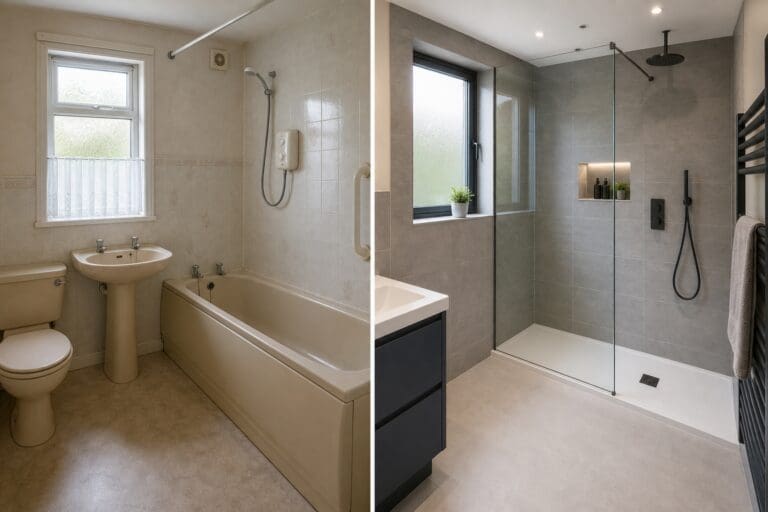
For those working to a tight plan, consider budget bathroom upgrade ideas that refresh appearance without heavy structural work. Thoughtful choices let you follow bathroom renovation trends while protecting value and avoiding frequent reworks.
Natural materials and organic textures for a calming sanctuary
Natural bathroom materials are shaping contemporary washrooms with a focus on tactile comfort and calm. Choosing the right surfaces creates a spa-like feel while remaining practical for family life and resale value.
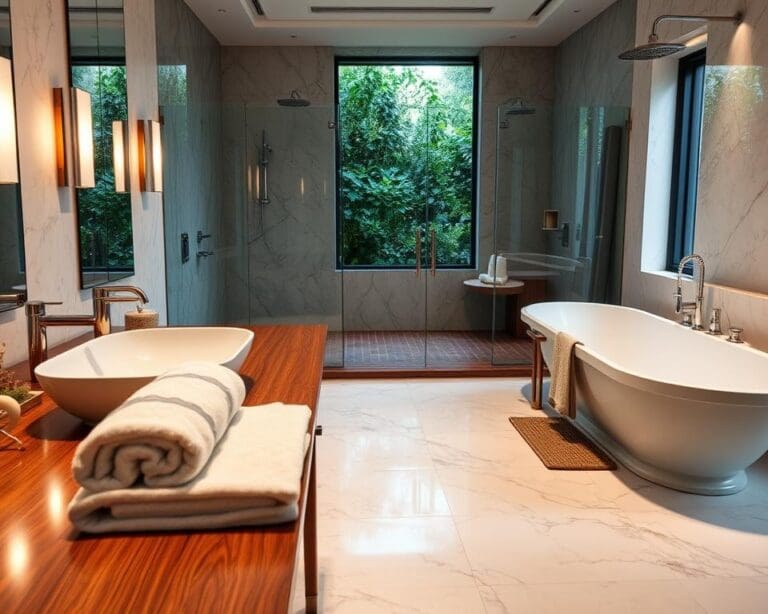
Stone, timber and sustainable surface choices deliver warmth and longevity. Marble-effect porcelain and honed or bookmatched stone give that luxe look without the upkeep of solid marble. Brands such as Porcelanosa and Neptune offer porcelain that mimics natural veining while resisting stains and scratches.
Engineered oak and teak bring design depth in timber bathroom ideas. Engineered boards perform well when humidity is controlled and need durable sealing. Solid teak is an excellent choice for wet zones beside baths and showers because of its natural water resistance.
Look for certified sustainable options. FSC-certified timber, recycled-content tiles and low-VOC paints reduce environmental impact. Companies including Roca and VitrA have introduced more eco-conscious product lines and water-saving fittings to support greener renovations.
Maintenance matters for long-term beauty. Regular sealing of natural stone, correct grout selection and quality silicone in wet areas prolong life. Choosing finishes that tolerate humidity makes upkeep easier and keeps surfaces feeling fresh.
Textured tiles and matt finishes add subtle drama through touch rather than shine. Textured tiles create a three-dimensional surface that reads as calm and contemporary. Matt ceramic and porcelain finishes hide water marks better than high gloss, making them practical for daily use.
Common applications include textured splashbacks, basket-weave mosaics and fluted tile patterns. Large-format matt tiles form an understated backdrop while smaller mosaics provide focal interest and tactile contrast.
For floors select tiles with suitable anti-slip ratings. Use the R- or P-scale where applicable to meet UK safety expectations. Many matt and textured ceramics work well with underfloor heating for comfort and safety.
Biophilic bathroom design brings plants, light and natural forms into bathing spaces. This approach reduces stress and enhances wellbeing by reconnecting users with nature within an urban home.
Practical steps include maximising daylight with larger windows where possible, installing rooflights or obscured-glass glazing and using moisture-tolerant plants such as Sansevieria, Boston fern and Pilea. Recessed planters, timber shelving and pebble shower floors help tie the scheme together.
Consider lighting that mimics daylight. Adjustable colour-temperature LED fittings support circadian rhythms and strengthen the calming sanctuary effect. Combining plant life with stone basins and timber shelving makes a cohesive, restorative room.
Smart bathrooms and technology-led conveniences
Smart bathroom trends are reshaping how we think about comfort, efficiency and luxury in UK homes. A focus on water- and energy-saving features appeals to tech-savvy homeowners who want personalised comfort without excess waste.
Popular integrations include digital shower systems from well-known manufacturers such as Aqualisa and Mira. These systems give precise temperature control, preset profiles and remote operation via apps or touch panels.
Bathroom tech goes beyond showers. Sensor-activated taps from Grohe or Delta cut water waste and improve hygiene. Underfloor heating with zoned thermostats provides scheduled warmth and remote control for better energy use.
Smart heated towel rails now offer programmable timers or compatibility with Hive and Nest thermostats. These fittings reduce running costs while ensuring towels are warm when needed.
Integrated lighting with tunable white LEDs helps you switch from bright grooming light to a warmer, relaxing tone. Smart mirrors add anti-fog, Bluetooth and display features for weather or news at a glance.
- Choose reputable brands that issue regular firmware updates.
- Secure your Wi-Fi and review data policies for connected devices.
- Use qualified electricians and plumbers and check IP ratings for wet zones.
Installation must respect Part P and Building Regulations in the UK. IP44 or higher is typically required for electrical fittings near water. Qualified trades will help avoid costly mistakes and keep warranties valid.
Cost-benefit trade-offs are clear. Smart systems often cost more up front but can save water and energy over time, boost daily comfort and add appeal to a resale. Many features, such as walk-in showers with digital controls and voice activation, also improve accessibility for ageing-in-place needs.
When planning a tech-led bathroom, balance convenience with security and longevity. Thoughtful choices in digital shower systems and smart heated towel rails will create a bathroom that feels modern, efficient and welcoming.
Colour palettes, bold statements and timeless neutrals
Current bathroom colour trends favour a balanced approach: enduring neutrals provide a calm base while splashes of bold colour deliver personality. Warm neutrals such as stone grey, taupe, off-white and warm beige remain popular in neutral bathroom design. These tones form a versatile canvas that pairs naturally with stone and timber, letting you update accessories and fittings without a full refit.
For long-lasting paint choices, use moisture‑resistant matt or satin eggshell emulsions with anti‑mould additives. Farrow & Ball is trusted for premium tones and depth, while Dulux offers widely available, budget‑friendly options. Test sample pots on different walls and view them at morning and evening light to ensure the finish reads as you expect in situ.
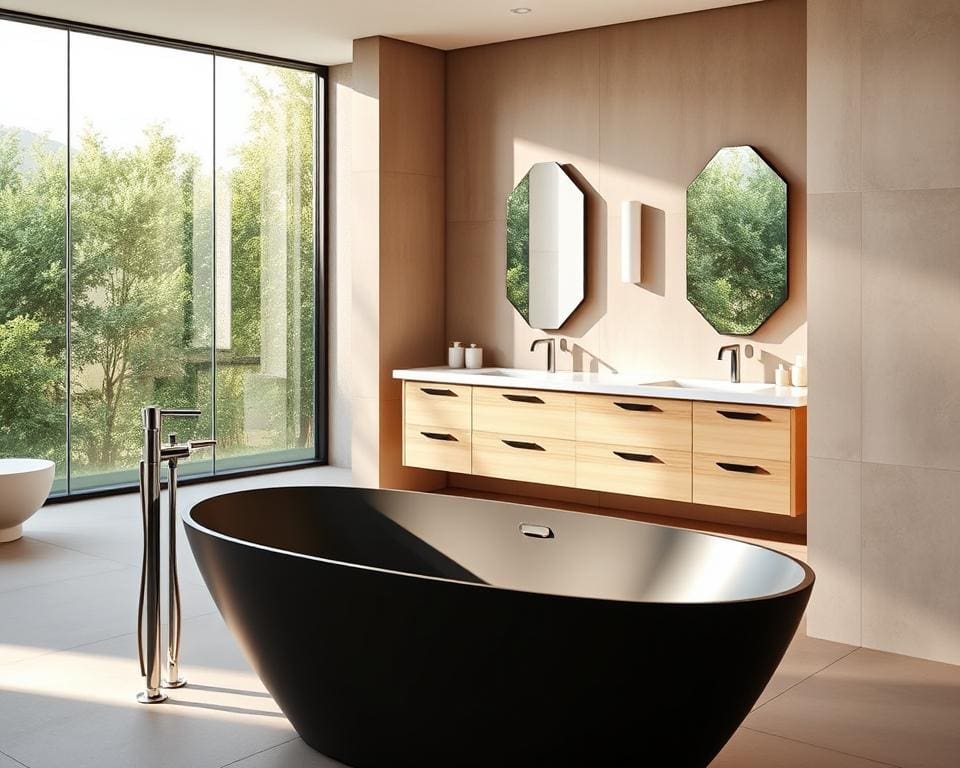
Bold bathroom ideas now include saturated jewel tones—forest and emerald greens, inky blues—and moody charcoal blacks used as feature walls, statement tiles or coloured sanitaryware where available. Apply these hues sparingly to avoid overwhelming smaller rooms: target a vanity wall, recessed shelving or a shower recess for maximum impact. Specialist retailers increasingly offer coloured basins and freestanding baths in distinctive finishes to create a focal point.
Combine palettes and finishes with simple rules: pair a neutral base with a single bold accent, or set rich tiles against matt black or brass fittings for contrast. Aged brass warms a scheme, while matte black keeps a contemporary edge. Remember that lighting alters perception—warmer bulbs enhance cosy tones, whereas daylight‑balanced LEDs keep colours true for grooming. Test tiles and fittings together, consider room scale, and aim for a sanctuary that blends natural materials, thoughtful technology and a well‑chosen palette to reflect personal style and retain market appeal across the UK.