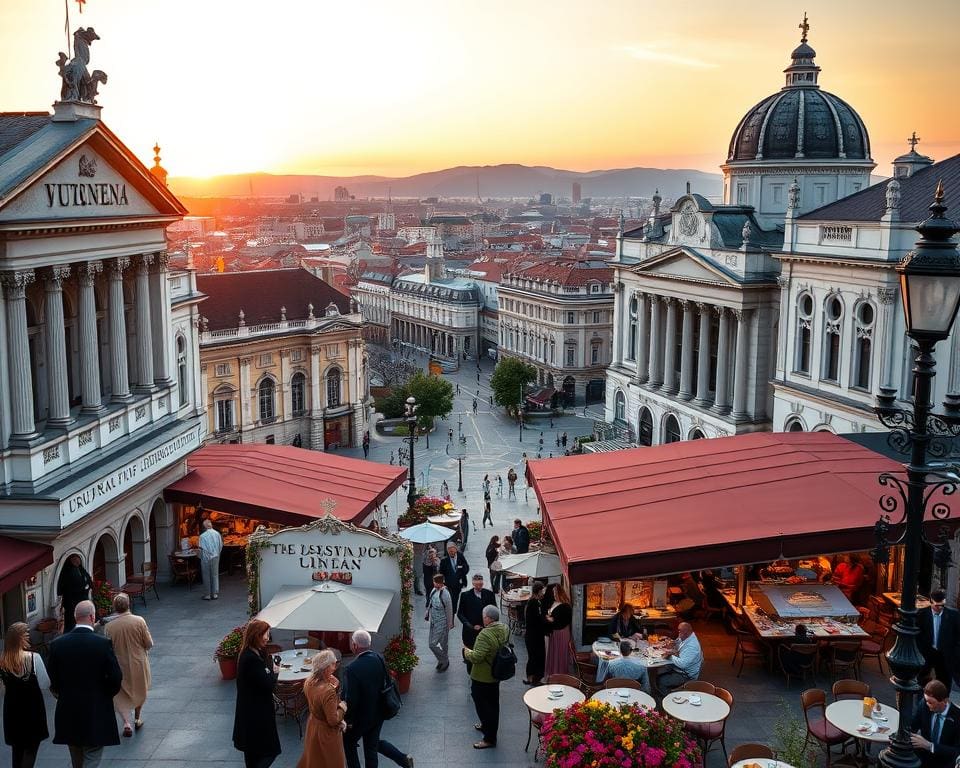
For UK travellers weighing cultural choices, Vienna reads like a curated collection of the arts. This Vienna culture review begins by framing the city as a cultural product: it promises classical music from venues such as the Vienna State Opera, imperial architecture at Schönbrunn and the Hofburg, and museum treasures at the Kunsthistorisches and Belvedere.
Think of this as a practical Vienna travel guide that tests value, accessibility and the quality of experience. Expect historic cafés serving Sachertorte and Wiener Schnitzel, strollable neighbourhoods like the Innere Stadt and Spittelberg, and a thriving contemporary arts scene that balances tradition with fresh voices.
The aim is to help you decide whether cultural travel Vienna matches your priorities. We will assess ticketing, tours, accommodation and how well the city delivers on its cultural promise, drawing on official tourism resources, concert-house schedules and respected travel journalism.
Read on for an inspirational yet practical appraisal that lets you judge: why is Vienna ideal for cultural travel, and how to make the most of your visit.
Why is Vienna ideal for cultural travel?
Vienna invites visitors with a layered cultural life that rewards slow exploration. This brief overview sets the scene for what makes the city so compelling for travellers who want depth, not just snapshots. Expect a city where imperial memory and bold contemporary practice sit side by side, shaping a richly textured cultural experience in Vienna.
Overview of Vienna’s cultural significance
Vienna has long been a European centre of music, art and ideas. The city served as the administrative and artistic heart of the Habsburg Empire and nurtured composers such as Mozart, Beethoven and Schubert. Today it hosts conservatories like the Universität für Musik und darstellende Kunst Wien and dozens of museums that give visitors a true Vienna culture overview.
Visitors will find a high density of UNESCO-listed sites and an extraordinary number of museums per capita. Live music fills churches, concert halls and cafés. This concentration of heritage and activity makes for an exceptional cultural experience in Vienna.
How Vienna balances history and contemporary culture
Historic palaces and grand Ringstrasse boulevards have been carefully restored. At the same time, MuseumsQuartier and mumok champion experimental galleries and new media. This balance gives a clear sense of Vienna history and contemporary culture in a single neighbourhood.
City policy supports festivals, independent venues and creative quarters such as Spittelberg. Opera houses programme canonical repertoire alongside premieres. The result is a dynamic cultural scene where preservation meets invention.
What cultural travellers can expect from a visit
- High-quality, well curated museum displays and guided tours that deepen understanding.
- Professional concert and opera productions at venues such as the Vienna State Opera and Musikverein, with advanced booking advised.
- Reliable public transport, clear signage and common English-language services in visitor areas.
Plan for a paced itinerary that blends daytime sightseeing with evening performances and long café conversations. That approach captures what to expect Vienna offers: an immersive stay tailored to curiosity and reflection rather than hurried ticking of landmarks.
Historic landmarks and imperial heritage
Vienna’s centre holds a living tapestry of imperial life and bold design. Wander from grand palace courtyards to intimate museum rooms and feel the weight of Habsburg heritage alongside the city’s evolving artistic voice.
Schönbrunn Palace and the Habsburg legacy
Schönbrunn Palace served as the summer home of the Habsburgs and stands as a UNESCO World Heritage site. Visitors can join guided palace tours such as the Imperial Tour or Grand Tour to learn about Maria Theresa, Franz Joseph and Empress Elisabeth.
Gardens around Schönbrunn Palace offer free access in many areas. Special attractions like the Gloriette, the Maze and Orangery concerts may require separate tickets. Tiergarten Schönbrunn, the oldest continuously operating zoo, sits within the grounds and adds another layer to the site’s appeal.
Hofburg Palace and state museums
At the heart of the city, Hofburg Palace combines living institutions with museum displays. The Imperial Apartments, the Sisi Museum and the Silver Collection reveal court life and administration across centuries.
The complex houses the Austrian National Library and provides access to the Spanish Riding School, where Lipizzaner horses perform. Combination tickets cover several Hofburg attractions, while public workouts and performances at the Riding School need separate booking.
Architectural styles from Baroque to Art Nouveau
Vienna architecture Baroque Art Nouveau presents a clear narrative of changing tastes. Baroque churches such as Karlskirche and formal palace façades reflect 17th‑ and 18th‑century grandeur.
The Ringstrasse era brought historicism with neo‑Renaissance, neo‑Gothic and eclectic civic monuments. Examples include the Austrian Parliament and the Vienna State Opera, which show 19th‑century civic pride.
Turn‑of‑the‑century Jugendstil reshaped the cityscape through figures like Otto Wagner and Josef Hoffmann. Secession Building details and Stadtbahn pavilions highlight geometric ornamentation and the boldness of Art Nouveau.
- Take a walking route that compares periods on foot.
- Visit MAK for applied arts and design context.
- Join an architectural tour to deepen understanding.
World-class museums and galleries
Vienna’s museums form a compact constellation of art, history and innovation that rewards both first-time visitors and repeat explorers. A single day can reveal imperial treasures, national narratives and bold contemporary work, all within walkable districts that invite lingering and discovery.
Kunsthistorisches Museum houses one of Europe’s richest Old Masters collections. Expect masterpieces by Pieter Bruegel, Titian and Peter Paul Rubens alongside Egyptian and Near Eastern antiquities. Timed tickets are advisable on busy days. Guided tours and family programmes help bring the imperial collections to life for varied audiences.
The museum provides conservation displays, a scholarly atmosphere and a welcoming café for a relaxing pause. Top works, such as Bruegel’s “The Tower of Babel”, reward careful viewing and a moment to reflect on the Habsburg legacy embedded in the galleries.
The Belvedere pair of palaces presents Austrian art across centuries and explains key moments in Viennese modernism. Viewing Belvedere Klimt is central to many visits because Gustav Klimt’s “The Kiss” and related works chart the visual shift that shaped early twentieth-century Vienna.
Combine visits to the Upper and Lower Belvedere for context. Temporary exhibitions often connect Klimt with Egon Schiele and the Secession movement, clarifying how national identity and modern aesthetics intersect in these collections.
MuseumsQuartier acts as a creative hub where modern and contemporary voices meet established museums. mumok and the Leopold Museum sit alongside performance spaces, cafés and studios, forming one of the world’s largest cultural districts.
The city’s gallery scene stretches into Mariahilf and Neubau with independent spaces, artist-run projects and pop-up shows. Checking rotating exhibition calendars ahead of travel helps plan time effectively. For those focused on contemporary art Vienna has a lively, evolving programme across institutions and small venues.
For budget-conscious travellers, consider passes that match your itinerary. A little pre-planning makes it easy to move between historic galleries and cutting-edge exhibitions without losing the sense of discovery that defines Vienna museums.
Viennese music and opera traditions
Vienna’s musical life feels like a living museum and a vibrant stage at once. The city offers an easy way for visitors to hear Mozart, Strauss and contemporary composers in historic settings and modern venues. Planning ahead helps you make the most of every performance.
The Vienna State Opera sits at the heart of the Ringstrasse, with a packed season of operas and ballets. For sought-after productions it is wise to book Vienna State Opera tickets well in advance. If your dates are flexible, standing tickets at the box office can offer last-minute access at lower cost. Guided backstage tours add depth by revealing the building’s history and stagecraft.
The Vienna experience beyond the opera house
The city hosts world-class concert halls beyond the main opera. The Musikverein is famed for its Golden Hall and is home to the Vienna Philharmonic. The Wiener Konzerthaus stages a broad range of repertoire from large symphonies to chamber recitals. Smaller venues and churches, such as Palais Auersperg and parish chapels, present intimate programmes suited to short visits.
Seasonal highlights and how to plan
Vienna festivals bring extra sparkle to the cultural calendar. Events like the Vienna Festival and Vienna Jazz Festival transform streets and concert halls with special programmes. Consult the concert calendar Vienna and book accommodation early during peak festival weeks. Aligning travel with Vienna festivals gives you access to flagship concerts and unique city-wide events.
Practical tips for concert-goers
- Check the concert calendar Vienna for updated schedules and box office openings.
- Reserve Vienna State Opera tickets for popular titles; try standing room for bargains.
- Dress smartly for evening performances; surtitles and English programme notes are often available.
- Mix visits to the Musikverein with smaller church recitals to sample a range of classical music Vienna.
Cafés, culinary culture and social history
Vienna’s café scene reads like a social history of the city. Long tables, marble tops and period chandeliers shelter conversations that shaped literature, music and politics. Visitors find that a single day can trace coffeehouse culture Vienna from a morning paper to a late‑night chat.
Historic Viennese cafés
Café Central, Café Sacher, Café Demel and Café Sperl remain living museums. Each house keeps period décor and menus that welcome long stays. These venues were once meeting places for writers, composers and thinkers. Staff expect guests to linger; reservations help at peak times.
Traditional dishes and where to try them
Classic plates define Vienna’s table. Try Wiener Schnitzel at a traditional restaurant in the Innere Stadt. Taste the original Sachertorte at Hotel Sacher or a delicate Apfelstrudel at Demel. For regional wine and rustic food, head to heuriger taverns in Grinzing or Nussdorf.
Café etiquette and recommended itineraries
- Order at the table in historic houses; counter service is common in modern cafés.
- Morning: start with coffee and a pastry at a landmark café.
- Midday: choose a museum lunch and sample Tafelspitz or local sausages.
- Afternoon: return to a coffeehouse for reading and reflection.
- Evening: dine at a heuriger for a relaxed finish to the day.
Vegetarian and international options are widely available. Ask staff for allergen information if needed. Use this plan to discover where to eat Vienna while savouring the city’s quiet rituals and rich flavours.
Walkable neighbourhoods and cultural itineraries
Vienna rewards slow travel. Its compact streets invite exploration on foot, making walkable Vienna a delight for anyone who loves art, architecture and cafés. A well-planned stroll reveals layers of history beside lively contemporary scenes.
Inner City gems to plan for
The Innere Stadt highlights sit close together, which helps with museum-hopping and unhurried discovery. Start at St. Stephen’s Cathedral, then drift along the Graben and Kärntner Strasse shopping boulevards for a sense of city life.
Nearby lie the Hofburg complex and the Albertina, while historic cafés offer restful stops. Allow half a day to a full day to take in this compact centre, depending on how many museums you wish to visit.
Bohemian pockets and creative quarters
Spittelberg Vienna charms with narrow streets, Biedermeier houses and craft shops. It feels intimate and artisanal, a perfect contrast to grand imperial sites.
The Mariahilf cultural quarter and neighbouring Neubau host independent boutiques, galleries and lively markets. These districts show how contemporary local life meets design and nightlife.
Sample half-day and full-day walking routes
- Half-day: Stephansdom → Graben → Hofburg (Imperial Apartments) → Albertina → Kaffeehaus pause → Staatsoper exterior → highlights along the Ringstrasse.
- Full-day: Morning at Schönbrunn palace and gardens, travel to MuseumsQuartier for the Leopold Museum and mumok, then afternoon in Spittelberg Vienna with dinner at a local bistro or heuriger.
Practical tips make these walking itineraries Vienna easier to enjoy. Wear comfortable shoes and dress in layers for changeable weather. Use a tram or the U-Bahn for longer hops and book timed entries for popular museums or concerts to keep your day relaxed.
Practical travel tips for cultural visitors
Plan so you savour Vienna’s culture without the rush. A little foresight turns museum queues into calm mornings and last‑minute ticket scrambles into relaxed evenings. Keep your itinerary flexible and prioritise the performances and exhibitions that matter most to you.
Best time to visit Vienna tends to be the shoulder seasons. Late spring (April–May) and early autumn (September–October) bring mild weather, fewer crowds and lively cultural calendars. Festive weeks around Christmas and New Year deliver magical markets and special concerts, yet demand and prices rise. Summer months host open‑air festivals with big crowds, while winter offers rich programming for those prepared for cold days.
Best times to visit for fewer crowds and events
Choose shoulder months to balance nice weather and manageable visitor numbers. Book seasonal concert tickets early if you plan a winter or summer visit, when demand spikes.
Transport, city passes and museum reservations
Vienna’s public network is efficient and simple to use. Single tickets, day passes and weekly options suit short or longer stays. Evaluate a Vienna transport pass against your plans; a pass can cut costs if you move around a lot and visit many sites.
Many museums now require timed tickets. Secure museum reservations Vienna ahead for major exhibitions to guarantee entry and avoid queues. Buy transport tickets from machines, Tabak Trafik or official apps for convenience.
- Compare the Vienna Pass and Wien‑Karte for cover on attractions and travel.
- Use regional rail for day trips to the Wachau or Bratislava when time allows.
Accessibility, accommodation choices and budgets
Accessibility Vienna is strong at major museums and stations. Check venue websites for step‑free access, lifts and services for visitors with sensory needs. Many sites offer assistance on request.
Accommodation spans grand hotels on the Ringstrasse to boutique options in Neubau and budget hostels. Staying central reduces transit time and suits walking between sites.
Set a clear Vienna travel budget. Include museum fees, concert tickets, café meals and local transport. Reserve high‑demand performances early to avoid premium late prices and to keep spending predictable.
Why Vienna offers an enriching cultural travel experience
Vienna delivers a clear cultural promise: layered history, sustained artistic excellence and a lively contemporary scene. This Vienna cultural review finds that landmarks like Schönbrunn and the Belvedere sit alongside active galleries and concert halls, so visitors encounter both heritage and fresh creativity in one short stay.
For travellers from the United Kingdom, Vienna is easy to reach from major airports and offers English-friendly services. Public transport is efficient and central hotels help maximise walkability, which makes planning simple for those asking is Vienna good for cultural travellers. Choices range from affordable café visits to headline performances at the Vienna State Opera.
Think of cultural return on investment: a single opera evening, a Klimt gallery visit and relaxed hours in a traditional café yield lasting memories. This cultural travel review Vienna emphasises that pre-booking concerts and museum slots, and balancing big institutions with neighbourhood discovery, makes each pound and hour feel well spent.
Ultimately, why Vienna offers enriching cultural travel is clear — refinement, accessibility and continuous cultural life combine to make the city more than a destination to see. It is a place to experience deeply, ideal for visitors seeking meaningful engagement with music, art and social tradition.