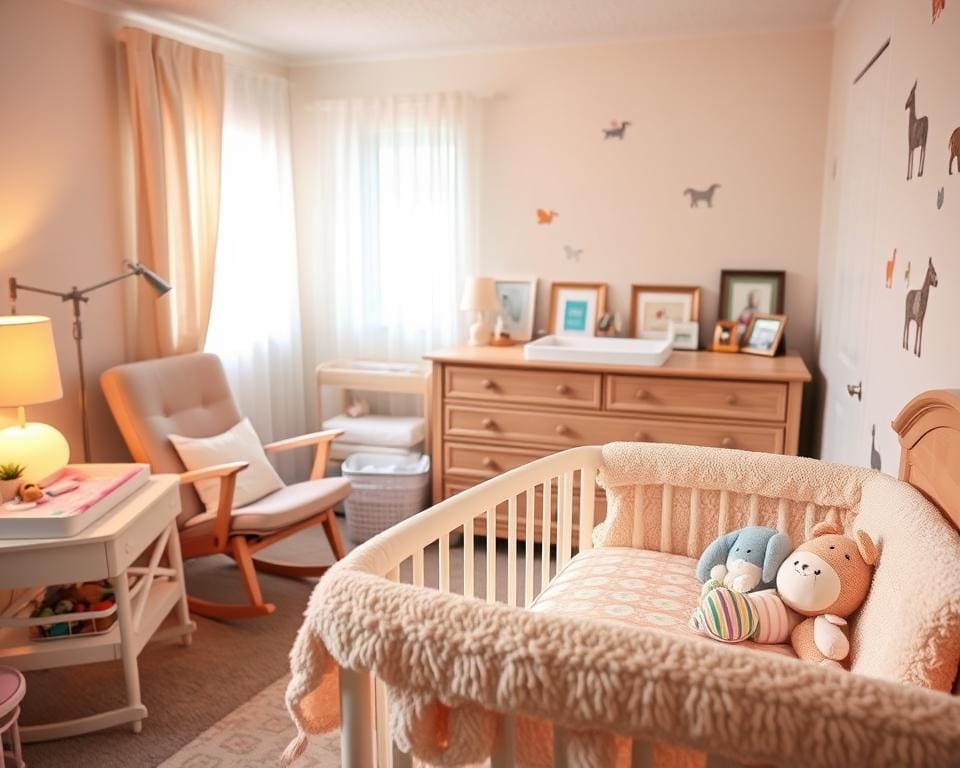
This short guide gives you a clear nursery checklist so you can set up a safe, comfortable space for your newborn. You will find baby nursery essentials, newborn nursery items and baby room essentials UK advice that focuses on safety, practicality and everyday use.
The article covers four main categories: safety and sleep, feeding and changing, furniture and organisation, and comfort, play and health. These categories build on one another — safe sleep first, then practical feeding and changing arrangements, followed by furniture and long‑term organisation and development items. Together they form the core nursery must-haves.
Prioritising essentials reduces stress in the early weeks and supports safer sleep, in line with NHS and Lullaby Trust guidance. Choosing the right items can help you establish routines quickly and follow British Standards Institution (BSI) guidance and Trading Standards advice when you shop.
If you are an expectant parent, a guardian setting up a room, or a relative buying a practical present, this checklist is tailored to the UK context. It takes into account smaller living spaces common in British homes and suggests well-known retailers and brands such as Mamas & Papas, John Lewis, Mothercare ranges and Sainsbury’s Tu for basics.
Expect practical recommendations for cots and mattresses, monitors, changing units and feeding equipment, all referenced to reputable sources like NHS safer sleep advice. The focus is on essentials rather than every gadget, so items are chosen for safety, longevity and routine usefulness.
You can adapt the nursery checklist for breastfeeding or bottle feeding, shared sleeping arrangements, or very small rooms. The goal is a compact list of nursery must-haves that helps you set up with confidence.
baby nursery essentials for safety and sleep
Start by making the cot the centrepiece of your nursery. A safe cot that meets recognised safe cot standards UK gives you confidence every night. Look for cots that comply with BS EN 716 and carry the BSI Kitemark where possible. Avoid second‑hand cots that are damaged, missing labels or more than ten years old.
Safe cot and mattress selection
Choose a firm, flat mattress that fits the cot with minimal gap. Cot mattress firmness matters for safer sleep advice from the Lullaby Trust and NHS. Aim for no more than two fingers between mattress and cot sides to prevent entrapment.
Use only fitted sheets for baby and nothing loose under the baby. Duvets, pillows and cot bumpers are not safe for under‑12‑month olds. Consider a correctly sized sleeping bag such as those from Gro Company to keep your baby warm without loose bedding.
Check product labels for fire safety details and BS EN compliance. Retailers such as John Lewis, Mamas & Papas and Mothercare sell BSI‑marked cots and specialist mattresses from brands like Silentnight Baby and Newton. Follow mattress care instructions, rotate if advised and replace any mattress that shows sagging or stains.
Room layout and sleep environment
Plan your nursery layout UK to keep the cot away from windows, radiators and blind cords. Cot placement safety reduces the risk of draughts, overheating and strangulation. Keep at least 60 cm between the cot and heating sources and avoid locating the cot under shelving.
Maintain a nursery thermostat range of 16–20°C to lower overheating risk. Use a reliable room thermometer and set your central heating or electric thermostat accordingly. Avoid overdressing and heavy bedding when the room is at an appropriate temperature.
Blackout blinds for nursery help with daytime naps and stable routines. Choose cordless options or secure cords with cleats well out of reach. Fit window restrictors on upper floors to prevent falls. Reduce night noise and bright lights; use soft, dimmable lighting for feeds and nappy changes to keep baby calm.
Monitor and babyproofing essentials
Decide between audio, video and Wi‑Fi monitors. Audio monitors are simple and reliable. Video monitors add visual reassurance but consider video monitor privacy when using Wi‑Fi models. Secure devices with strong passwords, two‑factor authentication and up‑to‑date firmware.
Look for monitors with night‑vision, stable range and the option for mains operation. Popular baby monitors UK brands include Motorola, Philips Avent and VTech. Position the monitor within range of mains sockets but well out of the baby’s reach to avoid trailing wires.
Babyproof sockets and sharp edges with socket covers and corner guards. Anchor tall furniture with approved anchor kits to prevent tip‑overs. Keep small objects out of reach and follow manufacturers’ instructions for all safety products.
Fit working smoke alarms on every floor and a carbon monoxide alarm if you have a fuel‑burning appliance. Follow smoke alarm recommendations and look for alarms that meet British Standard BS EN 14604. Test alarms weekly and replace batteries as advised.
Feeding and changing baby nursery essentials
Deciding what to have close at hand makes feeds and nappy changes simpler. Think about where you’ll spend most time with your baby and create zones for changing and feeding that cut movement and fuss. A small night‑time basket reduces disturbed sleep and keeps baby feeding supplies within reach.
Changing station and storage
When you choose between a changing unit vs mat, weigh space against convenience. A changing unit with raised sides and built‑in drawers gives organised nappy storage and a stable surface. A portable changing mat saves space, is cheaper and is excellent for small homes or travel.
Never leave your baby unattended on an elevated surface. Before you lift the baby, place essential changing supplies within arm’s reach so you can keep one hand on your child at all times.
Stock your station with nappies and wipes, nappy cream, nappy sacks and washable cloths. For bin options, consider a Tommee Tippee Sangenic or a simple pedal bin with a tight lid for hygienic disposal.
- UK nappies and wipes: Pampers, Huggies, Boots own brand, eco options like Bambino Mio
- Nappy storage: open shelving or baskets for fast access
- Labelled drawers and wall‑mounted organisers for small rooms
Keep a small caddy for moving a changing set around the house. Wash cloth items frequently, following manufacturer guidance and using 60°C for soiled cloths when safe to do so. Dispose of used disposable nappies per local waste rules.
Feeding equipment for breast and bottle feeding
For breastfeeding, pick a comfortable nursing chair with good back support and armrests and use a nursing pillow to position baby safely. Breastfeeding essentials include storage bottles or bags and a cooler or insulated bag for expressed milk when you are out.
If you express, a breast pump UK parents trust can be invaluable. Look at Medela, Philips Avent or Lansinoh for personal or hospital‑grade options.
For bottle feeding, choose bottles with suitable teats and a slow flow for newborns. A bottle steriliser cuts cleaning time. A bottle brush and a safe kettle or sterilising jug help when you prepare formula.
- Follow NHS guidance for powdered formula: use freshly boiled water cooled to at least 70°C when mixing.
- Sterilise bottles and teats for the first year or as the manufacturer recommends; alternatives include boiled water or cold‑water sterilising solutions.
- Keep feeding accessories such as burping cloths, bibs and a small side table or caddy for items during feeds.
Plan a night‑feeding setup with a dimmable lamp, water and nappies to make late feeds calmer. Choosing the right combination of equipment helps you focus on bonding and care rather than searching for supplies.
Nursery furniture and organisation for functionality
Choose furniture that works as your baby grows and keeps the nursery calm and practical. Think about cot size, storage, seating and lighting together so each item helps daily routines. Measure your room to match cot dimensions UK and plan for circulation space near the changing area and wardrobe.
Essential furniture pieces
Start with a cot that meets current safety standards and offers longevity. A convertible cot that changes into a toddler bed or day bed can save money long term. Look at Stokke Sleepi for a compact, long‑life option, Sniglar from IKEA if you need a budget pick and Mamas & Papas for mid‑range choices.
Check conversion kits carefully and follow manufacturer guidance for mattress heights as your child grows. Add a small nursery wardrobe or a rail for hanging clothes and a chest of drawers for folded items. Anchor tall furniture to the wall to prevent tipping and choose breathable mattress protectors with OEKO‑TEX or similar certification.
Organisational accessories
Use drawer dividers baby clothes to separate vests, sleepsuits and outfits. Breathable fabric dividers work well for small drawers and keep dressing quick at night. Ikea Skubb organisers and John Lewis storage ranges offer practical, washable options to consider.
Label baskets for nappies, spare bedding and seasonal clothing so you find what you need fast. Simple rotation by size cuts late‑night searching. Hanging organisers UK and over‑door racks save floor space in compact rooms. Use under‑cot drawers or a cot with integrated storage to make the most of small UK homes.
Keep important papers and mementos in a small labelled box and keep a digital backup of records and photos for extra security.
Decor and lighting choices that aid routine
Select calming nursery colours like soft blues, greens or neutral tones to support sleep. Use removable wall decals or washable paint so you can update the scheme without disruption. Keep bold, high‑contrast patterns limited to toys and near‑cot visual aids for early development.
Plan nursery lighting ideas around low glare and easy control. Fit dimmable LEDs with warm colour temperatures and a switchable night light for baby to guide feeds and nappy changes. Place pull‑cords and switches out of reach and use night light for baby with timers to signal day and night routines.
Choose a comfortable nursery rocker UK or a chair with washable covers for feeding and soothing. Low‑pile rugs and machine‑washable curtains boost hygiene and reduce allergens. Aim for minimal clutter around the cot and use nursery storage ideas that keep essentials within reach while preserving a calm sleep area.
Comfort, play and health items to support development
Set up the nursery to help sleep, play and safety. Choose swaddles and sleeping bags with clear TOG ratings so you match bedding to room temperature; TOG ranges run from about 0.2 for hot rooms to 2.5 for cool nights. Trusted options include Grobag and Aden + Anais, and muslin cloths from Aden + Anais or Next Baby make gentle layers for comfort and mopping up spills.
Limit soft toys in the cot for infants under 12 months but keep tactile items for supervised play. Pick baby development toys that carry a CE mark and have no loose parts; Jellycat offers very tactile plush toys and Sophie la Girafe is a classic teether. For routine, use soothers that follow orthodontic guidance, clean them often, and consider a white noise machine with a timer and volume limit. Brands such as Tommee Tippee and Gro‑Clock are useful for sleep cues and masking household noise.
Encourage development with a small playmat for daily tummy time, high‑contrast cards, soft rattles and sturdy board books. Short, simple activities—five minutes of tummy time, a brief read, or guided reach for a rattle—help motor skills and bonding. Store toys in low baskets and labelled containers that are stable and, where needed, anchored to prevent tipping.
Include a stocked baby first aid kit in the nursery with a digital thermometer (Braun ThermoScan or Kinsa), plasters, sterile gauze, saline nasal drops and basic antiseptic wipes. Consider a baby first aid course from St John Ambulance or the British Red Cross. For bathing, choose a fit‑in‑sink bath or a small baby bath, gentle fragrance‑free wash and shampoo from Cetaphil Baby, Aveeno Baby or Johnson’s Baby Sensitive, hooded towels and a non‑slip mat. Keep the red book handy, follow NHS vaccination and health‑visitor schedules, and store emergency numbers and your GP contact where you can find them quickly.