This short residential lighting guide explains the purpose and scope of the article. You will learn how to choose lighting for each room in a typical UK home, balancing ambience, function and safety across terraces, semi‑detached houses and flats.
The focus is practical: home lighting ideas that improve mood and task performance, from cooking and reading to working from home. You will find advice on the best lighting for rooms, the benefits of LED and smart controls, and how to save energy while creating attractive interiors.
Read this room-by-room lighting overview first, then follow sections on lighting basics, room-specific ideas and buying and installation tips. Before you begin, photograph your rooms and note existing fixtures, switch types and wiring access to make decisions easier and safer.
By the end you will have clear steps to enhance ambience, boost safety on stairs and in bathrooms, and choose fittings with the right lumen output, CRI and IP rating for each space.
Understanding lighting basics for every room
Good lighting begins with clear definitions. You need three core lighting types explained so you can plan each space. Ambient lighting gives overall illumination for safe movement. Task lighting focuses on activities like reading or cooking. Accent lighting adds drama by highlighting art or architectural features.
Types of light and their uses
Ambient lighting covers the whole room. Choose ceiling pendants, chandeliers or recessed downlights to match ceiling height and room shape. Task lighting should be brighter locally to reduce eye strain; use desk lamps, under-cabinet strips and bedside readers. Accent lighting creates contrast with spotlights, picture lights or LED strips to draw the eye to focal points.
Match lumen output to purpose. Ambient supplies broad lumen coverage sized to the room. Task lighting needs higher lumens at work surfaces. Accent lighting uses lower lumens but strong contrast to add depth. Put these layers on separate switches or circuits for flexibility.
Colour temperature and mood
Colour temperature guides atmosphere and function. Use warm light around 2700K–3000K for cosy living and dining areas. Neutral light in the 3000K–4000K band suits kitchens, bathrooms and multipurpose zones. Cool light above 4000K sharpens detail for home offices and utility rooms.
Check the Kelvin scale on packaging before you buy. Cooler, blue-rich light boosts alertness during the day. Warmer tones in the evening support melatonin and better sleep hygiene. Keep a consistent colour temperature within a room to avoid visual discomfort, while allowing variation between zones where needed.
Layering light for functionality and style
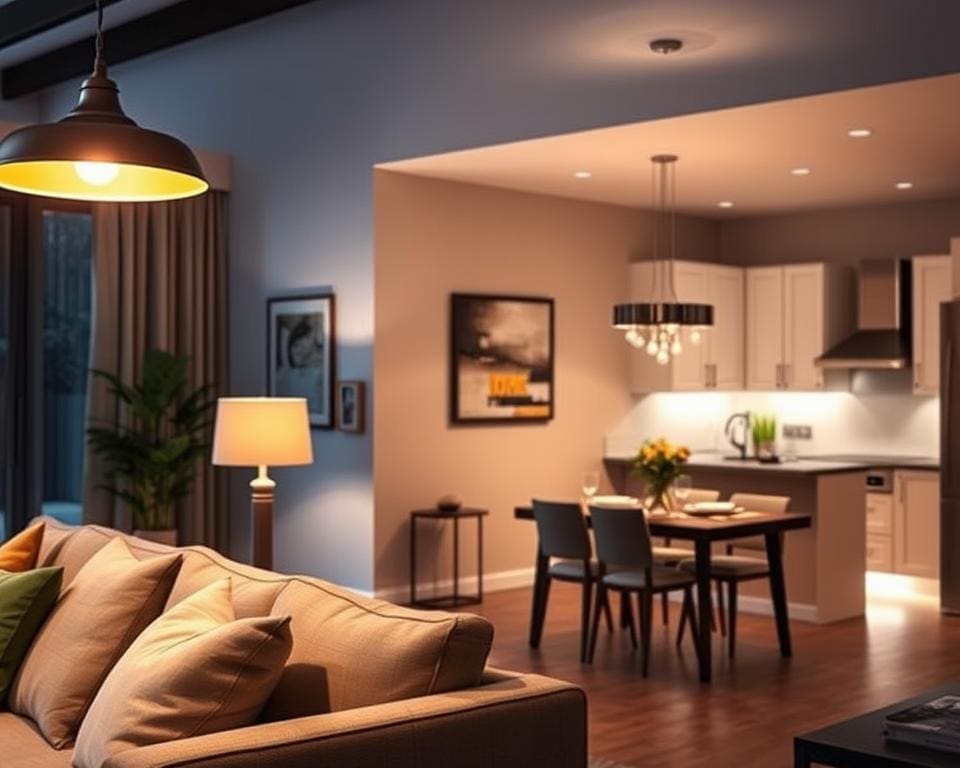
Layering light combines ambient, task and accent pieces so your rooms become flexible and inviting. Start with an ambient base sized by lumens, add task lights at activity points, then finish with accent fixtures to emphasise texture and art.
Use separate switching or zoning for each of the lighting layers, and fit dimmers to ambient circuits to set mood. Consider smart lighting solutions from Philips Hue or LIFX or compatible Zigbee/Z-Wave systems to create scenes and schedules that match daily rhythms.
Place task lights to avoid glare and harsh shadows; under-cabinet fittings should be recessed or shielded to prevent direct view of LEDs. Invest first in quality LEDs and controls, then choose decorative fittings. That way you build a practical ambient task accent combination that performs well and looks good.
Home lighting ideas for each room in your house
Good lighting turns a house into a comfortable home. Use a mix of ambient, task and accent fittings to match function and mood in every room. Choose dimmers, separate switches and smart controls so you can change scenes for cooking, relaxing or working with ease.
Living room
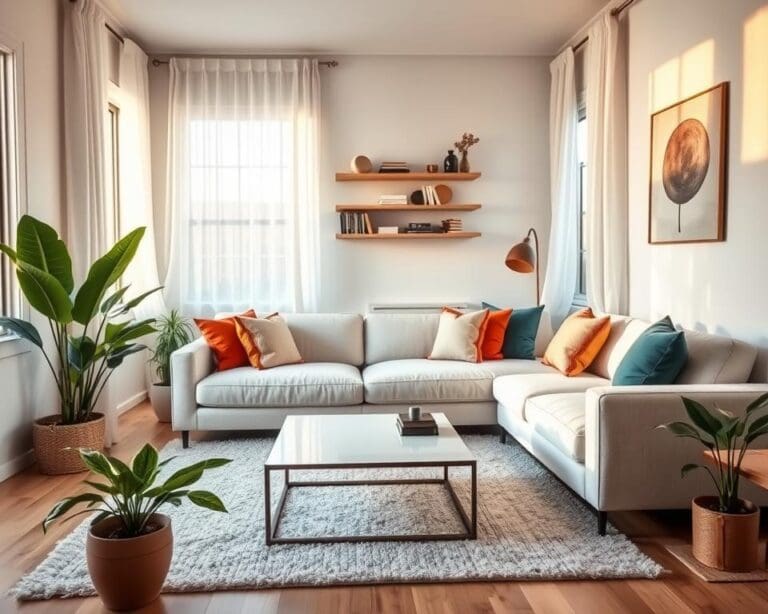
For lounge lighting, start with an even ambient living room light from recessed downlights or a central pendant sized to the space. Add floor lamps and bedside-style table lamps near seating for reading and hobbies.
Use living room accent lighting such as picture lights or directional spotlights to highlight artwork and shelving. Keep warm 2700K–3000K tones for seating areas and fit dimmers for movie nights.
Kitchen
Kitchen lighting ideas should separate ambient from task. Fit recessed ceiling lights for overall coverage and choose neutral to cool 3000K–4000K lamps for accurate colour rendition.
Install under-cabinet lighting and LED strips for kitchen task lighting on worktops. Above islands, use pendant lights for island to combine task light with design.
Dining room
Dining room lighting ideas centre on a focal fixture. Hang a chandelier over table or a cluster of pendants 60–75 cm above the surface for the best proportion in standard rooms.
Support the main fitting with wall lights or dimmable ceilings to shape the dining ambience. For long tables, consider multiple pendants rather than one oversized shade.
Bedroom
Bedroom lighting ideas should favour comfort and circadian-friendly control. Use soft bedroom ambient lighting from recessed fittings or a low-glare central pendant.
Provide bedside reading lights or adjustable wall lights for each side of the bed. Choose warm, dimmable bulbs and set schedules to reduce blue light before sleep.
Bathroom
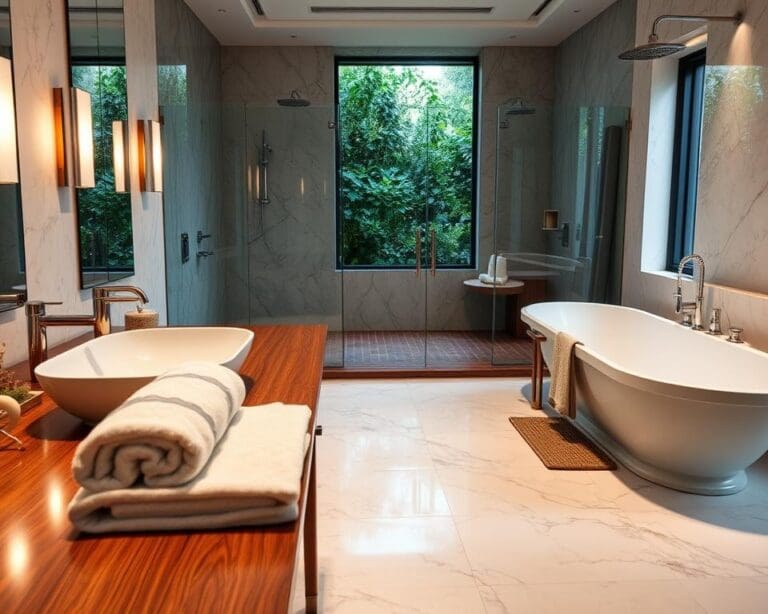
Bathroom lighting ideas must balance safety with clarity. Fit moisture-rated ceiling lights and check IP rated lighting for zones near water.
Use bathroom mirror lighting or vertical vanity lighting to reduce shadows. Concealed LED strips can add subtle ambience where appropriate and safe.
Home office
Home office lighting ideas focus on concentration. Provide balanced ambient light and task lighting for study or desk work.
Choose ergonomic lighting and desk lamp recommendations that offer adjustable intensity and neutral-cool colour around 4000K. Anglepoise-style or LED task lamps reduce glare and support long hours.
Hallways and staircases
Hallway lighting ideas should aid wayfinding and safety lighting. Use linear or recessed fittings for even coverage in corridors and landings.
Install staircase lighting, recessed step lights or wall lights for corridors to illuminate treads and guide movement. Consider PIR sensors to save energy in seldom-used areas.
Practical buying and installation tips to perfect your lighting
Use a clear lighting buying guide before you start. Measure room dimensions and ceiling heights, then set lumen targets for each space; for example, aim for 100–300 lux in living rooms and 300–500 lux at kitchen worktops. Tools such as lumen calculators help you match lumens to room size so you buy the right output. Record existing wiring and switch locations to avoid surprises during installation.
Prefer LED bulbs UK for energy efficiency and long life, checking lumen equivalents when replacing incandescent lamps. Look at CRI lighting values: choose CRI 90+ for kitchens and bathrooms where colour accuracy matters. Pick a consistent colour temperature across connected spaces to avoid jarring shifts in light tone.
Plan controls and smart options to add flexibility. Fit LED-compatible dimmers to prevent flicker and use timers, smart bulbs or a hub for lighting scenes. Consider PIR sensors in hallways and motion sensors in utility rooms, but be aware of standby consumption from smart hubs and weigh that against energy savings. Check product details for IP ratings when choosing fittings for bathrooms and outdoors.
Follow safe installation practices and get electrician advice UK when work goes beyond swapping fittings. Hire a NICEIC-registered or National Inspection Council for Electrical Installation Contracting accredited electrician for new circuits, bathroom zone work or high ceilings. Buy from reputable UK retailers like John Lewis & Partners, B&Q, Wickes or Screwfix, and choose trusted brands such as Philips, Osram/LEDVANCE or Thorn for warranties and support. Clean fixtures regularly, check seals on external lights, and keep replacement LEDs matched for colour temperature to maintain a consistent finish.