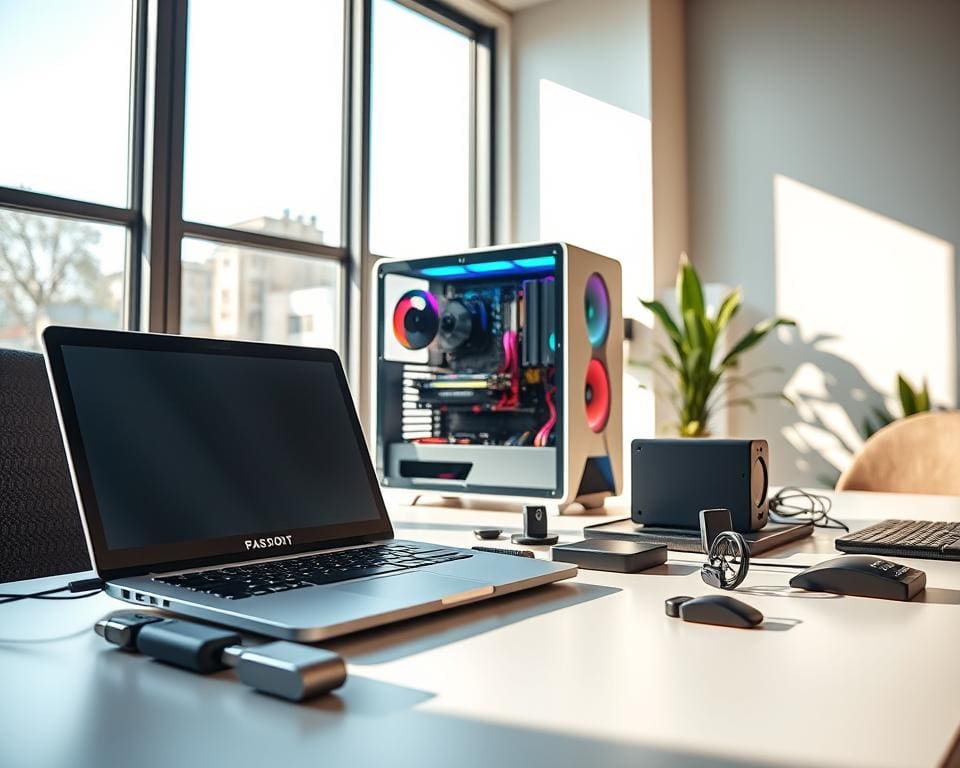
Modular hardware describes devices built from interchangeable, standardised parts. Leading manufacturers such as Framework, iFixit and Lenovo publish product literature that treats screens, keyboards, batteries and ports as replaceable modules. This approach contrasts with monolithic designs and makes configurable hardware a practical choice for modern users.
Industry and academic studies show clear modular design benefits. Research in Design Studies and the Journal of Cleaner Production finds that modular components speed innovation, shorten time-to-market and simplify manufacturing. Organisations can prototype faster and manage product variants with less effort.
Ergonomic modular systems help people work better. Guidance from the Health and Safety Executive and the Chartered Institute of Ergonomics & Human Factors explains how adjustable monitor arms, modular desks and configurable input devices let users match equipment to their bodies. That alignment supports posture and long-term wellbeing.
In short, modular hardware advantages include greater customisability, longer lifespans through repair and upgrade, reduced electronic waste and simplified maintenance. Framing configurable hardware as both a technological and sustainable hardware design choice links performance with healthier posture and more productive workplaces.
Why is posture important for long-term health?
Good posture shapes how the body moves, breathes and heals over years. Evidence from the NHS and the Chartered Society of Physiotherapy shows that maintaining the spine’s natural curves lowers joint wear, preserves mobility and reduces the risk of degenerative change. Small daily habits add up, so asking why is posture important for long-term health? is the first step to lasting benefits.
The link between posture and physical function is clear. Proper alignment optimises muscle activation, balance and fine motor control. When the spine and hips share load evenly, movement feels easier and fatigue drops. Research published in journals such as Spine ties sustained forward head posture and thoracic kyphosis to reduced range of motion and greater risk of disc problems.
Posture’s impact on chronic pain and well‑being reaches beyond the joints. Poor positioning over months or years can lead to persistent neck and back pain, tension headaches and poorer sleep. Chronic pain affects mood and work performance. Public health guidance from the HSE and the World Health Organization recommends ergonomics, exercise and education to lower the burden of musculoskeletal disorders and improve quality of life.
How ergonomic modular hardware supports healthy posture becomes vital in modern workplaces. Height-adjustable desks, modular monitor arms and adjustable keyboard trays let users create neutral spine positions. Brands such as Humanscale, Ergotron, Varidesk, Herman Miller and IKEA runner desks supply modular options that permit personal setups and gradual upgrades.
Modular solutions encourage movement and reduce sustained strain. Employers in the UK who adopt adjustable workstations UK see reduced sick leave and better staff wellbeing. Combining equipment with posture education and micro-breaks offers a practical, evidence-based route to protect long-term musculoskeletal health.
Design and practical benefits of modular hardware
Modular hardware puts control in the hands of the user. Thoughtful design and practical features translate into everyday advantages for workers, students and organisations across the UK.
Customisability and adaptability
Customisable hardware lets people build setups that match their bodies and tasks. Interchangeable monitor arms, adjustable keyboard modules and modular seating components support personalised posture solutions and reduce one-size-fits-all compromises.
Brands such as Framework and Herman Miller show how flexible modules make it simple to change a workstation as needs evolve. The result is ergonomic consistency and fewer barriers to correct posture.
Cost-effectiveness and reduced waste
Cost-effective modular systems can lower total ownership costs. Upgrading a single component is cheaper than replacing an entire unit, which cuts procurement spend over time.
Case studies from repair-focused makers and sustainability reports show measurable falls in e-waste when repairable modules are adopted. Organisations save on disposal fees while meeting environmental targets.
Ease of repair and maintenance
Modular repairability speeds up fixes and keeps equipment in use longer. Standard fasteners and swappable parts let in-house teams or local technicians replace modules quickly, reducing downtime for staff.
Reports from iFixit and UK repair campaigns highlight benefits for maintenance budgets and service life. Easier repairs mean ergonomic gear stays functional, which supports long-term posture and comfort.
Scalability for home and office environments
Scalable workstations adapt from single-user home offices to large corporate estates. Organisations can standardise core elements while offering variant modules for specific roles, such as design benches or hot‑desking bays.
Suppliers of modular furniture UK ranges often ensure compliance with British Standards, which simplifies rollouts and helps facilities teams plan with confidence.
For exhibition and event settings, modular flooring and raised systems offer extra flexibility. See a practical example of durable, reusable flooring that speeds reconfiguration and reduces waste at modular exhibition flooring.
- Improved ergonomics through tailored setups
- Lower lifecycle costs with replaceable parts
- Faster reconfiguration and reduced labour
- Better sustainability and less landfill
These features show how modular design benefits both individuals and institutions. By making equipment adaptable, repairable and scalable, organisations can support health, save money and reduce environmental impact.
Sustainability, performance and user experience advantages
Modular hardware aligns closely with modular sustainability goals in the UK by cutting resource use and e‑waste. Lifecycle assessments and WRAP guidance show that replacing parts rather than whole units lowers embodied carbon. Choosing repairable electronics UK suppliers with accessible spare parts and clear repair scores extends product lives and supports circular economy strategies promoted across public procurement.
Performance gains come from performance modular components that let teams tailor workstations to tasks. Ergonomics research finds adjustable modules reduce error rates and physical strain, and improve user satisfaction. User experience modular hardware emphasises comfort and intuitive controls, so employees stay focused and energetic through the working day.
Organisations also see practical benefits in cost and compliance. Corporate sustainability reports and public sector procurement guidelines note lower maintenance spend and stronger environmental metrics when modular approaches are adopted. When paired with BS EN ISO 9241‑aligned fittings and supplier training, modular systems help meet net‑zero targets while supporting staff wellbeing.
To maximise value, check repairability scores such as iFixit, warranty terms, spare‑part availability and ergonomic compliance before purchase. Measure users, offer adjustable modules, schedule simple maintenance and combine hardware with posture education and movement policies. Choosing modular solutions is an investment in people and planet that delivers sustainable office design, long‑term health and adaptable workplaces.