Replacing an ageing boiler is one of the most significant upgrades a homeowner in the United Kingdom can make. A thoughtful approach to new boiler installation UK affects comfort, safety and long‑term running costs, and it can boost a property’s market value.
Current UK priorities make efficiency a central concern. Cutting energy bills and meeting low‑carbon heating goals mean choosing a high‑efficiency condensing model from trusted manufacturers such as Worcester Bosch, Vaillant or Ideal often delivers seasonal efficiencies above 90% compared with older units.
Homeowners typically ask the same practical questions: how to size the unit, whether a combi, system or conventional boiler best suits the house, what a realistic budget looks like, and how to find a Gas Safe engineer for compliant installation. This boiler replacement guide will answer those points and offer boiler buying advice you can act on.
Get the basics right and the benefits are clear: lower fuel bills, fewer breakdowns, stronger warranties, possible eligibility for grants or finance, and safer operation with reduced carbon monoxide risk. Treating new boiler installation as an investment rather than a one‑off cost pays dividends over time.
This article follows a simple roadmap. First, we cover what to know about choosing the right boiler and costs. Next, we explore practical preparation and paperwork. Finally, we explain maintenance steps to keep performance high. For broader home checks that matter during any system upgrade, see this useful home‑buying checklist from TopVivo for related concerns like water damage and ventilation: what to check when buying a.
What should you know about installing a new boiler?
Choosing the right boiler means balancing household demand, budget and future-proofing. Start by thinking about the number of radiators, bathrooms and your insulation. That gives a clearer picture of the output you need and avoids oversizing or undersizing the appliance.
Assessing your home’s heating needs
Boiler output in kilowatts (kW) must match your property’s demand. Small flats typically need around 24–30 kW for a combi. A three- or four‑bedroom house often requires 28–35 kW depending on hot‑water habits and radiator count.
For system or conventional boilers you must consider central‑heating load and the hot‑water cylinder size. Multiple bathrooms and simultaneous showers push you towards a system or conventional layout rather than a combi.
Use an installer’s heat‑loss survey rather than relying on DIY estimates. That survey will calculate radiator heat demand by room size and fabric losses. Oversizing causes short cycling and lower efficiency. Undersizing leads to weak hot water and cold rooms.
Budgeting and long‑term running costs
Compare upfront purchase and installation costs with lifetime savings. A new gas combi including installation can range roughly from £1,800 to £4,000. System and conventional installs may cost more because of cylinders and extra pipework.
Higher initial spend on an efficient, modulating condensing boiler usually lowers boiler running costs over the years. Look for strong ErP or A‑rated models from Worcester Bosch, Vaillant or Ideal for better seasonal efficiency.
Factor in ancillary costs such as flue relocation, smart controls, radiator changes, powerflushing and magnetic filters. Check available help from schemes and energy‑company offers and look into boiler grants UK and low‑interest finance to ease the upfront burden.
Choosing a reputable installer
Gas work must be carried out by a Gas Safe registered engineer. Verify the registration number and ask to see ID. Seek installers who are Worcester Bosch Accredited or Vaillant Advance where possible for manufacturer backing.
Read independent reviews on Trustpilot and Which? and ask for references from recent similar installs. Make sure you get a written labour guarantee and clarity on manufacturer warranty terms, which often vary from two to ten years and may require annual servicing.
Use a boiler quotes checklist when you request estimates. Ask for the recommended boiler type and kW rating, reasons for that choice, a full itemised quote, timescale, required permits, suggested system cleaning, warranty details and emergency response times.
- Compare at least three quotes to ensure apples‑to‑apples pricing.
- Confirm whether the installer recommends combi vs system vs conventional and why.
- Check if the quote includes measures to limit future boiler running costs.
Preparation and practical considerations for installation
A smooth boiler installation begins with clear planning and a careful site visit. The following notes explain what installers will check, what paperwork you should have ready and how to reduce disruption during work. Keep records safe; you will need them for warranties and future sales.
Pre-installation survey and paperwork
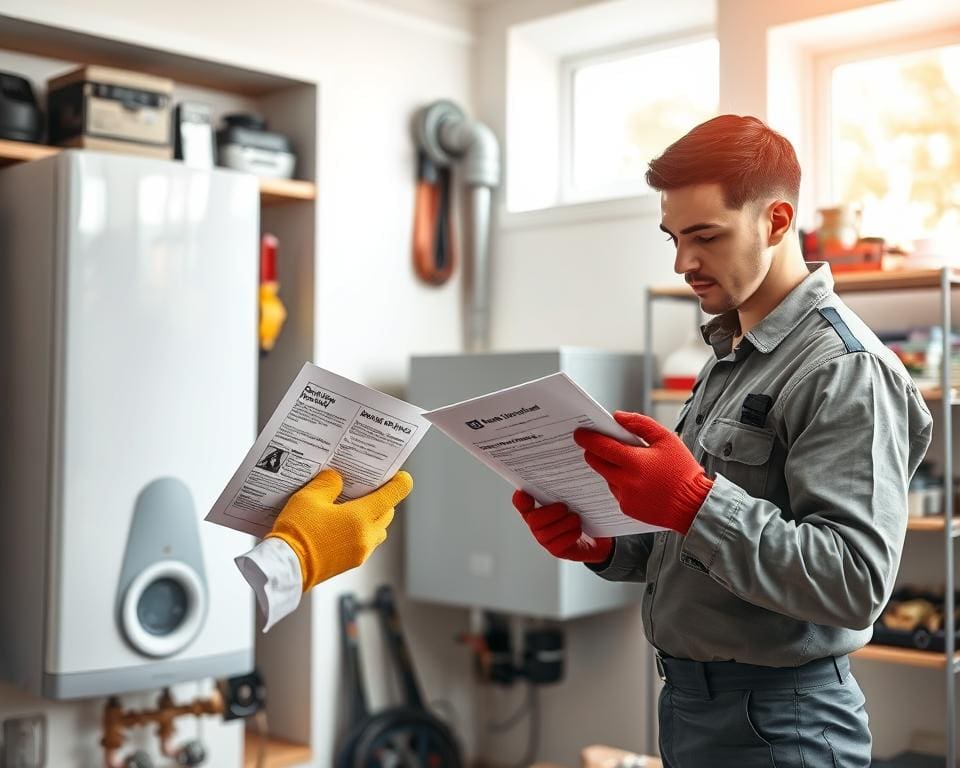
During a boiler site survey the engineer inspects the existing boiler, pipework and radiators. They measure rooms, note radiator sizes and assess the loft and airing-cupboard for cylinders. The survey includes a check of the gas meter, pipe route and a review of the proposed flue route and ventilation.
Installers commonly request proof of ownership or landlord permission, the existing boiler model, previous service history and details of central-heating controls. This information helps produce an accurate quote and flags extra work such as flue rerouting, new gas pipes or condensate drains that affect cost and the boiler installation timeline.
Logistics and timing
Most like-for-like combi swaps can be completed in one day. Conversions that add a cylinder or move the boiler often take two to three days or longer if external work, scaffolding or complex plumbing is needed.
Reduce disruption by agreeing daily start and finish times with your Gas Safe engineer and clearing access to the work area. Prepare an alternative plan for hot water during short outages and secure pets. Ask the installer to outline the estimated boiler installation timeline before work begins.
Safety and compliance
Building regulations boiler replacement rules require compliance with Part L and Part J. A Gas Safe engineer should issue a Building Regulations compliance certificate or notify Building Control via a competent person scheme. If the installer does not belong to such a scheme they must notify Building Control directly; ask to see the notification reference on completion.
Flue positioning rules cover terminal distances from windows, boundaries and openings. The correct flue length, terminal position and ventilation are essential for safety and for insurance validity. Fit a carbon monoxide alarm as best practice in homes with gas boilers; it is mandatory for solid-fuel appliances.
Responsible installers handle old boiler disposal in line with WEEE and local waste rules. Metals are recycled and hazardous fluids are dealt with correctly. Request confirmation of disposal costs and recycling practice before work starts.
After installation the engineer will complete commissioning checks: gas-tightness tests, burner pressure and CO/CO2 readings, flue flow and spillage tests and system pressure checks. You should receive a commissioning certificate, Gas Safety certificate, manufacturer warranty registration and a clear invoice listing the work carried out. Keep these documents safe for warranty validation and future proofing of your home.
Maintaining performance and maximising efficiency
Keeping a boiler running well saves fuel and extends its life. Regular care ties directly to lower bills and a stronger resale value. A simple boiler maintenance checklist and clear records of work make ownership easier and reassure buyers.
Recommended service intervals and what a service includes
Industry best practice is an annual service for gas boilers, and many manufacturers such as Worcester Bosch, Vaillant, Baxi and Ideal require it to preserve the boiler warranty service. A typical service checks the burner and heat exchanger, cleans controls, measures gas pressure and CO emissions, inspects the flue, tests safety devices and may top up system inhibitor. Keep receipts and logbook entries and register the boiler with the manufacturer to help maintain warranty cover.
Bleeding radiators, system balancing and powerflushing
Simple tasks you can do include bleeding radiators with a key and checking system pressure. If rooms heat unevenly, radiator balancing or a professional powerflush boiler clean may be needed to remove sludge and restore flow. Use chemical inhibitors and a magnetic filter from brands such as Fernox, Sentinel or Adey to slow future build‑up, and ensure these are fitted correctly during replacement.
Recognising warning signs: noises, leaks and loss of heat
Watch for kettling, banging or gurgling sounds, visible leaks, frequent pressure loss or cold spots on radiators. For minor issues, bleed a radiator, check pressure and consult the boiler manual before a reset. If problems persist — leaks, safety alarms or suspected carbon monoxide — switch off the boiler, ventilate the property and call a Gas Safe engineer. Keep an emergency boiler breakdown plan with installer contacts and a backup heating option for winter emergencies.