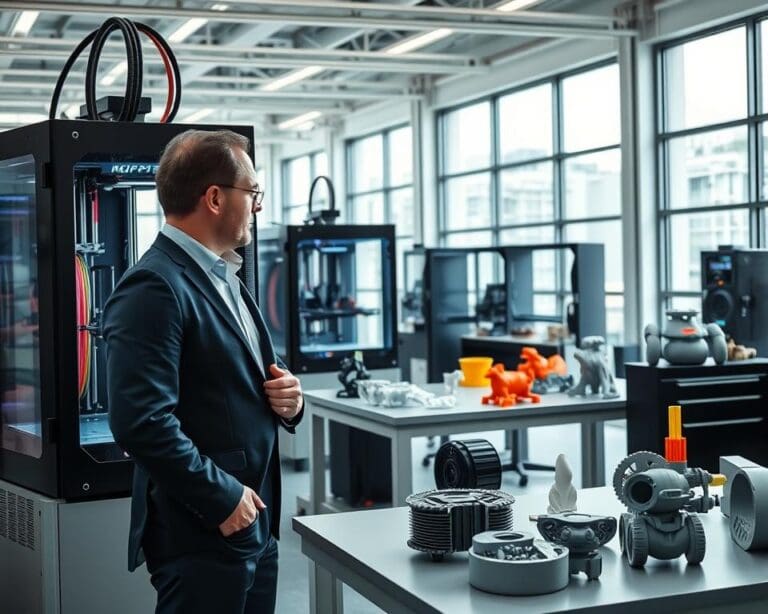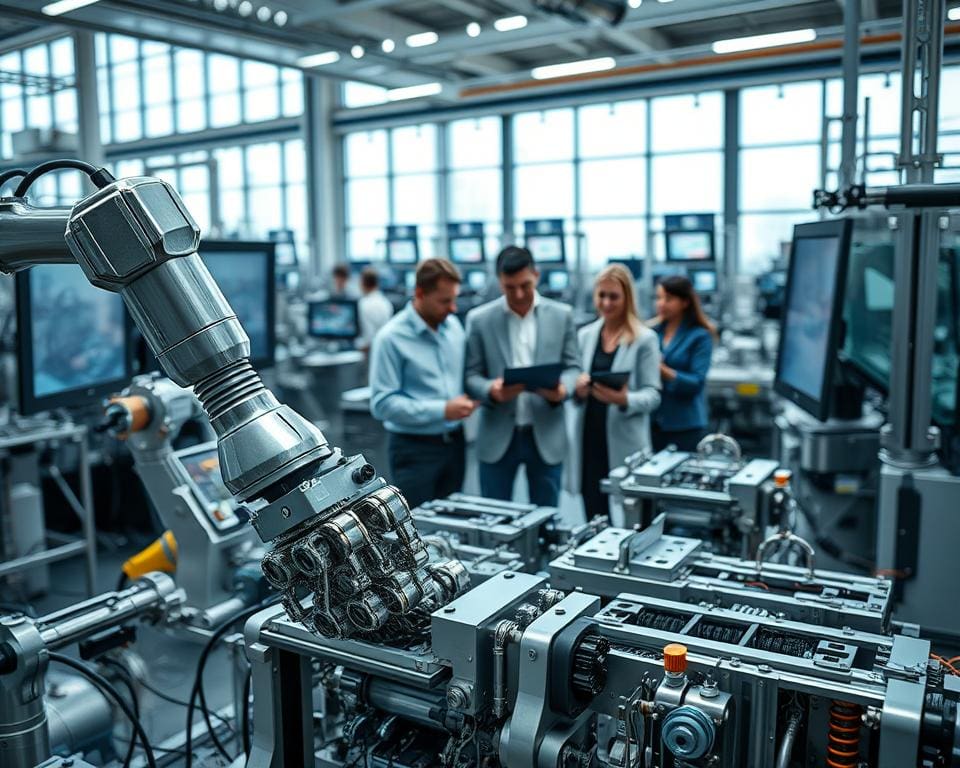
Advanced robotics are reshaping how British factories and distribution centres operate. Leaders at ABB, Fanuc, KUKA and Universal Robots report growing demand as companies seek the automation benefits of higher throughput and lower unit costs.
Worldwide installations of industrial robots continue to rise, and the UK is no exception. Clusters in Cambridge, Sheffield and the West Midlands combine university research, skilled integrators and manufacturing firms to speed robotics in manufacturing across sectors.
Beyond equipment, modern production robotics act as a business catalyst. They shorten time‑to‑market, support higher‑mix lower‑volume runs and make reshoring and near‑shoring more viable by improving local competitiveness and reducing lead times.
When paired with IoT, AI, digital twins and machine vision, robotics enable smart factories that improve quality and traceability. Automotive assembly lines, pharmaceutical dispensing operations and logistics fulfilment centres illustrate how robotics lift productivity while creating routes to higher‑value work and innovation.
Public and private programmes in the UK—catapults, grants and skills initiatives—are helping companies adopt advanced robotics. This support, alongside proven industry examples, makes clear why modern production robotics matter for competitiveness, resilience and future growth.
Why are advanced robotics important for modern production?
Advanced robotics reshape factory floors by linking speed, precision and adaptability. They deliver measurable gains in everyday operations and support strategic goals such as shorter lead times, better quality and faster product launches. The following points show how robotics drive change across three vital areas.
Boosting productivity and throughput
Robots raise output by running at higher cycle speeds and for longer shifts than manual labour. Studies in automotive paint shops, electronics assembly and food packaging report notable robotic throughput improvement and reductions in lead time.
Automation smooths takt times and cuts bottlenecks. When teams redeploy workers from repetitive tasks to supervision and process optimisation, overall plant productivity rises. This blend of human skill and machine speed underpins productivity through robotics across sectors in the UK.
Improving product quality and consistency
Robots deliver micron‑level repeatability in welding, dispensing and machining. That precision reduces variability, lowers scrap rates and raises first‑pass yield.
Pairing robots with machine vision and in‑line metrology enables 100% inspection cycles. Quality control robotics catches defects early, supports automated rework and strengthens traceability for regulated industries such as pharmaceuticals and medical devices.
Enabling flexible, agile manufacturing
Modern robotic cells use modular tooling and quick reprogramming to support short runs and many product variants. This reconfigurability is key to just‑in‑time strategies and bespoke production.
Collaborative robots UK models from established vendors let people and machines share work safely at close range. Hybrid teams combine human dexterity with robotic endurance to handle complex tasks. Connected systems and digital twins speed simulation, predictive maintenance and new‑product ramp‑up, powered by flexible manufacturing robotics.
Economic and workforce impacts of robotics adoption in UK industries
Adopting robotics in British industry reshapes local economies and workplace skills. Firms must weigh capital spending against long‑term gains. Clear planning helps link technology choices to regional goals and supply continuity.
Cost savings, ROI and total cost of ownership
Capital items include robot arms, controllers and end‑effectors. Integration, software licences, site works and energy add to upfront cost. Ongoing outlay covers maintenance and occasional retrofit.
Manufacturers report payback periods of 12–36 months for tasks like pick‑and‑place, welding and palletising. Declining hardware prices for cobots, common interfaces and cloud tools lower total cost of ownership. These changes improve robotics ROI UK for small and medium enterprises.
Drivers of return include reduced labour costs where applicable, less scrap, higher throughput and reduced downtime through predictive maintenance. Better quality cuts warranty and recall spend, delivering measurable cost savings robotic automation.
Flexible financing and public support ease adoption. UK government grants, Regional Industrial Strategy funds and vendor leasing schemes reduce upfront barriers for firms of all sizes.
Workforce transformation and skills development
Automation shifts roles rather than removes all employment. Routine tasks give way to higher‑skilled positions in maintenance, systems integration and process engineering.
Skills in demand include mechatronics, PLC programming, RAPID or KUKA KRL, robotic programming, data analytics and systems integration. Lifelong learning becomes central to career resilience.
Institutions such as the Advanced Manufacturing Research Centre, Catapult centres and UK universities run short courses, apprenticeships and retraining programmes. Employer‑led training and government reskilling support help workers transition to new roles and support workforce upskilling robotics.
Regional competitiveness and supply chain resilience
Robotic investment boosts productivity in regional hubs and attracts suppliers, creating positive spillovers. Strong local capability raises regional manufacturing competitiveness and draws higher‑value supply chains.
Manufacturers using automation can retool faster, scale capacity and reduce dependence on distant suppliers. That flexibility strengthens supply chain resilience robotics and shortens lead times during disruption.
Clusters of expertise form where skills, service providers and firms co‑locate. Such clusters amplify innovation, supporting sustained local growth and job creation across the UK.
Technological advances and future trends shaping modern production
Machine learning and AI are now core to the future of manufacturing robotics. Improved vision systems and adaptive control let robots grasp irregular parts, spot defects and refine motion paths on the fly. These gains boost uptime and reduce scrap, while predictive maintenance models analyse sensor streams to forecast wear and schedule servicing before faults occur.
Safety and ease of use are changing how people work with machines. Force‑sensing, compliant control and richer safety software support the collaborative robots future by allowing closer, safer teamwork on the shopfloor. Intuitive programming — hand guiding and graphical interfaces — lets production staff reconfigure cells without needing specialist coders, widening the appeal for SMEs.
Logistics and intralogistics benefit from autonomous mobile robots AMRs from suppliers such as Mobile Industrial Robots and Amazon’s internal systems. These platforms enable dynamic routing, multi‑floor transport and rapid order fulfilment when tied to warehouse management systems. Combined digital twins and simulation shorten commissioning time by testing cells virtually before physical deployment.
Edge computing and cloud orchestration converge to deliver real‑time control and scalable fleet management. Sustainability is also central: automation supports energy‑efficient schedules, better material use and precision disassembly for remanufacturing. For UK firms, a phased adoption pathway — pilot, prove ROI, then scale with standardised platforms and university or integrator partnerships — will help capture the promise of robotics trends UK and AI and robotics while building resilient, higher‑value supply chains.