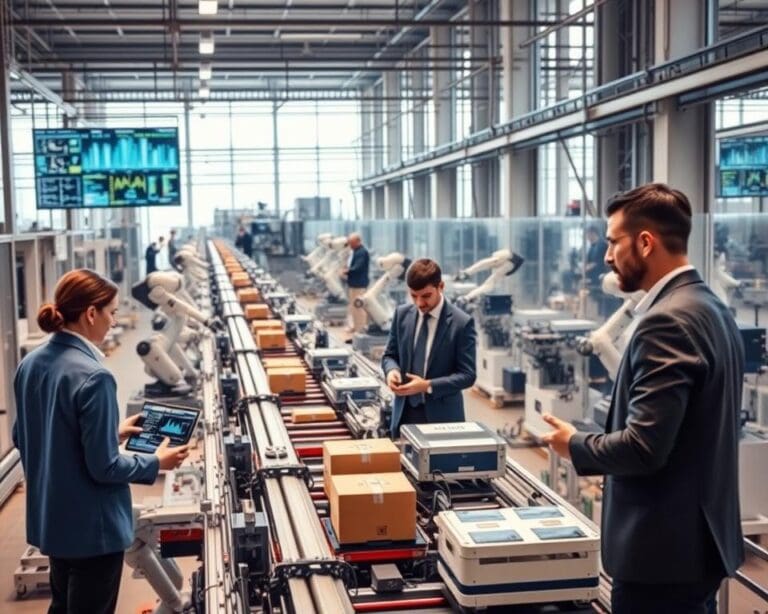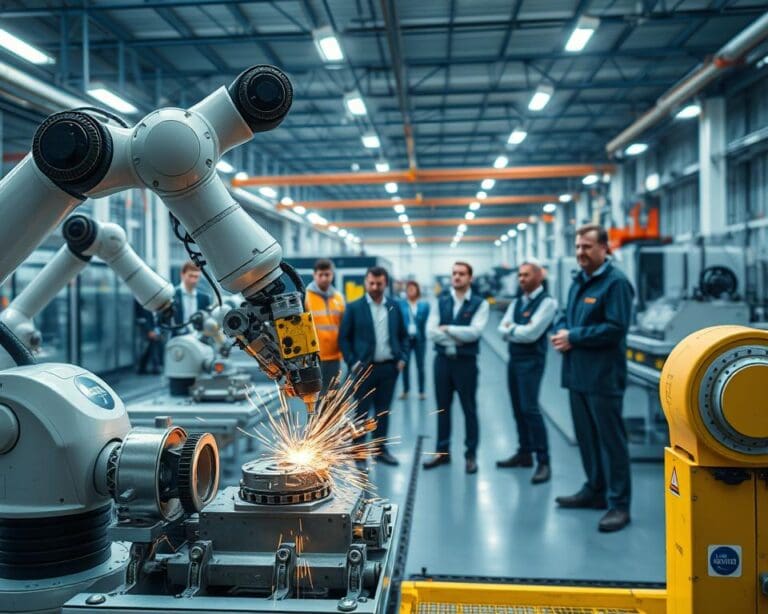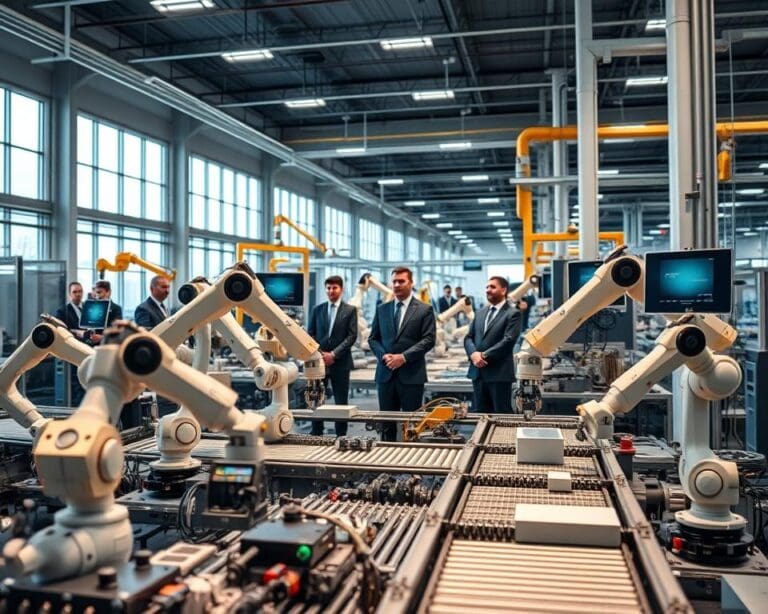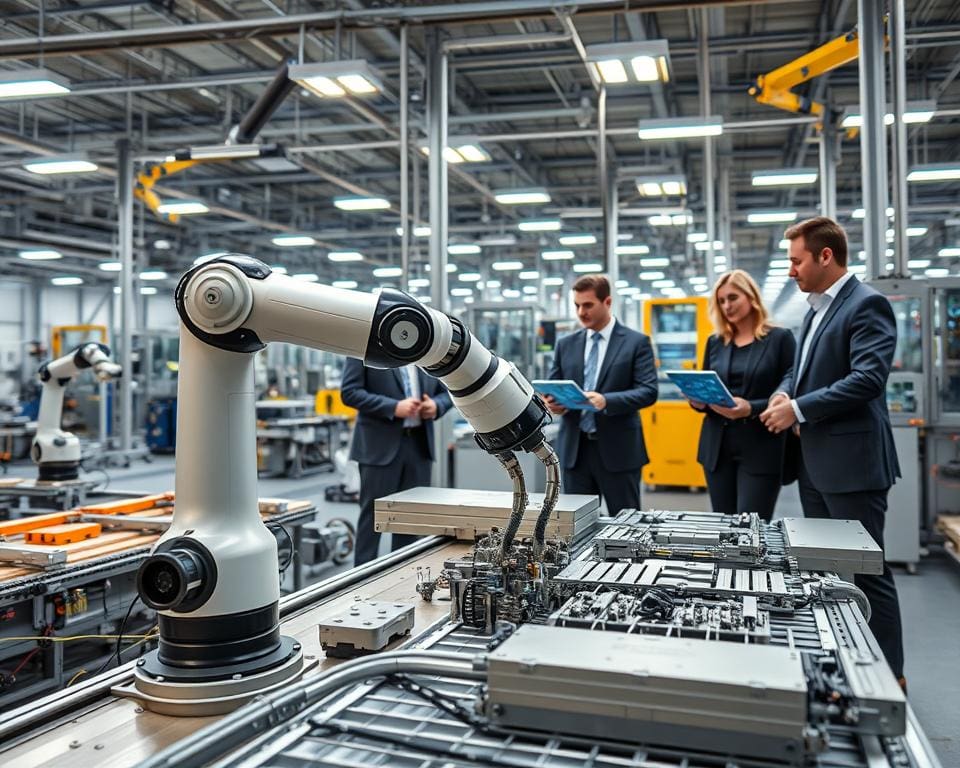
Machine autonomy in industry means equipment, robots and systems that can sense their environment, make decisions and act with minimal human intervention. This shift from simple mechanisation to true autonomous machines builds on decades of progress. Early robotic arms transformed automotive production, programmable logic controllers added repeatable control, and embedded microcontrollers and networked PLCs paved the way for cyber-physical systems.
The story continues under the banner of Industry 4.0 UK, where sensors, connectivity and analytics combine to deliver manufacturing automation at scale. Industrial autonomy now covers smart devices that adapt in real time, systems that optimise themselves and fleets of machines that coordinate with little human oversight. These capabilities help firms respond faster to demand, tighten supply chains and lower energy use.
The UK context matters. The Government’s Made Smarter review and targeted investments are encouraging adoption across sectors, from aerospace to food processing. Policymakers and businesses alike see autonomous machines as a route to higher productivity, resilient supply chains and lower carbon emissions.
This article explains the technological foundations of autonomy, examines examples on the factory floor, and discusses the benefits and challenges for the workforce and for business strategy. It will also offer practical steps for companies planning to deploy autonomous machines in the UK manufacturing landscape.
The technological foundations of machine autonomy in industry
Autonomy on the factory floor rests on a stack of mature technologies. These foundations include sensing, local processing, learning algorithms and resilient connectivity. Each layer must perform reliably under dust, vibration and changing light to keep production safe and efficient.
Advances in sensors and perception
Modern perception systems combine LiDAR, stereo and depth cameras, time‑of‑flight sensors, industrial vision systems, force/torque sensors, tactile pads and MEMS inertial measurement units. Vendors such as Cognex and Keyence lead on machine vision, while Velodyne and Ouster supply LiDAR for logistics robotics. Low‑cost depth sensors have helped cobots gain safe, close‑proximity capabilities.
Sensor fusion merges visual, lidar and proprioceptive streams to boost object detection and localisation. This fusion improves navigation and collision avoidance in busy production areas. Rugged housings and optical filters keep sensors for industrial robots resilient against dust and variable lighting.
Edge computing and low-latency processing
Edge computing in manufacturing places CPUs, GPUs and accelerators near machines to meet real‑time needs. Platforms such as NVIDIA Jetson and Intel Movidius enable on‑device inference for closed‑loop control and safety interlocks.
Low latency matters because control loops and immediate perception decisions must operate in milliseconds. Hybrid architectures split workloads between edge nodes, on‑premise servers and private cloud instances for heavy analytics. Deterministic compute and real‑time operating systems on industrial PCs and PLCs ensure predictable timing.
Role of machine learning and deep learning models
Industrial machine learning powers tasks from visual inspection to motion planning. CNNs detect surface defects, unsupervised methods flag anomalies, and reinforcement learning refines robotic manipulation. Toolkits like TensorFlow, PyTorch, NVIDIA Isaac and ROS speed development and deployment.
Transfer learning and synthetic data cut labelling costs and help models generalise. Challenges remain: data quality, domain shift between lab and factory and explainability. Continuous learning strategies keep models aligned with evolving production conditions.
Connectivity: 5G, industrial Ethernet and IIoT platforms
Robust connectivity ties the stack together. Deterministic industrial Ethernet protocols such as PROFINET and EtherCAT, plus Time‑Sensitive Networking, provide synchronised control for motion systems. Private 5G networks unlock mobile use cases in the 5G industry, supporting AGVs and remote monitoring with low latency and wide coverage.
IIoT platforms including Siemens MindSphere, PTC ThingWorx and Microsoft Azure IoT aggregate telemetry and host digital twins for predictive analytics. Integrating legacy equipment into modern stacks requires gateways and careful OT/IT convergence planning to preserve security and uptime.
When sensors for industrial robots, edge computing manufacturing, industrial machine learning, IIoT platforms, 5G industry, industrial Ethernet and perception systems are combined thoughtfully, autonomy becomes practical and scalable across UK factories.
How are machines becoming more autonomous in industry?
Manufacturing is shifting from fixed automation to systems that think, adapt and collaborate with people. Plants are adopting technology that lets equipment move, learn and make short‑term decisions on the shop floor. This change raises productivity and opens new options for small‑batch and bespoke production.
Autonomous robots on the factory floor
Robots have evolved from fenced cells to flexible, mobile and collaborative platforms. Brands such as Universal Robots and ABB with YuMi use force‑limited control and integrated vision to work safely alongside operators. These systems are redeployed across tasks like assembly, welding, painting and material handling to support rapid changeovers.
Collaborative robots reduce setup time for high‑mix lines. They allow manufacturers to scale customisation without large capital expense. The result is greater agility for small‑batch work and quicker introduction of new products.
Smart conveyors, automated guided vehicles and mobile robots
Material flow is becoming dynamic. Traditional AGVs follow fixed paths guided by magnets or tape. AMRs navigate using SLAM and dynamic path planning to avoid obstacles and adapt to new routes. Suppliers such as KUKA, Mobile Industrial Robots and Locus Robotics deliver fleets for warehousing and factory logistics.
Fleet‑management software coordinates vehicles, schedules routes and manages traffic in real time. Integration with WMS and ERP systems enables end‑to‑end automation, cutting lead times and increasing throughput across the supply chain.
Self-optimising production lines and adaptive control systems
Self‑optimising production adjusts process parameters automatically using sensor feedback and learning algorithms. Adaptive control systems tune settings such as speed, temperature and force to maintain tolerances and improve yield. Examples include welding controllers that alter parameters based on seam conditions and extrusion lines that balance speed with material properties.
Digital twins let engineers simulate changes before deployment. Model‑based control strategies make it possible to test scenarios virtually and roll out optimisations with confidence.
Closed-loop maintenance: predictive and prescriptive approaches
Maintenance is moving from calendar‑based tasks to condition‑aware strategies. Predictive maintenance uses vibration analysis, thermal imaging and telemetry to forecast faults before they occur. This reduces unplanned downtime and extends equipment life.
Prescriptive maintenance goes further by recommending or scheduling interventions, ordering parts and reallocating workloads automatically. Platforms such as Siemens MindSphere, Schneider Electric EcoStruxure and IBM Maximo provide asset performance tools that close the loop between detection and action.
- Reduced stoppages through early fault detection
- Faster recovery by automating spare‑parts workflows
- Improved OEE from coordinated maintenance and production
Benefits, challenges and workplace implications of increased autonomy
Autonomous systems reshape factories by boosting output, cutting waste and tightening quality control. Reports from UK manufacturing show double‑digit productivity uplifts in automated cells, with faster cycle times, lower scrap rates and more consistent tolerances. Continuous operation and real‑time inspection reduce manual rework and enable energy optimisation that trims emissions and costs.
Productivity gains and quality improvements
Autonomy lets plants run 24/7 with rapid changeovers between products. That raises throughput while keeping quality steady. Real‑time sensors and closed‑loop control spot defects as they appear so teams can intervene before batches are affected.
Smarter control delivers environmental benefits through precise process control. Energy use falls and material waste drops, helping manufacturers meet carbon reduction targets and improve margins.
Skills transformation and workforce reskilling
Jobs shift from repetitive manual tasks to roles in robot supervision, data analysis, automation engineering and AI maintenance. This requires targeted manufacturing workforce reskilling UK programmes that blend apprenticeships, T‑Levels, university‑industry partnerships and initiatives such as Made Smarter.
Change management matters. Involving staff early, mapping clear career pathways and showing demonstrable safety measures reduce resistance. Employers that invest in continuous training see higher retention and faster technology adoption.
Cybersecurity, safety and regulatory considerations
Connected machines expand the attack surface, so strong industrial cybersecurity is essential. OT networks must be segmented, devices securely provisioned and patches applied promptly to limit exposure to ransomware and sabotage.
Workplace safety remains paramount. Compliance with safety standards robots such as ISO 10218, IEC 62443 and ISO/IEC 27001 guides design and operation. Physical protections like safety PLCs and light curtains, alongside robust risk assessments, keep people safe. UK law and HSE guidance frame regulatory expectations for autonomous operations.
Economic and social impacts in the UK manufacturing sector
Automation can drive reshoring of high‑value production by improving competitiveness and supply‑chain resilience. The economic impact manufacturing UK may be large: higher productivity and exports, plus growth in engineering and software roles.
Social effects vary by region. Some roles face displacement while new technical jobs appear. Policy must support communities through inclusive transition programmes, ensuring that benefits of industrial autonomy are shared across the UK.
Practical steps for businesses to adopt autonomous machines
Begin with a clear strategy and a readiness assessment. Map existing workflows, spot bottlenecks, hazardous tasks and labour gaps, and quantify return on investment and payback periods. Use those findings to assemble a manufacturing automation roadmap that prioritises high‑impact use cases and sets realistic timelines.
Pilot technologies in controlled settings with minimum viable deployments to learn fast and limit disruption. Establish robust connectivity such as industrial Ethernet, secure Wi‑Fi or private 5G, and deploy edge compute with standardised data models to enable interoperability. Adopt IIoT platforms and choose vendors like Siemens, Rockwell Automation or ABB with open APIs to avoid vendor lock‑in, and plan legacy integration through gateways.
Invest in people, governance and procurement. Create workforce development plans with technical training, upskilling and cross‑functional teams combining operations, IT and engineering. Implement cybersecurity and data governance policies, safety assessments and continuous monitoring. For procurement, favour modular, scalable solutions and consider managed services or partnerships with system integrators to reduce implementation risk.
Scale iteratively using measured KPIs such as OEE, downtime and quality metrics, and maintain feedback loops to refine models and control strategies. Use digital twins and simulation to test changes before full deployment. Seek funding and collaboration through Innovate UK, regional development agencies, Make UK and the Manufacturing Technology Centre, and work with universities and catapult centres to de‑risk projects. This approach answers how to implement autonomy in factories and supports industrial automation adoption UK; it shows how businesses can adopt autonomous machines as part of a long‑term, resilient manufacturing automation roadmap.