
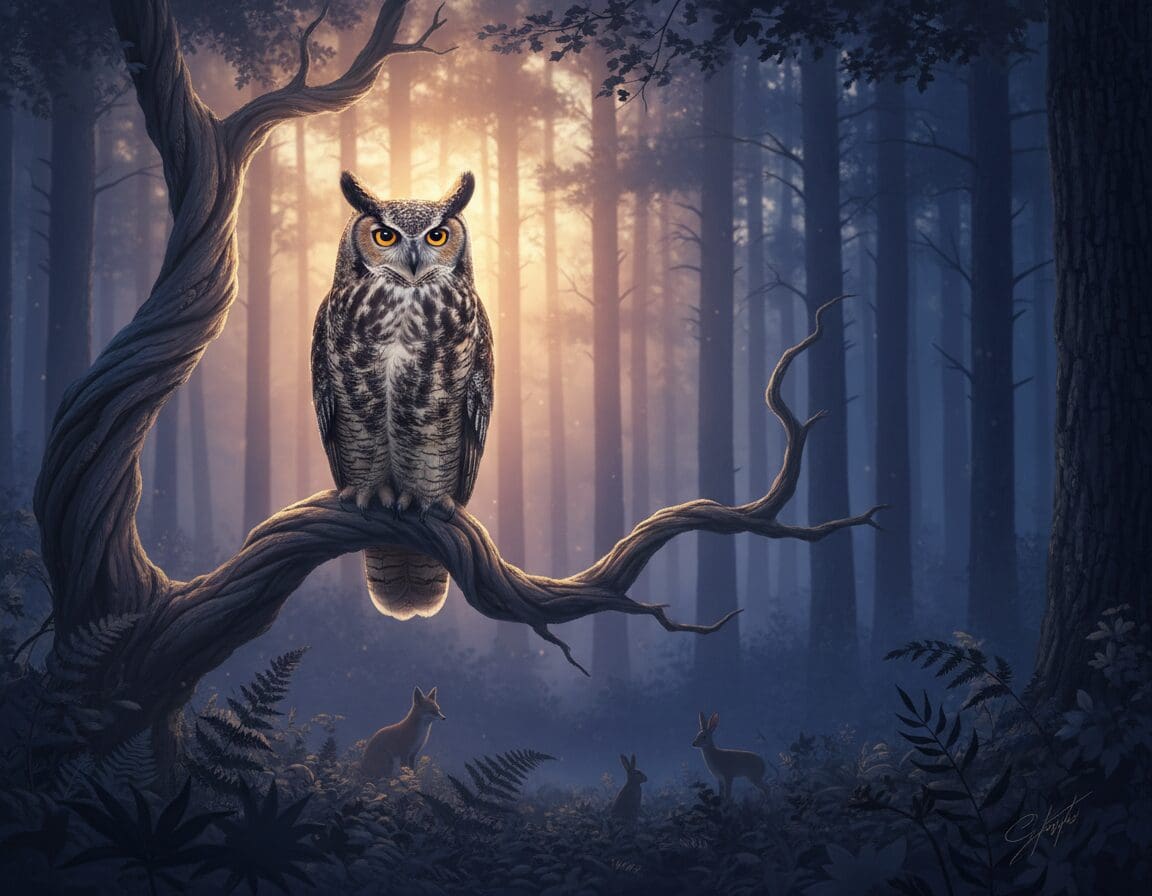
Seeing an owl can stop you in your tracks. From the farm hedgerows to the edges of town, a brief flash of wings or a haunting call invites questions about the meaning of owl sightings and the deeper messages they might carry.
This article sets out to answer what does seeing an owl mean from three balanced angles: cultural history, spiritual symbolism and scientific behaviour. We will explore owl symbolism across the UK and Europe, consider how people interpret an owl encounter, and offer practical context grounded in ornithology.
Owls fascinate because they are nocturnal, have large eyes, silent flight and distinctive calls. Those traits explain why owls figure in folklore and modern nature-based spirituality, and why interest in wildlife experiences and owl omen UK stories has grown among British readers.
The piece follows a clear four-part structure. First, cultural and historical meanings across Britain and Europe. Second, symbolic interpretations such as wisdom, transition and mystery. Third, spiritual lenses for interpreting owl messages. Fourth, practical perspectives: behaviour, species facts (barn owl, tawny owl, little owl, long-eared owl, short-eared owl) and what to do when you see an owl.
Content draws on reputable sources including the RSPB, academic studies of European folklore, anthropological literature and mainstream books on spirituality and dreams. Where useful, ornithological facts will inform the practical guidance so readers can pair personal reflection with reliable information on owl encounter interpretation.
what does seeing an owl mean
An owl sighting can stir a mix of curiosity and feeling. People in towns and countryside read into the moment through long cultural lines. Past stories, local lore and personal experience all shape what the encounter feels like.
Historical and cultural meanings across the UK and Europe
Classical sources linked owls with Athena and Minerva in Ancient Greece and Rome, where the bird became a symbol of wisdom and guardianship of learning. Those classical motifs moved into medieval Europe and fed into manuscripts, bestiaries and scholarly emblems.
In British and Celtic traditions, the owl could cross boundaries between worlds. Some Celtic accounts treat owls as guides to the Otherworld or as protective spirits. In other rural tales an owl’s call might be taken as warning of danger or a presage of death.
Regional folklore varies across northern and western Europe. Scandinavian tales sometimes cast owls as prophetic figures. In parts of rural England an owl might be seen as a household guardian by one community and as a harbinger by the next.
Ethnographic studies and collections of British folk beliefs document these shifts and regional nuances. Those sources show how shared classical images and local practice combine to form layered meaning.
Common symbolic interpretations: wisdom, transition and mystery
Wisdom and learning are the clearest symbolic threads. The Athena motif underpins modern uses of the owl in education and literature, where it signals knowledge and scholarship.
Owls’ nocturnal life links them to transition and liminality. Their activity at dusk and dawn ties them to rites of passage, moments of change and the boundary between conscious and unconscious states.
They also embody mystery and hidden knowledge. An owl’s silent flight and sharp gaze make it a common image for revelation, secrecy and what remains unseen.
The emotional tone of these symbols shifts with culture. For some the owl brings comfort and protection. For others the bird appears as an owl as omen that unsettles or warns.
How cultural background shapes personal meaning
Personal interpretation filters cultural motifs through upbringing and belief. An academic or student might read an owl sighting as affirmation of learning. Someone raised with village lore may feel unease or reverence.
Migration and multicultural life in the UK mean people bring diverse owl stories from South Asian, African and Caribbean traditions. Those narratives alter how an encounter is understood and felt.
As a practical takeaway, reflect on the tales you grew up with and the stories you now carry. Your cultural lens helps decide whether an owl sighting feels like guidance, mystery or warning.
Spiritual and symbolic interpretations of owl sightings
Encounters with an owl often stir a sense of mystery and invitation. The spiritual meaning of owls appears across many paths as a bridge between the seen and unseen, offering cues for reflection and inner work.
Owl as a messenger in spiritual traditions
Across shamanic lineages and contemporary nature-based practices, the owl as messenger turns up as a being that carries warnings, guidance or revelation. Nocturnal birds are commonly viewed as liminal guides that move between worlds, used in neo-pagan and Wiccan symbolism as totems for wisdom and psychic sight.
Practitioners are advised to treat such motifs with respect and care. The meanings attached to an owl vary by culture and personal history, so adopting imagery from another tradition calls for sensitivity to origin and intent.
Signs of life transition, guidance and inner knowing
Because owls inhabit the threshold of night, many read an appearance as sign of impending change. Encounters can signal career shifts, endings in relationships or inner transformations that are about to unfold.
To receive guidance, pause and reflect on context. Journalling impressions, noting life events around the sighting and sitting in quiet contemplation help surface inner knowing that may accompany the symbol.
Simple practices reinforce the process. Try asking a clear question before a walk, use meditation to open to subtle promptings, and keep a log of dreams and sightings to spot patterns.
Night-time symbolism: intuition, the unconscious and dreams
In Jungian and dream-interpretation frameworks the owl links to the unconscious and to intuition. An owl in dreams can represent sudden insight, an invitation to trust gut feeling, or a marker of unresolved fear demanding attention.
When interpreting an owl in dreams, pay attention to emotions and the bird’s behaviour. A calm, watchful owl points toward steady insight. An agitated or attacking owl may reveal inner conflict that needs gentle work.
How to interpret an owl sighting in personal spiritual practice
Use a step-by-step reflective approach. Observe the sighting objectively: note species, behaviour, time and place. Record personal circumstances and immediate feelings. Reflect on connections between the encounter and current life events.
Consult reliable cultural or spiritual resources you trust. Balance symbolic reading with practical care for wellbeing. If a sighting triggers anxiety, seek support from friends or a mental-health professional.
To integrate meaning, choose symbolic acts that feel authentic. Light a candle, write a poem, plant something living or take a concrete step toward learning if the owl suggested wisdom. These small actions honour the experience and help weave new insight into daily life.
Practical perspectives: science, behaviour and what to do when you see an owl
Owls in the UK are fascinating as much for their ecology as for their symbolism. Common owl species Britain residents may encounter include the tawny owl (Strix aluco) in wooded areas, the barn owl (Tyto alba) hunting over farmland, the little owl (Athene noctua) around hedgerows and farm buildings, the long-eared owl (Asio otus) favouring conifer stands and the short-eared owl (Asio flammeus) seen on open moor and coastal grassland. Each species has distinct calls and habitats that help identify sightings and explain behaviour.
Understanding nocturnal bird behaviour clarifies many encounters. Owls hunt at night using fringed wing feathers for near-silent flight, exceptional night vision and acute hearing to locate prey. These adaptations shape how people notice them: a sudden wingbeat, a clear call from a tree, or a daylight sighting that may indicate disturbance, migration or an unusual feeding opportunity. Awareness of owl behaviour UK makes sightings less mysterious and more meaningful.
Practical etiquette matters. If you wonder what to do if you see an owl, keep a respectful distance, avoid shining bright torches or making loud noises and never interfere with a nest site. In the UK owls are protected by wildlife law, so it is illegal to harm or intentionally disturb them; reporting a suspected injured bird is better than attempting to handle it yourself. Follow RSPB owl advice and guidance from the British Trust for Ornithology when unsure.
Recording sightings helps conservation. Note date, time, location, behaviour and any photos taken unobtrusively, and submit records to citizen-science projects such as the BTO Big Garden Birdwatch or local wildlife trusts. Bridging science and symbolism, an encounter can inspire stewardship: support local habitat work, install appropriate nest boxes and join birdwatching groups to learn more. Small actions rooted in knowledge benefit both the birds and the people who cherish them.