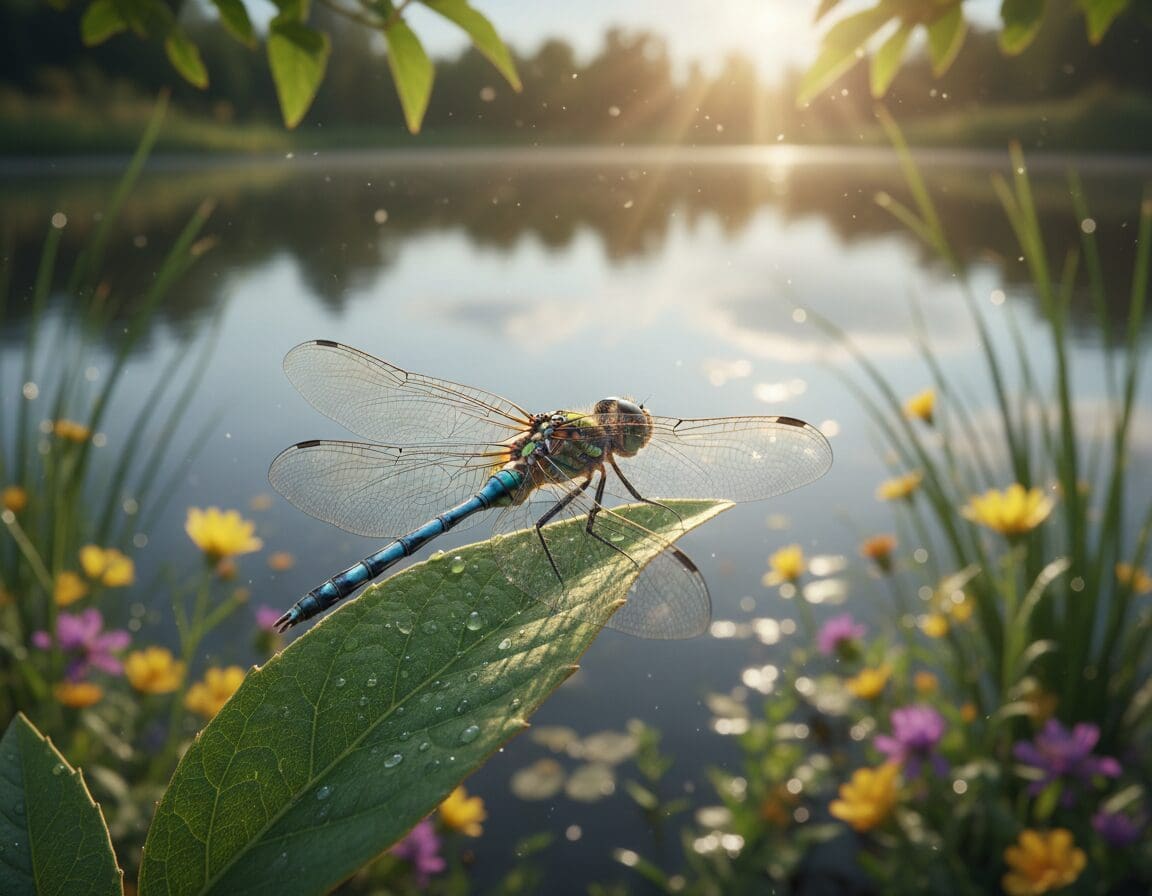
Spotting a dragonfly by a British pond can feel like a small, luminous moment. For many people the question what does seeing a dragonfly mean springs to mind. This introduction sets out the article’s aim: to explore dragonfly meaning with balance, drawing on natural history, folklore and spiritual traditions.
Dragonfly sightings are common across the United Kingdom from late spring to early autumn. Familiar species such as the Common Darter (Sympetrum striolatum), Emperor Dragonfly (Anax imperator) and Broad-bodied Chaser (Libellula depressa) often prompt reflection. Readers will recognise these insects in parks, riverbanks and wetland reserves and wonder about the dragonfly sighting significance in their own lives.
The piece is organised in four parts. First, spiritual and symbolic interpretations set a contemplative tone and explore spiritual meaning dragonfly. Second, we look at nature and behaviour to explain why certain traits inspire symbolism. Third, cultural meanings and UK folklore place sightings in context. Finally, practical guidance shows how to interpret a sighting in your life.
By the end you should gain: an overview of how traditions interpret dragonflies; clear facts about biology and behaviour that fuel metaphor; a sense of dragonfly symbolism UK; and simple steps to reflect on a personal sighting. Sources include material from the British Dragonfly Society and related entomological references, alongside folklore studies and commonly cited spiritual perspectives. Treat spiritual readings as personal guidance rather than empirical fact.
what does seeing a dragonfly mean: spiritual and symbolic interpretations
A sudden dragonfly sighting can stir curiosity and calm in equal measure. People often ask if the moment holds a message. When viewed through a spiritual lens, a dragonfly invites close attention to light, change and presence.
Dragonflies in spiritual traditions
Across cultures, dragonflies link the visible world with the unseen. Japanese poems and Hiroshige prints celebrate their swiftness and joy. Some Native American accounts point to renewal or ancestral messages, though meanings shift with each tribe’s history and practice. Modern spiritual teachers frame dragonflies as prompts to awaken perception and stay rooted in now.
Symbolism for personal transformation
The dragonfly life cycle provides a vivid metaphor for inner change. From aquatic nymph to air-borne adult, its stages speak of patient growth and sudden emergence. This dragonfly transformation meaning encourages resilience and stepping into a fuller self. Its iridescent wings are read as mirrors for clarity and self-awareness, urging a fresh view of old patterns.
Speed and agility in flight point to adaptability. Spotting one during a shift in life can feel like an invitation to move gracefully through new terrain. Many people adopt the dragonfly as a guide for navigating transitions with poise.
Messages from the spirit world and signs
For some, a dragonfly is a comforting sign from the spirit world. A visit at a funeral or after bereavement may be felt as reassurance from a departed loved one. In other moments, a dragonfly might appear as confirmation that a chosen path aligns with inner truth.
Context matters. Note the time, place and your mood when the insect appears. Keep a small journal of sightings, behaviour and any recurring colours or dreams to build a personal lexicon. Treat observations as part intuition, part natural event.
Balance belief with scepticism. The mind seeks patterns and meaning. A reasoned approach honours both the felt significance of a sighting and natural explanations such as habitat or seasonality.
A dragonfly spirit animal can offer an approachable symbol for change and clarity. Whether viewed as a sign from spirit world dragonfly encounters or as a prompt toward reflection, each sighting can deepen personal insight and guide quiet transformation.
Nature, behaviour and cultural meanings of dragonflies
Dragonflies blend precise natural history with rich human imagination. Their life cycle, striking flight and ties to water shape how people read them in the British landscape.
Dragonfly biology and behaviours that inspire meaning
Eggs are laid in or beside water. The aquatic nymph, or naiad, hunts underwater for months or years. When it is ready, the nymph climbs out, splits its skin and unfurls its wings. The adult stage focuses on flight and reproduction. Timeframes vary by species; some nymph stages last several years.
Dragonflies are expert fliers. They can hover, fly backwards and change direction quickly. Their large compound eyes give near 360-degree vision, allowing rapid predation. These traits give rise to symbolic links with perspective, vigilance and agility.
They favour freshwater habitats such as ponds, streams, marshes and reedbeds. In the UK, activity peaks in warm months from May to September. Because they are sensitive to water quality, they act as informal indicators of a healthy ecosystem.
As predators of mosquitoes and midges, dragonflies help control insect populations. This predatory role feeds perceptions of cleansing and protection in many local traditions.
Cultural folklore and myths in the United Kingdom
References to dragonflies appear across British folk belief and rural sayings. Unlike regions with strongly hostile imagery, British accounts are often neutral or positive. Regional variation exists in the tone and detail of stories.
Some traditional names live on in vernacular speech. Phrases such as “horse stinger” or “devil’s darning needle” are found in wider European lore and sometimes surface in British usage. These names can carry superstition while reflecting practical observations of behaviour.
Common folkloric themes include omens, swift messages and transformation. Rural tales sometimes link dragonflies to water spirits, a motif that echoes their aquatic origins and life cycle.
Conservation efforts have reframed popular perception. The British Dragonfly Society and recorders across the UK document species, restore habitat and promote appreciation. This work has helped shift dragonflies from occasional folklore figures to celebrated wildlife.
Art, literature and contemporary symbolism
Dragonflies have inspired poets, painters and naturalists throughout British cultural history. Illustrations and verse use the insect as a symbol of summer and fragile beauty. Nature writers and photographers continue to celebrate their form and motion.
Design movements such as Arts and Crafts and Art Nouveau adopted the dragonfly motif in jewellery and decorative arts. The insect often symbolises lightness, elegance and renewal in decorative design.
In film, animation and popular spirituality, dragonflies represent change, freedom and heightened awareness. The persistence of such images confirms the insect’s ongoing role in British visual and literary culture.
How to interpret a dragonfly sighting in your life
Begin by noting the simple facts. Write down the date, time and place—garden, pond or inside your home—and the weather at the moment. Record behaviour: was the dragonfly hovering, landing on you or circling? A photo can help later with identification and with recalling how you felt. This practical step will make any reflection more grounded and useful for future reference.
Next, place the sighting within your life context. Ask whether you are facing change, grief, celebration or a big decision. Linking what seeing a dragonfly means for me to recent events helps shape meaning that fits your situation. Balance emotional responses with observable details so interpretation blends feeling with fact.
Invite personal associations and intuition. List memories, cultural references or dreams that come to mind and trust your initial impression, while keeping a curious, critical eye. Use the framework of signs and synchronicity dragonfly to explore symbolic angles without abandoning common-sense or natural-history perspectives.
Use short rituals to deepen the experience. Try journalling prompts such as “What change am I ready to make?” or “Where do I need clearer vision?” followed by mindful breathing or a brief walk by water. Creative acts—drawing, photography or a simple keepsake—turn an encounter into a lasting personal marker. These actions follow dragonfly sighting guidance by transforming insight into practice.
If the sighting brings up strong grief or anxiety, reach out to a trusted friend or a UK service like Cruse Bereavement Support for guidance. For questions about species or habitat, contact the British Dragonfly Society or your local wildlife trust to satisfy scientific curiosity and find ways to help. Combining nature knowledge with UK spiritual guidance dragonfly offers a balanced route to meaning.
Finally, choose symbolic actions that reflect any resolve you feel. Plant a water-loving shrub, join a pond-restoration volunteer day or make a small donation to support dragonfly habitat. Whether you view the encounter as a personal sign or a joyful nature moment, use the sighting as an invitation to pause, reflect and act with intention.