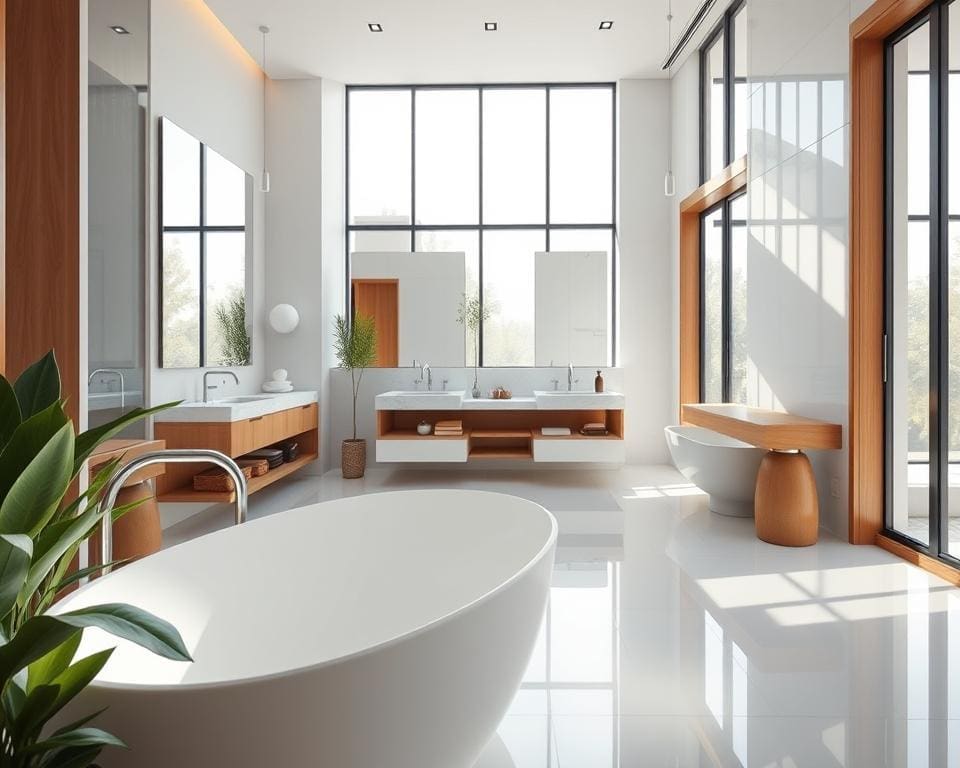
When you plan a modern bathroom renovation, you want a space that looks contemporary and works well every day. A modern bathroom often means clean lines, minimal clutter and high-performance fixtures. Think large-format porcelain, engineered stone and matt-finish metals such as brushed stainless steel, matt black or brushed nickel.
Renovating brings clear benefits: higher property value, better daily comfort and lower running costs from efficient taps, showers and lighting. It also lets you improve accessibility and meet Building Regulations where needed, for example Part M for access considerations.
Your read will guide you through practical bathroom renovation ideas tailored to the bathroom design UK market. You will find planning advice on layout, ventilation, waterproofing and lighting, plus when to consult tradespeople such as a plumber, electrician, tiler or plasterer. You should also check whether works affecting drainage, electrics or structure need building regulations approval.
Practical UK points matter. Many terraced and period properties have smaller bathrooms, while modern houses often offer larger family bathrooms. Familiarity with common plumbing and waste arrangements, electrical zones and RCD protection will help your project run smoothly. Seasonal timing is important too — avoid heavy wet work in winter where drying times lengthen.
Sustainability and material choice are central to contemporary bathroom ideas. Opt for low-VOC paints, FSC-certified timber, recycled-content tiles and water-saving fittings from trusted brands such as Grohe, Hansgrohe and Mira to cut environmental impact and bills.
Across the following sections you will get bathroom remodel tips on layout and style, pros and cons of fixtures and fittings, surface choices and practical upgrades including lighting, storage and smart technology. That roadmap will help you make informed choices that suit your home and budget.
Bathroom renovation ideas to modernise your space
Refreshing a bathroom needs careful thought about how the room will work for you. Start by assessing your current plumbing runs and soil stacks. Keeping sanitaryware close to existing drains cuts labour and materials, which helps your bathroom renovation budget while simplifying planning.
Planning your layout for function and flow
Measure the room and draw a scaled floorplan. Mark door swings, ventilation points and any radiators or planned heated towel rails. Consider common arrangements such as single-wall, galley, en suite, family bathroom and wet-room conversions when you weigh options.
Allow clearances for circulation: aim for 600–750mm in front of basins, 700–800mm for toilet clearance and 900–1200mm for shower entry where space permits. Think about outward-opening or pocket doors to free up floor area and support space-saving bathroom ideas.
Ventilation is essential. Choose an extractor sized for the room to meet guidance on air changes per hour and fit humidity sensors to reduce damp. For wet zones, specify damp-proof membranes and tanking to Building Regulations standard to protect finishes and structure.
For heating, electric underfloor mats suit smaller refits; wet underfloor systems work well with full renovations tied into a boiler or heat pump. Use thermostatic controls to improve comfort and reduce running costs during bathroom planning UK projects.
Choosing a contemporary style that suits your home
Pick a style that matches your property. Minimalist Scandi schemes suit compact layouts, while industrial chic uses metal accents and concrete-effect tiles for a bold look. Spa-inspired finishes create calm, and transitional modern blends period features with current fittings for a cohesive result.
Match finishes to the home: period houses benefit from modern fittings in brushed brass or satin nickel, new-builds favour frameless glass and monolithic surfaces. Use neutral palettes with an accent colour and mix matt and gloss textures to add depth without cluttering the room.
Choose a focal point such as a freestanding bath, a vanity unit or a tiled feature wall. Coordinate hardware and sanitaryware from trusted brands like Villeroy & Boch, Roca or Ideal Standard to ensure quality and resale appeal while reflecting modern bathroom styles.
Budgeting tips and where to invest for highest impact
Obtain at least three local quotes and check trades hold Gas Safe or NICEIC accreditation where relevant. Typical UK projects range from a basic cosmetic refresh to full strip-out and refit, so clarify scope early to align estimates with your bathroom renovation budget.
Prioritise waterproofing, reliable plumbing and effective ventilation; these areas prevent costly problems and add long-term value. Mid-range spend on a durable vanity and a quality shower system often gives the best balance of daily use and appeal to buyers.
Save money by retaining the existing layout, refinishing a structurally sound bath and using off-the-shelf sanitaryware or locally sourced tiles. Coordinate works with a single contractor to limit delays and include a 10–20% contingency for surprises common in older properties.
Contemporary fixtures and fittings to upgrade comfort and style
Choosing the right fixtures shapes how your bathroom looks and works. Modern bathroom fittings can boost comfort, save water and improve safety. Consider practical factors such as space, maintenance and Part M compliance when planning upgrades.
Freestanding baths versus built-in baths: pros and cons
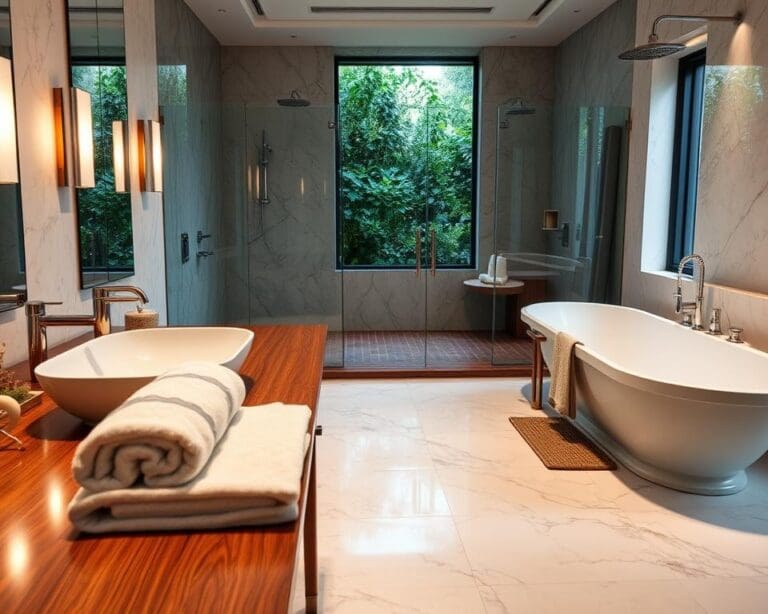
A freestanding bath creates a strong visual centrepiece and suits larger, spa-style schemes. Brands like Victoria + Albert, Burlington and Kaldewei offer solid-surface and enamelled options. You should note freestanding bath pros cons: they need more floor space, stronger floor support and often cost more to install.
Built-in baths work better in smaller rooms and family bathrooms. They hide plumbing, allow tiled surrounds and give you storage or seating edges. If you favour practicality over a showpiece, a built-in bath may be the smarter, more affordable choice.
Material choice affects weight and heat retention. Acrylic and solid-surface baths keep water warm and are lighter than cast iron. Cast iron resists scratches but is heavier to move and needs robust subfloor support. Check waste trap location, access for installation and maintenance before you buy.
Walk-in showers and wet-room options for accessibility
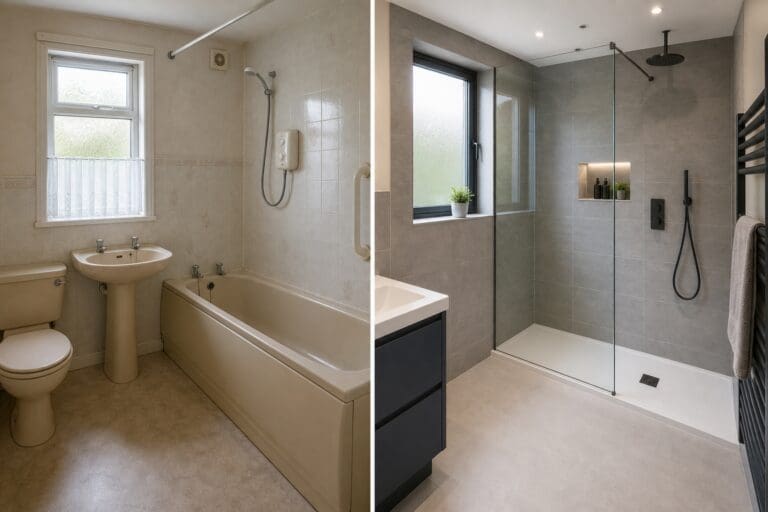
Walk-in showers deliver low thresholds and easy access. A level-entry tray or tiled threshold reduces trip risks. Frameless glass panels keep sightlines open and improve the contemporary feel.
Wet rooms remove the step entirely by waterproofing the whole floor area. They suit bathroom accessibility UK projects and open-plan designs. You must specify correct drainage, tiled falls and specialist tanking. Consult installers approved by Cemplas or Wedi where possible.
Think about grab rails, slip-resistant tiles with suitable PTV ratings, thermostatic valves and shower seats. These measures help you meet accessibility standards and make daily use safer for all ages.
Modern taps, mixers and shower systems that save water
Thermostatic mixers give precise temperature control and prevent scalding. They work well in family bathrooms and ensuite suites. Choose cartridges with anti‑limescale features in hard-water areas.
Water-saving shower systems cut usage without harming performance. Look for WRAS-approved fittings and proven options such as Grohe EcoJoy, Hansgrohe EcoSmart or Mira Eco. Flow regulators, aerating taps and efficient showerheads reduce bills and environmental impact.
Smart shower controls from Mira Showers or Aqualisa let you pre-set temperature and flow. Programmable showers can include eco modes and pair with home automation. Prioritise durable finishes and easy-to-service components to keep systems working for years.
Finishes, tiles and surfaces that create a modern aesthetic
Choose surfaces that balance style with durability to keep your bathroom looking fresh for years. Modern bathrooms benefit from a mix of large-format finishes, tactile details and low-maintenance materials. Think about where moisture concentrates and pick products that match the room’s function.
Selecting tile types, patterns and grout choices
Start with tile type. Porcelain suits floors and wet zones because it is dense and hard-wearing. Ceramic works well on walls where budget matters. Glass mosaic adds sparkle for a splashback or feature strip. For slip resistance, consider textured or anti-slip porcelain on floors.
Look at format and pattern next. Large-format tiles reduce visible grout lines and make the room feel bigger. Subway tiles remain timeless; lay them in staggered or herringbone patterns for a contemporary twist. Hexagon or metro tiles add geometric interest without overwhelming the space.
Choose grout with care. Use epoxy or polymer-modified grout in showers and near baths for stain resistance. Pick a grout colour to match tiles for a seamless look or pick a contrasting tone to emphasise pattern. Professional installers often use Mapei, Ardex or Laticrete products for consistent performance.
Natural stone, porcelain and engineered surfaces compared
Natural stone such as marble and slate gives unique veining and a premium feel. Stone needs sealing and regular maintenance to avoid staining, so reserve it for lower-traffic areas or feature walls. If you love the look but want less upkeep, porcelain can mimic stone without the porosity.
Porcelain offers low porosity, strong wear resistance and wide design options. Brands like Porcelanosa, Florim and RAK Ceramics produce realistic stone and concrete finishes suitable for wet-room floors and walls.
Engineered stone and solid-surface worktops such as Caesarstone or Silestone deliver non-porous, hygienic vanities and upstands. They resist stains and scratches better than natural stone and simplify cleaning.
Bear cost and installation in mind. Natural stone and bespoke engineered pieces often cost more to buy and fit. Choosing porcelain can give a premium look at a lower overall cost.
Moisture-resistant paint, wall panels and maintenance considerations
For ceilings and non-wet walls use low-VOC, mildew-resistant emulsions formulated for bathrooms. Popular options in the UK include Dulux and Johnstone’s bathroom-grade paints. These products reduce mould growth and tolerate higher humidity.
Bathroom wall panels such as GRP, acrylic or PVC create a seamless, grout-free environment. Panels by manufacturers like The Wet Wall Company or Trespa are quick to fit and easy to clean, making them ideal for shower enclosures.
Maintain surfaces with simple routines. Clean gently with non-abrasive products, use a squeegee after showers and ensure good ventilation to limit mould. Reseal grout joints annually when natural stone is present. In hard-water areas use descaling products or consider a water softener to protect fixtures and tiles.
Lighting, storage and smart technology for a practical modern bathroom
Start with a layered lighting plan to make your bathroom both safe and soothing. Combine ambient downlights (IP44 minimum for zones 2 and outside zones) with vanity task lights that offer CRI 90+ for true colour rendering. Accent strips under vanities or toe-kick lighting add depth and can be dimmed; choose warm-white 2700–3000K for relaxation and 3000–4000K for brighter tasks. Always follow BS 7671 and use a qualified electrician, and use IP65 fittings where lights sit close to water.
Good bathroom storage solutions keep surfaces clear and improve function. Fit recessed medicine cabinets and shower niches to free floor space, and specify moisture-resistant MDF or plywood with a waterproof finish for joinery. Wall-hung vanity units with soft-close drawers and organisational inserts create an airy look and allow underfloor heating coverage. For laundry and drying, include heated towel rails, pull-out hampers and adequate ventilation to reduce mould risk.
Smart bathroom tech now brings real convenience when chosen carefully. For heating, select underfloor heating controls compatible with Hive or Nest and ensure RCD protection when wiring mains devices. Consider programmable smart showers and app-controlled lighting for presets that match mood and use. Illuminated mirrors UK suppliers offer demister pads and Bluetooth audio; also add water monitoring with Fibaro or Honeywell leak sensors and smart stop valves to protect homes that are empty for periods.
Before you start, follow a short checklist: measure and plan your layout, confirm budget and contingency, obtain any permissions, and book accredited trades. Specify ventilation, waterproofing and reliable integration standards such as Zigbee, Z‑Wave or secure Wi‑Fi. Choosing reputable UK suppliers and installers will protect warranties and aftercare, and ensure your bathroom is both modern and practical.