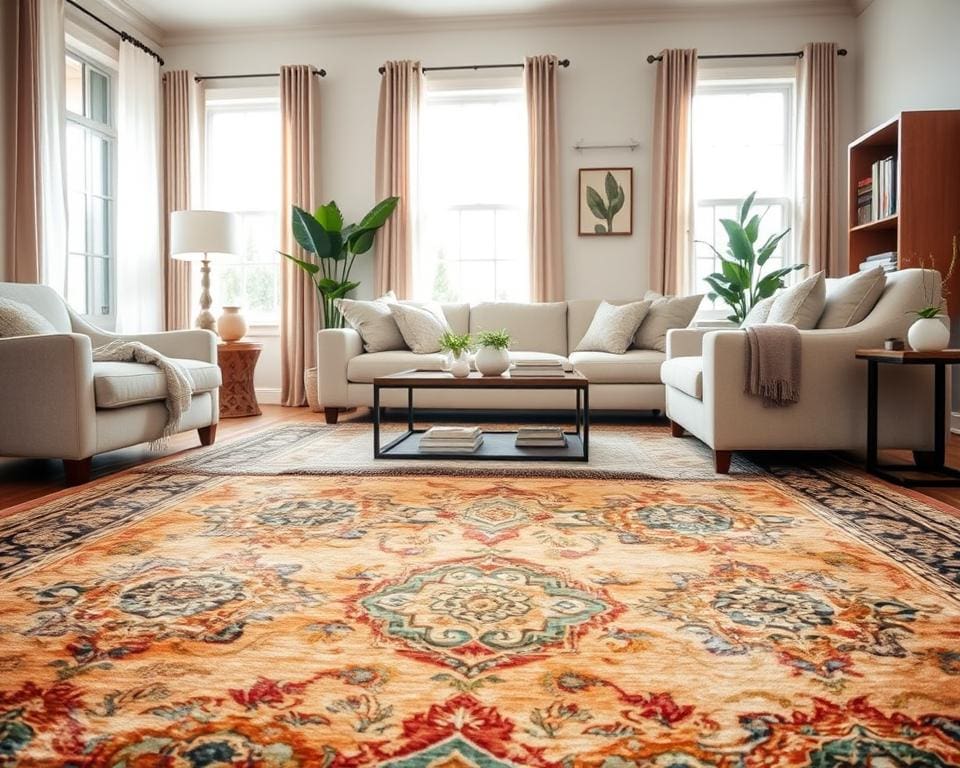
Choosing the right area rug can transform your living room. A well-chosen living room rug defines seating zones, softens hard floors like oak or tile, improves acoustics and protects surfaces from wear.
This rug buying guide helps you decide on scale, material, pile and pattern so you balance style with practicality. You will learn how to choose area rug sizes that suit typical UK room footprints and underfloor heating, and which fibres cope best with pets and children.
By the end of this short introduction you will know the key decisions to make: the correct rug size, which material and pile will last, how colour and pattern work with your decor, and what basic maintenance keeps the best rug for living room use looking great.
Understanding your living room layout and measurements
Start by surveying your living room layout to see how traffic flows and where seating naturally groups. Note doorways, radiators and the position of windows so the rug anchors the main social area without blocking movement.
Measuring your space accurately
Use a tape measure to record room length and width, then measure key pieces such as the sofa and coffee table. Accurate rug measurements help you pick a size that fits the seating group and keeps a tidy border of visible floor.
Common UK rug sizes include 120x170cm, 160x230cm, 200x300cm, 250x350cm and 300x400cm. Match these options to your room scale when you measure for rug placement.
Decide between all-legs-on, front-legs-on or a floating layout. All-legs-on gives a cohesive feel, front-legs-on works in smaller rooms, and a floating rug suits informal schemes.
Traffic patterns and functional zones
Sketch routes people take through the room and avoid placing rugs where feet must constantly cross awkwardly. Use runners for narrow paths to keep the main rug clear of heavy flow.
Define zones — a conversation cluster, TV area or reading nook — by choosing rug sizes that visually anchor each spot. Rugs near doorways should be durable and simple to clean.
How rug size affects furniture arrangement
Small rugs can highlight a single armchair but may leave seating feeling disjointed. Use them as accents rather than the main anchor.
Medium rugs under the coffee table with front legs of seating on the rug unite the group without overwhelming the room. Large rugs that take all furniture legs create a polished area and work well in open-plan spaces to separate living and dining zones.
Keep proportional balance: leave 10–30cm of visible floor in tighter rooms and 30–60cm in larger rooms. Check that rug dimensions complement your sofa length and coffee table footprint for harmony in furniture arrangement.
For design inspiration and guidance on styles that harmonise with furniture, see this rug resource which covers pattern, colour and placement ideas to suit different living room layouts.
area rug materials, pile and durability for UK homes
Your rug choice begins with materials and pile. Picking the right rug materials helps match comfort, upkeep and lifespan to your living habits. Consider where the rug will sit, who uses the room and whether you need a durable area rug for heavy traffic.
Natural fibres: wool, cotton and jute — pros and cons
A wool rug is resilient and naturally sheds dirt. It keeps its shape, offers insulation and works well over underfloor heating. Wool costs more but can last decades with prompt stain care. Look at British retailers such as John Lewis for quality wool rugs and clear care guidance.
Cotton rugs are affordable and often machine washable in smaller sizes. They take dye well for bright colours, but they can flatten faster than wool in busy rooms. Jute and other vegetable fibres give a textured, eco-friendly look suited to casual or coastal schemes. These fibres can be rough underfoot and may shed, so avoid them in dining areas and homes with pets that scratch.
Synthetic fibres: polypropylene and nylon for high-traffic areas
A polypropylene rug is stain-resistant, colourfast and budget friendly. It cleans easily with detergent and water and works well indoors and out. Polypropylene rugs can feel less luxurious than natural options, yet they make practical choices for families and rental properties.
Nylon offers strong abrasion resistance and excellent colour retention. It is pricier than polypropylene but stands up to busy living rooms and commercial use. Seek recycled synthetics where possible to lessen environmental impact, since many UK retailers list eco-friendly polypropylene and polyester ranges.
Pile types: flatweave, low pile and high pile — comfort versus maintenance
Flatweave rugs like kilims are reversible and lightweight. Their minimal rug pile makes cleaning simple and helps furniture legs sit evenly. Flatweave suits dining areas and busy zones where you need crisp patterns with low maintenance.
Low pile rugs use short fibres for easy vacuuming and strong wear resistance. They are ideal if you want a durable area rug for a high-traffic living room. High pile or shag rugs feel indulgent underfoot and reduce noise, yet they trap dust and crumbs and demand regular grooming and specialist cleaning.
Durability considerations for pets and children
Homes with pets or young children benefit from stain-resistant fibres and medium to low pile. Choose tight weaves and sturdy backing to limit snagging and matting from claws and heavy play. Avoid long shag rugs where shedding or spills are frequent.
Follow manufacturer care instructions and check warranties. Brands such as Habitat and The Rug Seller provide guidance and stain treatments suitable for UK households. Add a good rug pad to prevent slipping, cut wear and give extra cushioning for little ones.
Choosing colour, pattern and style to suit your decor
Picking the right rug can change how your living room feels. Start by noting dominant and accent tones in your sofa, curtains and artwork. Aim for balance: a tonal or neutral option can sit quietly under a patterned settee, while a bolder choice can lift plain furniture.
Identify your room’s focal point, such as a fireplace or a statement artwork. Choose a coordinating rug that echoes one accent colour or provides a calm base so the focal feature stands out. In bright rooms, darker rug colours can ground the space. In small or dim rooms, lighter rugs help open up the area but will need more care.
Using pattern to anchor or enliven your space
Match pattern scale to room size. Large-scale rug patterns suit spacious rooms and make a strong statement. Small, dense designs hide stains and pet hair, which is useful in family living rooms. Stripes lengthen narrow spaces, geometric prints add modern energy, and floral or oriental motifs bring traditional warmth.
If your upholstery is patterned, choose subtler rug patterns so the space reads as calm. If your furniture is plain, a vibrant rug patterns can become the room’s centrepiece.
Texture and layering for visual interest
Mix textures to add depth. Pair a flatweave with a smaller high-pile sheepskin or faux-fur for contrast underfoot. Textured rugs create tactile appeal and catch the eye without competing with pattern.
Layering rugs works well to define zones or protect high-use areas. Place a smaller decorative rug atop a larger neutral base, making sure rug colours and scale harmonise. Think tactile contrasts, such as a smooth leather sofa against a nubby jute rug, to create a refined, staged look.
Practical tips for buying, maintaining and placing your rug
When you buy area rug, compare national retailers like John Lewis, Heal’s, Habitat and Made.com with specialist sellers such as The Rug Seller and local independent shops. Check exact measurements, fibre content, pile height, backing type and whether the rug is suitable as an underfloor heating rug. Order swatches or samples to see colour and texture in your room’s light and consider bespoke sizes or runners for odd spaces.
For confident rug placement, align the rug with the room’s longest dimension or the main furniture layout to create balance. Use a rug pad slightly smaller than the rug to prevent slipping, protect floor finishes and add cushion. If you have underfloor heating, choose breathable backing and low tog rugs and follow the manufacturer guidance so heat transfers efficiently.
Rug maintenance starts simple: vacuum weekly, increase frequency in busy homes, and rotate the rug every three to six months to even wear and sun fade. Treat spills immediately by blotting with a clean cloth and follow fibre-specific cleaning—wool often needs specialist products while synthetics tolerate mild detergent. Trim snags with scissors rather than pulling and use enzyme cleaners for pet odour and stains.
Plan for long-term rug care and costs before you buy. A higher initial investment in wool or well-made woven rugs can mean longer life, while synthetics offer budget-friendly, low-maintenance options. Confirm size, fibre suitability and return policies, request samples, read reviews and factor in cleaning and a good rug pad when budgeting to protect your investment.