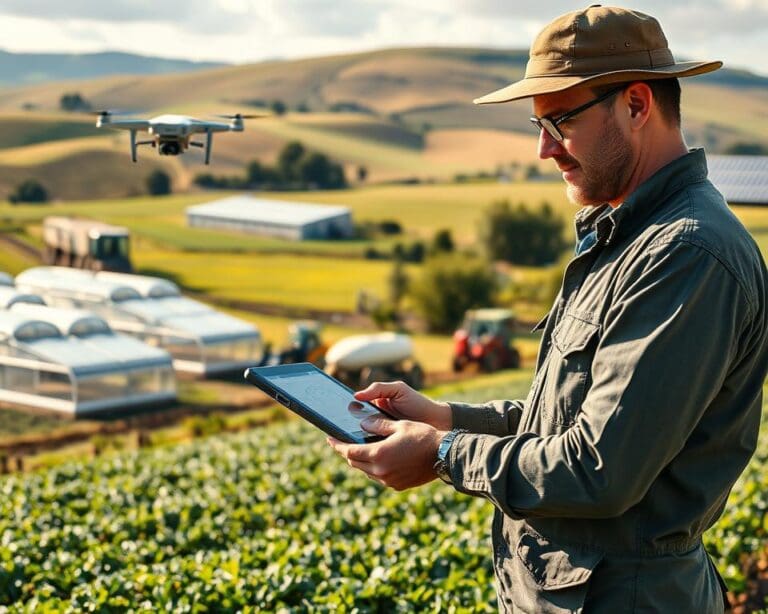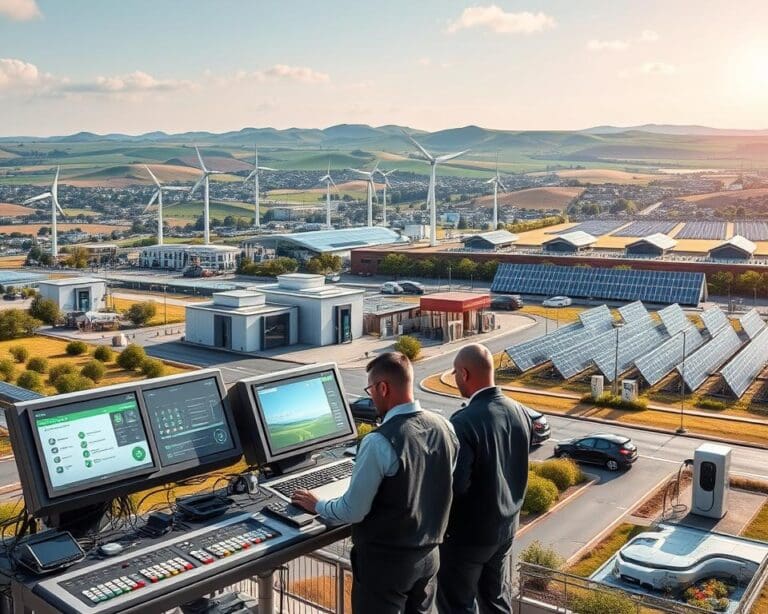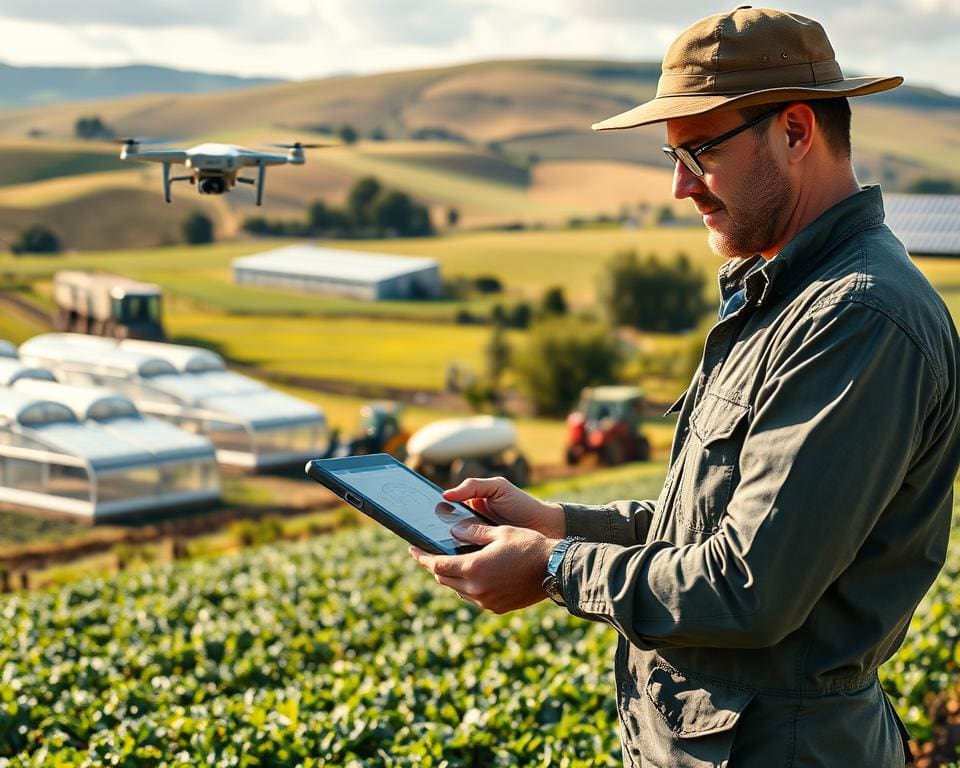
Agricultural technology now combines digital tools, automated machinery, biological advances, data systems and low-carbon energy. Together, these developments can help you produce food more efficiently while protecting soil, water and natural resources.
The UK focus matters because farms differ across England, Scotland, Wales and Northern Ireland. Arable, livestock, horticultural and mixed farms each need practical solutions that match their land, climate, labour and business goals. This is where UK agricultural innovation and agri-tech can make a clear difference.
Robotics, artificial intelligence, drones, satellite imagery and connected sensors are changing daily decisions. Precision agriculture, soil-monitoring systems, renewable energy and improved crop varieties are also shaping the future of farming. These tools can support smart farming without removing the value of your experience.
Farming technology is not only for large businesses. Mobile applications, shared machinery, contractor services and modular systems can help smaller and family-run farms adopt technology at a manageable pace. The right approach can improve productivity, reduce input waste, support animal welfare and lower operating costs.
Successful technology in agriculture depends on more than buying equipment. You also need reliable data, rural connectivity, staff training, technical support and compatible systems. Guidance from Defra, Innovate UK, the Agriculture and Horticulture Development Board and UK farming innovation programmes can help you assess value and plan investment.
How agricultural technology is reshaping UK farming
UK farming technology is changing how you plan, monitor and manage daily work. Digital records, automated equipment and real-time alerts help you spot problems early. This supports better choices across crops, livestock, soils and labour.
For arable farms, yield maps, satellite imagery and soil tests reveal changes within each field. You can use this information to target seed, fertiliser and crop protection products. Variable-rate applications reduce waste and support stronger farm productivity.
Livestock businesses can use electronic identification, automated weighing and activity monitors to track animal performance. Health alerts may highlight changes in eating, movement or weight before a visible illness develops. These tools support welfare checks and more accurate feeding plans.
Horticultural businesses gain value from protected cropping, automated irrigation and climate controls. Sensors can adjust water, heat and ventilation as conditions change. Robotic harvesting may improve consistency and reduce damage, waste and pressure on seasonal staff.
Connected records are useful on mixed farms. You can link crop plans with livestock movements, grassland use, manure applications and environmental schemes. This wider view helps you manage resources across the whole holding rather than treating each task in isolation.
Automation has a clear role in responding to labour shortages in agriculture. Machines can handle repetitive, heavy or time-sensitive work, such as field monitoring, milking routines and crop inspection. Your team can spend more time on skilled decisions, animal care and maintenance.
Rising prices for fuel, fertiliser, feed, water, energy and labour make careful resource use essential. Sensors and precision systems help you measure what each crop, animal group or glasshouse zone needs. The financial return depends on farm size, equipment costs, data quality and how well the system fits your work.
Climate pressure adds another reason to invest in resilient farming. Drought, flooding, heat stress and changing pest patterns can disrupt familiar plans. Weather forecasts, soil-moisture sensors and decision tools help you adjust irrigation, planting, spraying and harvest timings.
Consumers and retailers expect clear evidence of traceability, animal welfare and lower emissions. They may seek proof of responsible antibiotic use and environmental care. Accurate digital records help you show how food is produced, provided that access is controlled and information is securely stored.
Agricultural data can come from machinery, soil tests, weather stations, livestock sensors, satellite platforms and farm-management software. When these sources work together, you can compare performance and identify trends. Good farming innovation turns complex readings into practical actions.
Data should support decisions rather than create extra paperwork. You need systems that are simple to use, compatible with existing machinery and able to provide clear recommendations. Strong farm efficiency comes from applying useful information at the right time.
Defra agricultural statistics and policy publications provide a useful view of national change. AHDB guidance, agricultural colleges, knowledge-exchange programmes and Innovate UK agri-tech projects can support training and trials. Testing a system on a small area can help you assess its value before making a major investment.
Across British agriculture, technology works best when it matches your land, workforce and production goals. A careful approach lets you improve accuracy, reduce waste and build skills without losing sight of practical farm needs.
Robotics, automation and artificial intelligence in agriculture
Modern machinery can take on repetitive work with greater accuracy and less operator input. Advances in connected technology support better decisions, safer routines and more efficient use of labour across UK farms.
Autonomous farm machinery and robotic systems
Autonomous tractors use GPS, guidance systems, cameras and onboard software to follow planned routes. You can use them for drilling, cultivation or spraying, with fewer missed areas and overlaps. Semi-autonomous models still need an operator, yet they can reduce steering effort and improve working accuracy.
Robotic harvesting is developing in orchards, vineyards, soft-fruit farms and field vegetable systems. A machine must spot ripe produce, avoid bruising and work through changing light, rain and crop conditions. This makes harvesting harder to automate than many other farm tasks.
Automated milking systems let dairy cattle choose when to enter the milking unit. The equipment records milk yield, milking frequency and selected animal-health indicators. You need suitable housing, reliable maintenance and careful herd-management routines to gain value from this form of farm automation.
Targeted weeding robots use cameras, GPS and mechanical tools to distinguish crops from weeds. They can reduce herbicide use and manual labour. Precise treatment between plants may limit waste, though muddy ground, dense crops and poor visibility can affect performance.
- Check whether the machine suits your crop, field size and terrain.
- Assess battery capacity, charging time, maintenance and software updates.
- Plan operator training, risk assessments, safeguards and supervision.
- Compare ownership with contractors or equipment-sharing schemes.
Artificial intelligence for smarter farm management
Artificial intelligence in agriculture turns records from machinery, livestock and fields into useful patterns. AI farming tools can help you plan work, monitor crop stress and compare input use across fields. Cloud systems store and process this data, which makes farm management software easier to scale.
Automation can maintain consistent working depths, routes, application rates and milking procedures. This supports accurate operations and may reduce avoidable input waste. Reliable connectivity remains important, since weak signals can delay data transfer or remote control.
UK research institutions, agricultural colleges and Innovate UK projects are testing new systems. Small Robot Company and Saga Robotics are linked with field robotics and crop-care development, while Fendt produces advanced tractor technology. Check whether a product is commercially available, in field trials or still a research prototype.
Drones, satellite imagery and computer vision
Agricultural drones can survey crops quickly and capture detailed images of difficult areas. Satellite data offers wider field coverage over time. Computer vision helps software identify weeds, gaps, disease signs and crop variation from these images.
You can combine these tools with machinery records and weather data to target inspections or treatments. The main barriers include purchase costs, battery limits, permissions, data skills and dependable maintenance. Operators still need training and clear safety procedures around people, livestock and aircraft.
Precision agriculture and connected farming technologies
Precision agriculture UK systems use location-specific information to manage fields, crops, livestock and machinery. You can respond to changes in soil, weather, crop growth and animal needs instead of treating every area in the same way.
GPS farming and guidance systems help you follow consistent routes across a field. Accurate positioning can reduce missed areas, limit overlap and cut fuel, seed, fertiliser and chemical use. It can guide planting, spraying, spreading and harvesting with greater accuracy.
Connected farming links equipment, sensors and digital services. This approach forms part of Internet of Things agriculture, where devices collect and share data. Soil-moisture probes, weather stations, water meters, livestock trackers, grain-store monitors and machinery telematics can provide useful information.
Farm sensors can measure soil moisture, temperature and electrical conductivity. These readings may support decisions about irrigation, trafficability, cultivation and nutrient management. You can spot dry zones, wet areas or changing soil conditions before they affect crop performance.
Real-time weather monitoring gives you rainfall, wind speed, temperature, humidity and frost-risk data. Disease models can add insight into infection conditions. This information can improve the timing of spraying, irrigation, fertiliser application and harvesting.
Smart irrigation uses soil-moisture readings, weather forecasts, crop needs and flow controls to apply water where it is needed. This can reduce abstraction, energy use, runoff and crop stress. Alerts can help you react when pipes fail, tanks run low or moisture levels fall.
Variable-rate technology adjusts the amount of seed, fertiliser, lime or pesticide applied across a field. Rates may reflect soil fertility, yield potential, weed pressure, crop requirements or defined field zones. This can reduce unnecessary inputs while supporting more even crop growth.
Reliable data is vital for variable-rate application. You need accurate field boundaries, dependable positioning, calibrated machinery and suitable prescription maps. Regular checks in the field can confirm that the system is applying the planned rate.
Farm management software can bring data together from fields, machinery, livestock records, weather services and financial systems. A suitable platform can help you maintain records, plan jobs and monitor performance. It may support assurance checks and environmental reporting, too.
Interoperability matters when you use products from different suppliers. Systems should exchange data without repeated manual entry. Poor compatibility can create duplicated records, isolated information and errors that weaken the value of connected farming.
Rural broadband and mobile coverage affect how well digital tools work. Weak connectivity can interrupt cloud-based platforms, stop real-time alerts and limit the use of connected machinery. Offline functions, local data storage and clear signal planning can reduce disruption.
Digital systems bring security risks. Unauthorised access, ransomware, weak passwords and insecure devices can expose commercially sensitive farm data. Use secure accounts, software updates, access controls and regular backups, with clear responsibilities agreed with suppliers.
Your team needs practical training before relying on digital tools. You should know how to calibrate sensors, read dashboards, check data quality and respond when a device or connection fails. Guidance from the National Farmers’ Union, AHDB, Defra and the National Cyber Security Centre can support safer adoption.
- Define one clear problem, such as uneven irrigation or overlapping spray routes.
- Test the technology across a limited area and record its costs, savings and environmental effects.
- Review the data, check the equipment and measure the results with your existing method.
- Expand the system only when it delivers clear value for your farm.
This staged approach keeps investment under control and gives you time to build staff confidence. Research programmes in UK agricultural technology can offer further insight into data governance, connectivity and reliable field use.
Sustainable agricultural innovations for a resilient future
Sustainable agricultural technology can improve environmental performance without reducing farm income. You should assess each change across soil, water, biodiversity, emissions, animal welfare and long-term profit. Digital records, satellite images and machinery data can support reduced tillage, cover crops and wider rotations. They also help you track soil cover, traffic, erosion risk and crop performance. This approach supports sustainable UK farming and can strengthen local supply chains, including those serving a local produce business.
Regenerative agriculture technology gives you better insight into soil health. Monitoring systems can record organic matter, nutrients, moisture, compaction, pH and biological activity. Soil carbon monitoring is useful, but results depend on sampling depth, location, laboratory methods, baseline data and the period measured. Reliable records matter when reporting carbon gains. Healthier soils can improve fertility, biodiversity, water infiltration and water retention. They may also reduce drought damage, flooding, cultivation passes and crop establishment problems.
Renewable energy on farms can include solar panels, wind systems, biomass and anaerobic digestion. Subject to planning and environmental rules, digestion can turn suitable organic material into biogas and digestate. Batteries and smart controls can store power and manage refrigeration, irrigation, drying, milking and protected cropping. Electric farm machinery may cut noise, fuel use and local emissions for selected tasks. However, range, charging access, power demand, cost and field conditions still need careful review.
Climate-resilient agriculture also depends on suitable crop varieties, including those with drought tolerance, disease resistance and efficient nutrient use. Gene editing is different from conventional breeding and genetic modification, and its UK use depends on policy, safety checks and public acceptance. Biological pest control, beneficial insects, microbial products and pheromone traps can support integrated pest management. Agroforestry, vertical farming, aquaponics and diversified rotations offer further options, but energy use, capital, land and market access matter. In line with the Agriculture Act 2020, Defra’s Environmental Improvement Plan, the Sustainable Farming Incentive, Environment Agency guidance, UKCEH evidence and Rothamsted Research, you should compare whole-farm impacts before investing. No single innovation can solve every environmental challenge.