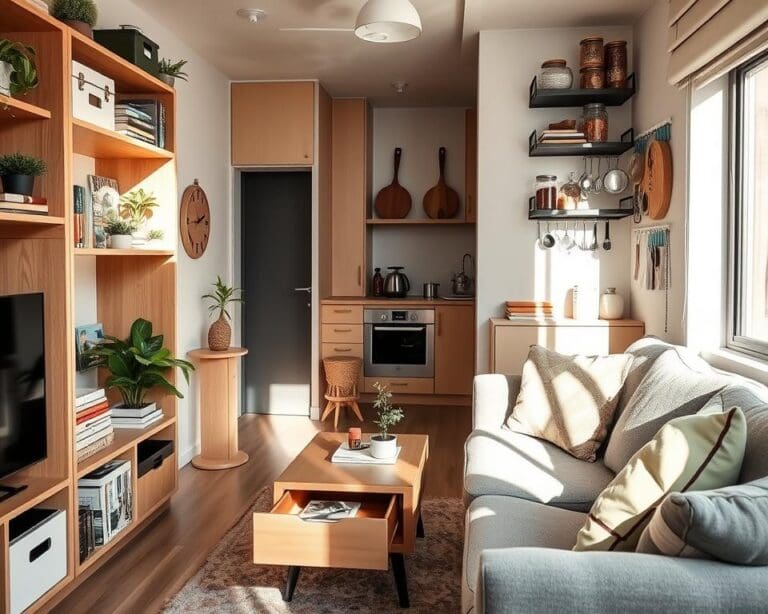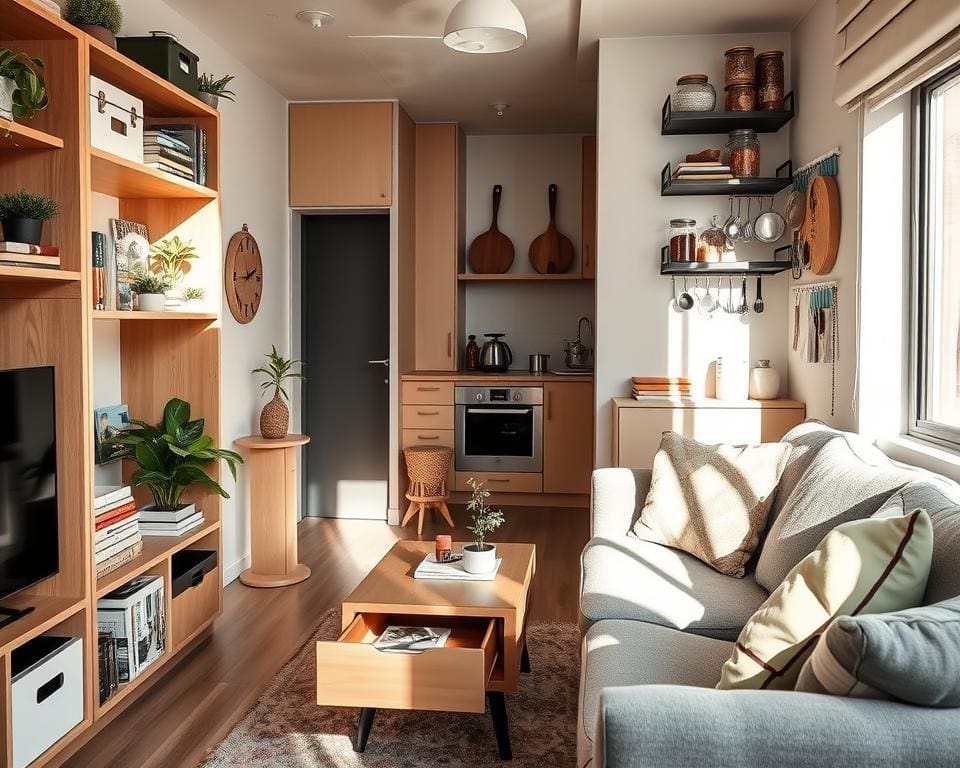
This guide shows you practical, budget-aware ways to increase usable storage in flats and small homes across the United Kingdom. You will learn how to declutter small spaces, spot space-saving tips UK landlords will accept and apply storage solutions for small homes without major renovation.
Efficient storage reduces visual clutter, makes cleaning easier and improves the flow of daily life. Research links clutter with stress, and well-organised rooms often feel larger and more welcoming. That matters whether you rent in London, own a compact flat in Manchester or share a terrace in Birmingham.
We introduce four core principles you can use right away: assess and plan before you buy, exploit vertical and hidden spaces, choose multifunctional furniture and set simple organising and maintenance habits. The sequence is straightforward: assessment → interventions (vertical and hidden) → systems and upkeep to maximise storage and keep results lasting.
Practical UK considerations are woven through the guide. Many Victorian terraces have narrow staircases and new-builds lack built-in cupboards. For renters, low-damage fixes such as Command strips, adhesive hooks and freestanding units are often the fastest route. Affordable retailers like IKEA, John Lewis, Argos and B&Q supply a wide range of ready-to-fit options for small home storage.
Read on for clear steps to declutter small spaces and apply storage solutions for small homes that save time, reduce stress and make every square metre work harder for you.
small home storage: smart planning and space assessment
Begin with a clear plan before buying shelves or boxes. A quick storage audit helps you spot clutter hotspots and tailor solutions to your lifestyle. Take notes, set simple goals and follow a decluttering checklist so each step remains manageable.
Survey your space and storage needs
Work room by room and list categories such as clothing, books, kitchenware and paperwork. A brief storage needs assessment reveals where items gather and which zones overflow most often.
Note daily routines that affect storage, such as mornings in the kitchen or evenings in the living room. Take photos to document the current state and to track progress after changes.
Measure and map available areas
Measure rooms, cupboards, alcoves and ceiling height so you can exploit vertical space. Be sure to measure doors and window positions to avoid blocking access or light.
Create a simple floorplan on grid paper or an app and mark radiators, sockets and vents. This step lets you plan freestanding units for rented homes without making structural changes.
Set storage goals and prioritise
Decide what you want to achieve: clear floors, easier access or extra hobby space. Set measurable targets, for example freeing up 1.5 metres of hallway or reducing living-room items by a percentage.
Use the rule keep, donate, sell, recycle, store when you sort. Prioritise belongings by use so daily items stay within reach and seasonal goods move to higher or external storage.
- Start with a decluttering checklist to remove obvious excess.
- Plan a budget and stage projects: immediate low-cost fixes first, medium-term buys next and long-term fittings last.
- Check permissions for flats or listed buildings before major changes.
Make the most of vertical and hidden spaces
When floor space is limited, look up and beneath to reclaim usable room. Vertical storage and tucked-away solutions free your main living area, create the impression of height and keep clutter at bay.
Use wall-mounted shelving and cabinets
Fit adjustable shelving like IKEA IVAR or ALGOT, Habitat floating shelves, or custom plywood units to gaps and alcoves. Wall shelves UK options come in many sizes so you can tailor storage to odd angles and narrow hallways.
Fix shelving into studs where possible or choose plasterboard anchors rated for the load. Renters can use picture rails or tension pole shelving to avoid drilling.
Keep everyday items at eye level and lighter décor higher up. Closed cabinets reduce visual noise. Slim cupboards above radiators or shallow wall-mounted units help in tight corridors.
In the kitchen, add rail systems for utensils, spice racks inside door panels and, if ceiling height allows, overhead pot racks to free worktop space.
Invest in multi-functional furniture
Choose pieces that serve more than one purpose, such as sofa beds and ottomans with storage, BRIMNES storage beds or JOHN LEWIS wardrobes with integrated organisers. These items cut the need for extra cupboards.
For work-from-home flats, pick fold-down desks or wall-mounted drop-leaf tables like the NORBERG to create a workspace that disappears when not in use.
Prioritise build quality and smooth mechanisms. Check weight limits, dimensions and stability. Secure tall units to the wall to prevent tipping.
Utilise under-stairs and under-bed areas
Under-stairs storage solutions can be converted into cupboards, pull-out drawers or shelving for shoes, coats and pantries. In rented homes use freestanding modular drawers or narrow shelving that fits the stair void.
Under-bed storage works well for seasonal clothes and linens. Use rolling boxes, vacuum-seal bags or branded options such as IKEA SKUBB or Argos underbed drawers for easy access.
Protect textiles and papers with breathable cotton bags or acid-free boxes. Avoid storing valuables in damp under-stair spaces; use silica gel or a small dehumidifier if needed.
Store rarely used items under beds or stairs and label containers clearly. Clear-front boxes speed retrieval and keep your system working without fuss.
Practical organising systems and maintenance habits
Start with modular organising systems that suit your items. Use drawer organisers, dividers and small boxes such as Muji acrylic organisers, IKEA VARIERA and SKUBB, or John Lewis storage accessories to keep cutlery, jewellery, cables and stationery in order. Vertical file organisers and magazine racks tame paperwork; scan important documents with Adobe Scan or Microsoft Lens and back them up to the cloud to reduce paper clutter.
Adopt simple labelling tips to speed retrieval. A label maker or printed labels on boxes and shelves makes storage more usable, and colour-coding by room or category gives instant visual cues. Keep storage accessories UK-friendly: clear stackable boxes, slimline non-slip hangers and cascading hangers make a big difference in wardrobes and cupboards.
Build a decluttering routine with daily and weekly habits. Spend five minutes clearing surfaces at the end of each day, return items to their places and deal with mail straight away. Weekly, tidy high-traffic zones, launder and rotate bedding, and review seasonal items. Schedule a monthly mini-audit to reassess problem areas and apply a one-in, one-out rule for clothing to prevent build-up.
Plan seasonal deep-cleans twice a year and use UK marketplaces like Gumtree, Facebook Marketplace or eBay to sell unwanted items, or donate to local charities. Fit small investments—hooks, pegboards such as IKEA SKUGGIS alternatives, door-mounted organisers from Argos or Dunelm—and assign household zones so everyone knows where things belong. Start with one small intervention this week, take before-and-after photos, then refine your organising systems as you learn what works for your home.