
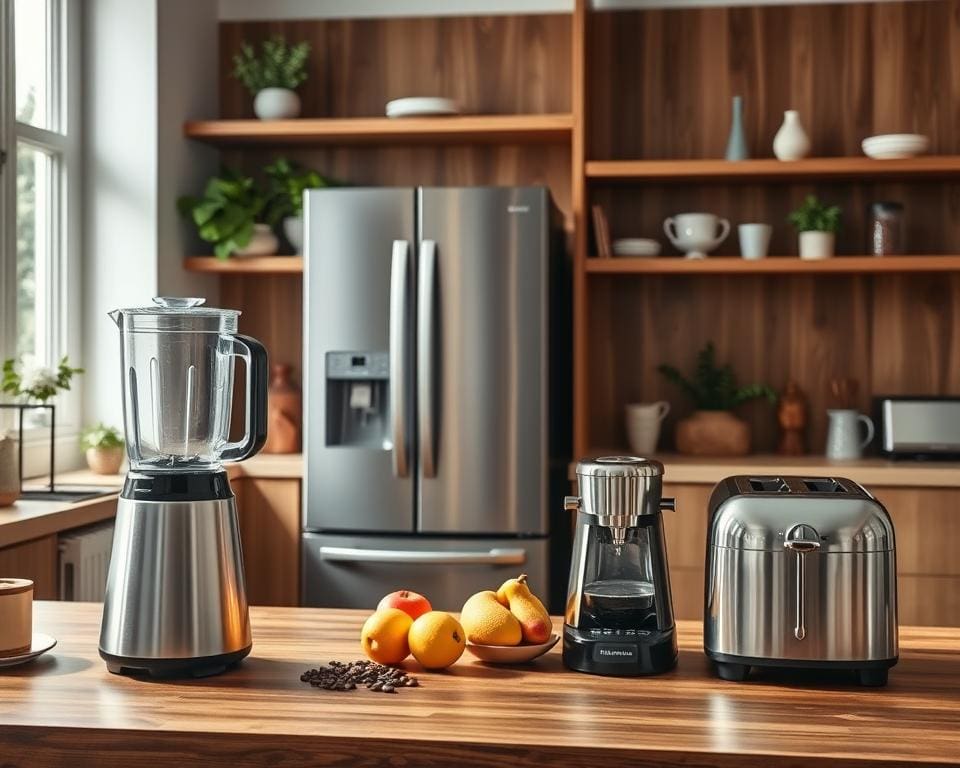
You want clear advice on which kitchen appliances will give you real value over time. This kitchen appliance buying guide explains how to prioritise purchases based on performance, durability, energy use and fit with your daily routine.
The focus is practical: whether you own a home, rent, or are planning a renovation in the United Kingdom, you’ll learn which appliances worth investing in typically repay their cost through reliability, lower running bills and stronger resale appeal.
We judge appliances by build quality, cooking performance, energy efficiency (Energy Performance labels and kWh use), expected lifespan and the availability of warranty and service from brands such as Bosch, Miele, Smeg, Neff, Siemens, Whirlpool, Samsung and Hotpoint.
Typical lifespans help you decide: reliable ovens and ranges often last 10–15 years, fridges and freezers 10–12 years, dishwashers 7–12 years and hobs and extractors 10+ years. Specialist items like built‑in steam ovens and integrated coffee machines can be durable but vary more by model and brand support.
This short introduction sets out what to expect in the full piece: Section 2 helps you assess needs, Section 3 identifies the best kitchen investments, and Section 4 shows when to save and when to splurge on durable kitchen appliances.
How to decide which kitchen appliances suit your needs
Begin by taking a frank look at your meal preparation habits. Note how often you cook, the types of recipes you use and whether you need large-capacity appliances for family cooking appliances or compact units for a one- or two-person household. This simple audit helps you assess cooking habits and pin down your kitchen appliance needs.
Assessing your cooking habits and lifestyle
If you cook daily and enjoy baking, you will value ovens with precise temperature control and even heat. If you mostly reheat ready meals, lower-spec models meet your needs and save money. Consider whether you entertain often; premium ranges and integrated appliances can boost both performance and home value.
Budget versus long-term value
Separate upfront cost from total cost of ownership when weighing budget kitchen appliances against long-term value appliances. Factor in energy use, expected lifespan and likely repair bills. A higher-priced, energy-efficient fridge can offer better appliance ROI over ten years than a cheap, inefficient model.
Space, layout and energy considerations for your kitchen
Use practical kitchen space planning before you buy. Measure for built-in ovens, tall fridges and integrated appliances so cabinetry and door swings work. Check ventilation needs for hobs and extractors, and confirm your electrical supply can handle high-power ranges or induction hobs.
Think about creating an energy-efficient kitchen. Read energy labels and kWh figures to estimate running costs against UK electricity tariffs. Good insulation, clearance for ventilation and correct installation extend compressor life and lower bills.
Warranty, service and brand reputation
Research appliance warranty UK terms and the quality of appliance service and repairs. Brands such as Miele, Bosch, Samsung and Whirlpool have established UK aftercare networks and spare-part availability. Register purchases, keep receipts and follow maintenance guidance to protect warranties and simplify aftercare.
Check independent reliability data from Which? and retailer reviews to spot consistent patterns. Consider extended warranties only if they add genuine cover beyond the manufacturer’s guarantee and match the appliance’s expected role in your household.
Kitchen appliances that typically justify the cost
When you plan a kitchen upgrade, some purchases repay you in daily performance and long‑term value. Think about appliances that improve results, save energy and raise your kitchen’s appeal. Focus on core items first and assess how each will fit your routine.
Ovens and ranges: choose models with accurate controls and durable build to get the best outcomes. True convection improves browning and cooking times while stronger fan motors keep temperatures steady. A range cooker investment can be transformative for frequent hosts, while built‑in oven longevity matters if you want fewer repairs and lasting seals. Look for pyrolytic cleaning, steam functions and flexible cavities for family life.
Refrigeration: modern fridges deliver real savings and better food care. Energy-efficient fridges with inverter compressors cut running costs and quieten operation. Good insulation and multi‑zone cooling extend fridge lifespan and limit waste. Follow simple food preservation tips such as correct temperature settings to protect quality and reduce spoilage.
Dishwashers: you save time and water with a high‑efficiency model. Newer machines outperform handwashing for hygiene and use less water on many cycles. Consider dishwasher efficiency ratings and choose an option sized for your household. Slimline dishwasher benefits suit flats and small kitchens, while full‑size units serve busy families. Reliability and sensible maintenance keep performance high.
Hobs and extractors: induction hobs UK models heat fast and are energy efficient. They pair well with magnetic cookware and support safe, responsive cooking. Good extractor fan efficiency protects surfaces and improves ventilation for kitchens, removing steam, grease and smells. Choose the best kitchen hobs and an extractor with suitable m3/h and low noise for open‑plan layouts.
Specialist appliances: built‑in steam oven units and an integrated coffee machine reward specific lifestyles. A built‑in steam oven lifts baking and roasting quality, while a bean‑to‑cup coffee system saves café trips and delivers consistent drinks. Specialist kitchen appliances and luxury kitchen appliances add convenience and appeal, but only justify the cost if you will use them often.
To get the most from premium purchases, check power and installation needs before you buy. Match capacity to household size and pick brands known for service and parts availability. When chosen carefully, these appliances can enhance daily cooking, reduce waste and strengthen the value of a fitted kitchen.
When to save and when to splurge on appliances
Decide where to spend by thinking about how you use your kitchen. If you cook every day, host often or want to raise property value, splurge on core items that define performance and run for long hours — the oven, fridge, dishwasher and hob/extractor. These invest in durability, energy efficiency and reliable brands, and they often repay you through lower running costs and fewer repairs. This is practical appliance buying advice UK buyers use when weighing cheap vs expensive appliances.
Save on small or occasional gadgets. Kettles, basic microwaves and toasters are easy to replace and rarely affect cooking quality, so mid‑range models or seasonal deals are sensible. For trend‑led or single‑use items — speciality blenders or novelty toasters — wait for sales or choose secondhand or certified refurbished units from reputable sellers to save on kitchen gadgets without losing function.
Timing and negotiation matter. Look for Black Friday, end‑of‑line clearances and retailer finance offers, and ask for installation and disposal to be included in the price. Compare energy labels and calculate expected running costs rather than choosing purely on sticker price. Also consider integrated, higher‑spec appliances if your kitchen is part of a long renovation to complement cabinetry and boost resale appeal; see a detailed renovation cost breakdown at TopVivo.
Use a short checklist before you buy: match the appliance to your cooking habits and space, check energy ratings and warranty terms, read real user reviews and balance upfront cost with likely lifespan. That approach helps you know when to splurge on appliances and when cheap vs expensive appliances makes better sense for your home and budget.