Choosing the right wall art can transform a room. This guide will walk you through creative wall art styles, practical selection principles and budget‑sensitive options so you can lift your home’s look with confidence.
Wall art matters because it anchors a room and expresses your personality. The right piece defines scale and colour, brings cohesion and can even enhance perceived value in living rooms, dining rooms, bedrooms, hallways and home offices across the UK.
You’ll find discussion of many forms of interior wall art, from framed prints and original paintings to limited‑edition prints, photography, tapestries and mirrors. We also cover sculpture and three‑dimensional works, plus sustainable and budget choices like prints from Etsy, posters, DIY pieces and second‑hand finds on eBay or in charity shops.
By the end of the article you’ll know which styles suit your rooms, how to choose the best wall art size and placement, and how to light and preserve pieces. You’ll also learn how to balance stylish wall decor with your budget and everyday lifestyle.
For inspiration, look to Tate Modern and the National Gallery for colour and composition, consult Elle Decoration and Homes & Gardens for trends, and explore marketplaces such as Etsy, Not On The High Street and Made.com for accessible home wall art ideas.
Creative wall art styles to define your space
Choosing the right art styles for interiors helps you shape mood and function. Use these approaches to make a room feel curated, lived-in or bold. Start with a clear intent and build from there.
Gallery walls that tell your story
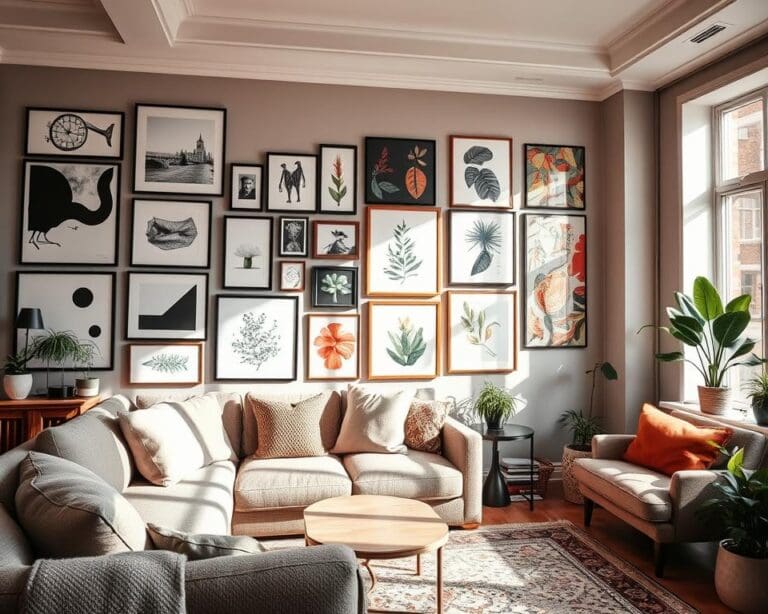
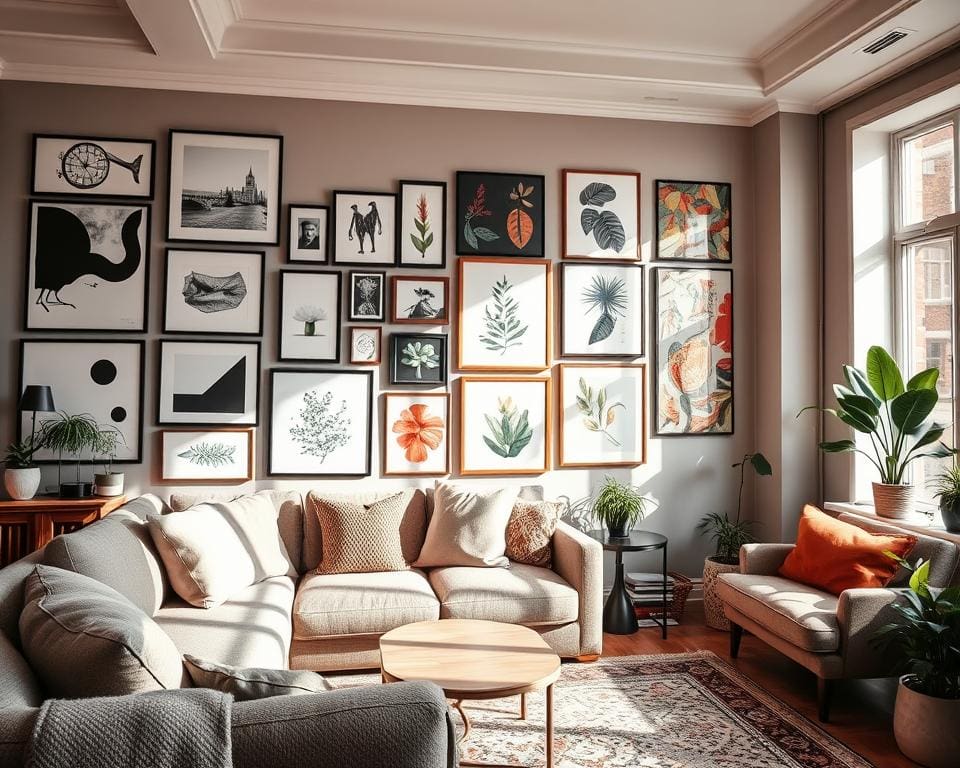
A gallery wall is a curated arrangement of multiple artworks, photographs, prints and objects grouped to create a cohesive display. It excels at personal storytelling through travel photos, family portraits, illustrations and mixed media.
For composition, pick a consistent theme such as colour, frame style or subject. Lay pieces out on the floor before you commit to the wall. Use a central anchor piece or hang by a horizontal centre line at about 150cm from the floor as a starting guideline for living areas in the UK.
Common arrangements include grid, salon and linear layouts. Choose uniform frames for a polished look or mixed frames for eclectic charm. Use acid‑free mounts to preserve prints. Picture rails or systems like Gallery System protect plaster walls and give flexible hanging options.
Explore prints at the Victoria & Albert Museum for classic images and independent sellers on Etsy or Society6 for original finds that suit your gallery wall ideas.
Statement pieces for focal impact
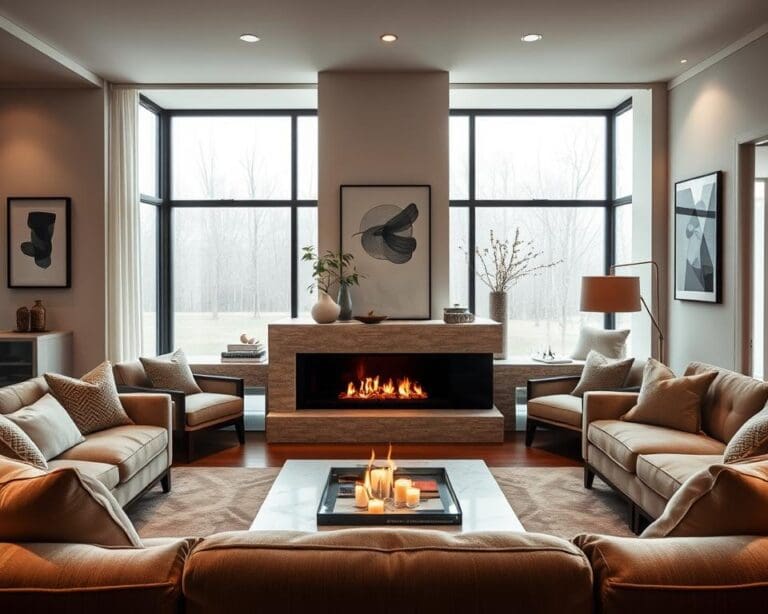
A single large work can anchor a room and set the tone. Look for bold composition, colour or scale to draw the eye. Statement wall art works well above sofas, mantels and dining consoles.
Consider placement so the piece reads at eye level and balances surrounding furniture. Pick a work that contrasts with the room’s palette or echoes a key tone to create cohesion. Museums such as Tate and commercial galleries can inspire choices and provenance.
Textural art and three‑dimensional works
Textural wall decor adds depth through materials such as woven fibre, plaster relief, metal or reclaimed wood. These pieces engage touch and light to change the room’s feel across the day.
Three-dimensional wall art brings sculptural interest without using floor space. Small clusters of relief work or a single protruding sculpture can create striking shadow and movement.
When mixing textures, balance scale and keep sightlines clear. Use wall-mounted fixings rated for the weight involved. Galleries and makers specialising in craft and contemporary ceramics are good places to source authentic textural wall decor and three-dimensional wall art.
How to choose wall art that suits your interior
Choosing art for your home starts with clear priorities: style, scale and function. Use this short guide to choose wall art that complements your scheme, lifts natural light and lasts for years. Keep choices practical so the result feels considered rather than cluttered.
Matching artwork to your room’s style
Identify your room’s style first. Modern spaces suit clean, minimal prints. Contemporary interiors welcome bold abstract colour fields. Traditional rooms pair well with classic oil landscapes or framed prints. Scandinavian schemes favour simple botanicals and natural textures. Industrial lofts take to large graphic prints or reclaimed metal pieces. Bohemian rooms thrive on eclectic mixed media and textiles.
Apply the 60–30–10 colour rule: the room’s dominant colour 60%, a secondary tone 30% and an accent from the artwork 10%. Use art to introduce an accent or to echo existing tones from paint or soft furnishings. For paint palettes, brands like Farrow & Ball offer reliable pairing ideas and inspiration from galleries such as the Royal Academy can refine your choices.
Picking the right size and placement
Scale matters. Refer to a simple wall art size guide before you buy. A good rule is to let art span about two‑thirds the width of the furniture beneath it. Oversized mirrors or canvases can overwhelm small rooms; tiny pieces will look lost on large walls.
Consider sightlines and patterns. Bold wallpaper needs subtler art. Small rooms benefit from lighter, brighter works to avoid a boxed‑in feel. Use the following art placement tips when you hang pieces:
- Hang art at eye level, roughly 150cm from floor to centre.
- Create groups with even spacing; treat a cluster as one large piece.
- Align frames with furniture edges for a cohesive look.
Lighting and preservation considerations
Good lighting for art makes colours sing and details readable. Position pieces to catch natural light or place wall lights and picture lamps nearby to boost illumination. Mirrors help disperse light across a room; read suggestions on mirror use at wall mirrors as eye-catchers.
Think about preservation when you place art. Avoid direct sunlight on delicate works and keep distance from radiators or humid bathrooms. Use UV‑filtering glass for prints and consider conservation‑grade framing for originals. For routine care, dust frames with a soft cloth and clean glass with a gentle cleaner applied to the cloth, never sprayed directly.
Follow these steps and your choices will reflect the room’s character, while practical measures ensure the art remains a lasting part of your interior.
wall art ideas to match your budget and lifestyle
When you’re balancing taste with thrift, affordable wall art can transform a room without breaking the bank. Start with high‑quality prints, posters or rolled canvases from Etsy, Society6 and Desenio, and watch framing choices lift the look. For cheap wall art ideas, check framed poster sales at The Range and IKEA’s art prints; use mounts and inexpensive frames from Wilko or Hobbycraft to give budget wall decor a polished finish.
If you can spend a little more, mid‑range pieces offer personality and provenance. Look for curated prints from independent UK galleries, limited‑edition prints on Saatchi Art and finds at the Affordable Art Fair. Platforms such as Artfinder and local university graduate shows are great for original works by emerging artists that stay within a sensible price bracket.
Plan at least one investment piece if you aim for longevity. Buy from reputable galleries or auction houses—Sotheby’s contemporary sales are one route for higher value works—and always ask for provenance and condition reports. Resale value matters, so factor in documentation and insurance when purchasing a statement original.
Match art to your lifestyle: homes with pets or young children benefit from glazed frames or lightweight acrylic, and avoid fragile sculpture in busy zones. If you move often, choose unframed prints or rollable canvases and modular systems that travel well. For sustainable wall art, explore vintage prints, charity shop frames and second‑hand platforms like eBay and Gumtree, or commission pieces made from reclaimed materials to combine ethics with style.
Finally, practical buying tips will keep you secure: check return policies, shipping protection and framing options, and request extra photos for second‑hand or high‑value pieces. Use sales and vouchers to stretch your spending, and mix price points—pair an investment piece with economical prints and DIY accents to create layered, personal lifestyle wall decor UK that suits both your budget and everyday life.