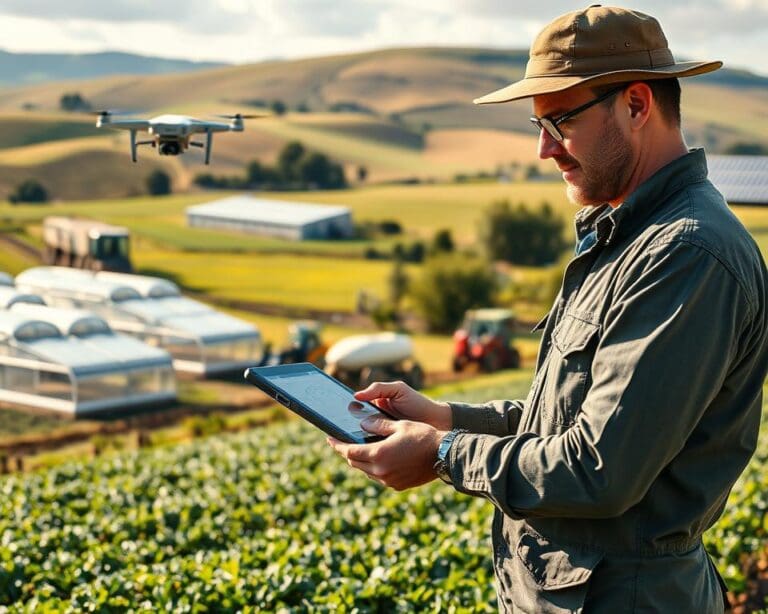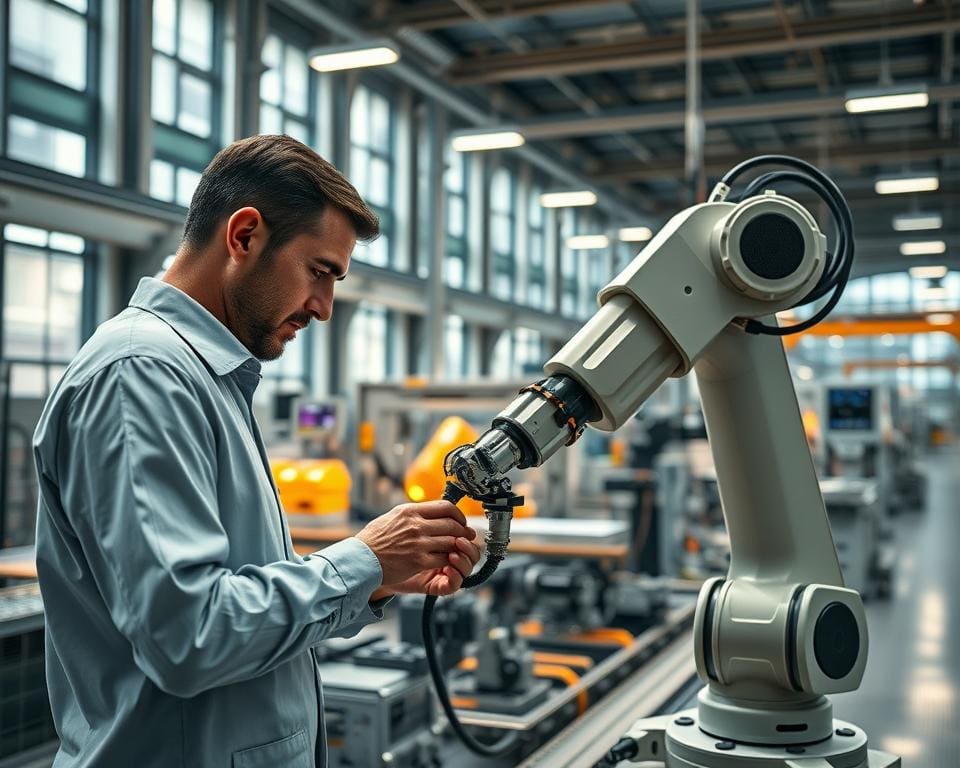
You are seeing AI reshape shop floors across sectors from automotive and aerospace to food and pharmaceuticals. AI in manufacturing embeds data-driven decision making into everyday operations, turning traditional factories into smart factories UK that react faster and make fewer mistakes.
Artificial intelligence production covers a range of capabilities: machine learning for demand forecasting, computer vision for fault detection, deep learning for quality inspection, natural language processing for maintenance logs, reinforcement learning for process control and edge AI for low-latency control at the machine level.
For UK manufacturers, Industry 4.0 is more than a buzzword. National initiatives such as Innovate UK funding and a drive to strengthen the aluminium and automotive supply chains make AI-driven manufacturing a strategic priority. You need resilience, competitiveness and sustainability to boost productivity after Brexit.
Success depends on data and connectivity. IoT sensors, robust OT–IT integration, reliable data pipelines, cloud and edge computing and standards like OPC UA form the foundation. Digital twins then combine those streams into simulation and optimisation tools you can trust.
Risk and governance matter as much as technology. You must address data governance, cybersecurity, model explainability and compliance with the Data Protection Act and GDPR. Start with pilots, clear KPIs and change management before scaling AI across production lines.
This article will show how AI-driven manufacturing delivers measurable value: reduced downtime, improved quality, lower costs, faster time-to-market and targeted workforce upskilling. For a practical primer on business impacts, see this analysis from TopVivo on how AI affects business: how does artificial intelligence affect business.
AI in manufacturing: core applications reshaping production
AI touches every stage of production. You can use models to forecast failures, spot defects, tune processes and streamline supply decisions. The following subsections outline the practical tools and steps you can take to deploy these capabilities on your shop floor.
Predictive maintenance and reduced downtime
Machine learning using supervised models, anomaly detection and time-series forecasting analyses vibration, temperature and acoustic sensors plus PLC/SCADA logs to flag faults before breakdown. Vendors such as Siemens MindSphere, ABB Ability and GE Predix are common in the UK and worldwide, with condition monitoring firms like SKF and Fluke providing complementary hardware.
Typical gains include 20–50% lower unplanned downtime, extended equipment life and improved OEE. An implementation path covers sensor retrofitting, data labelling, model training, threshold setting and integration with your CMMS for automated work orders.
Quality control through computer vision
Convolutional neural networks and deep-learning vision systems inspect surfaces, measure tolerances and detect defects far faster than manual checks. You will see uses in PCB inspection, weld seam verification, paint finish assessment and pharmaceutical packaging checks.
Solutions from Cognex, Keyence and cloud services such as Microsoft Azure Cognitive Services support on-edge inference to meet latency and privacy needs. Outcomes include lower scrap rates, fewer returns and more reliable compliance with ISO and MHRA rules.
Process optimisation and real-time decision making
Reinforcement learning, optimisation algorithms and real-time analytics let you adjust temperature, pressure and feed rates to keep products within spec while cutting energy use. Examples cover chemical batch optimisation, energy control in steelmaking and live scheduling on assembly lines.
Integration with MES and SCADA enables closed-loop control. Digital twins help you test scenarios and run what-if analyses before committing changes on the line, supporting rapid, safe improvements in your plant.
Automation of repetitive tasks and collaborative robots
Traditional industrial robots excel at high-speed repetition. Collaborative robots cobots add safety features, force sensing and easy redeployment so you can mix human skills with automation. Common tasks include pick-and-place, kitting, fastening, dispensing and inspection assistance.
Manufacturers such as Universal Robots and FANUC offer cobot models that raise throughput and consistency while freeing skilled staff for higher-value work. Plan cell layout, safety sensors and redeployment routes to get the best return from automation.
Supply chain and inventory forecasting
AI supply chain forecasting blends historical sales, promotions, seasonality and external signals like weather and macro indicators to improve service levels. Use cases include supplier lead-time prediction, dynamic reorder points and automated procurement triggers.
Platforms such as SAP IBP, Oracle SCM Cloud and Blue Yonder/Luminate deliver demand signals that power inventory optimisation, lower carrying costs and reduce emergency shipments. For a practical primer on AI and business change, see this overview on how AI affects business.
Operational benefits and measurable ROI for UK manufacturers
AI can change how your factory runs and how you measure success. Expect clearer cost lines, faster responses to faults and visible lifts in output when you link models to machines. Start with modest pilots that define baseline manufacturing KPIs AI so you track true impact.
Efficiency gains and cost reduction
You can cut operating costs by using AI for predictive maintenance, which lowers emergency repairs and extends asset life. Process optimisation trims energy use per unit and automated cells replace repetitive labour where sensible.
Typical KPI improvements are practical to track. Many early deployments report OEE improvements between 5–20%. Measure maintenance cost per machine, throughput per shift and energy use per unit to see the change.
Account for total cost of ownership. Upfront spend on sensors, software and integration sits alongside ongoing model upkeep and cloud or edge compute fees. Compare those costs with cumulative savings to estimate payback.
Improved product quality and reduced waste
Vision systems and quality models drive measurable gains in first-pass yield and lower defect rates. You may see defect reductions of 30–70% in inspection applications, which directly cut scrap volume and returns rate.
Less material waste reduces carbon intensity per unit and eases compliance reporting for environmental standards. Use these metrics to demonstrate how you reduce waste manufacturing while strengthening quality control.
Faster time-to-market and increased flexibility
Digital twins, simulation and automated scheduling speed product changeovers and shorten lead times. These tools let you react faster to custom orders and shifting demand in sectors like electronics and consumer goods.
Track reductions in changeover time, improvements in mix flexibility and drops in backlog to quantify time-to-market manufacturing benefits. Faster iterations boost competitiveness in markets that move quickly.
Case studies and metrics you can measure
Run small, measurable pilots that set baseline KPIs: downtime hours per month, defect rate, lead time and inventory turns. Define target improvements and measure delta after a fixed pilot period.
- Financial metrics to track: payback period, NPV of savings and IRR.
- Operational metrics: OEE, throughput per shift and maintenance cost per machine.
- Quality metrics: first-pass yield, scrap volume and returns rate.
Look at real-world examples for context. Siemens uses digital twins in factories, Rolls-Royce applies predictive analytics to engines and Unilever drives supply chain optimisation. These projects show how to convert efficiency gains AI into quantifiable manufacturing ROI AI.
Focus on data quality and clear ownership of metrics as you scale. Small, well-defined pilots make it easier to prove value and then expand successful work across your sites.
Challenges, implementation strategies and workforce impacts
You will face several AI implementation challenges at the outset. Data is often fragmented across legacy PLCs, MES, SCADA and ERP systems, with poor quality and little labelled history. Integration complexity can slow projects and threaten uptime unless you plan connectors and safety interlocks from the start. Industrial cybersecurity is critical because connected devices increase the attack surface; adopt network segmentation, identity management and regular assessments.
Cost and skills gaps are real barriers. Capital expenditure and a shortage of data scientists with industrial experience make vendor partnerships and managed services attractive. Work with proven suppliers such as Siemens, ABB, Rockwell Automation or Cognex for domain expertise. For governance and ethical AI manufacturing, ensure model explainability and audit trails so operators and regulators can trust automated decisions.
Start small with scoped pilots that target measurable KPIs. Build a data foundation by fitting sensors, standardising formats like OPC UA and using edge computing for latency‑critical tasks. Use agile iterations, document lessons, and create reusable MLOps pipelines to scale. Design security‑by‑design architectures early to embed industrial cybersecurity as you expand.
Your workforce strategy is as important as the technology. Invest in AI workforce upskilling for operators, technicians and engineers through programmes such as the Made Smarter initiative, local universities and apprenticeships. Expect roles to evolve from repetitive tasks to supervision, exception handling and higher‑value engineering, and plan for new positions like data engineers and AI operations specialists. For effective manufacturing change management, secure executive sponsorship, involve unions and staff early, communicate benefits clearly, and track human‑centred KPIs like engagement and safety incidents. A staged roadmap — assess readiness, pick a pilot, secure budget and partners, run with defined KPIs and prepare governance and training for scale — will help you convert pilots into lasting competitive advantage.