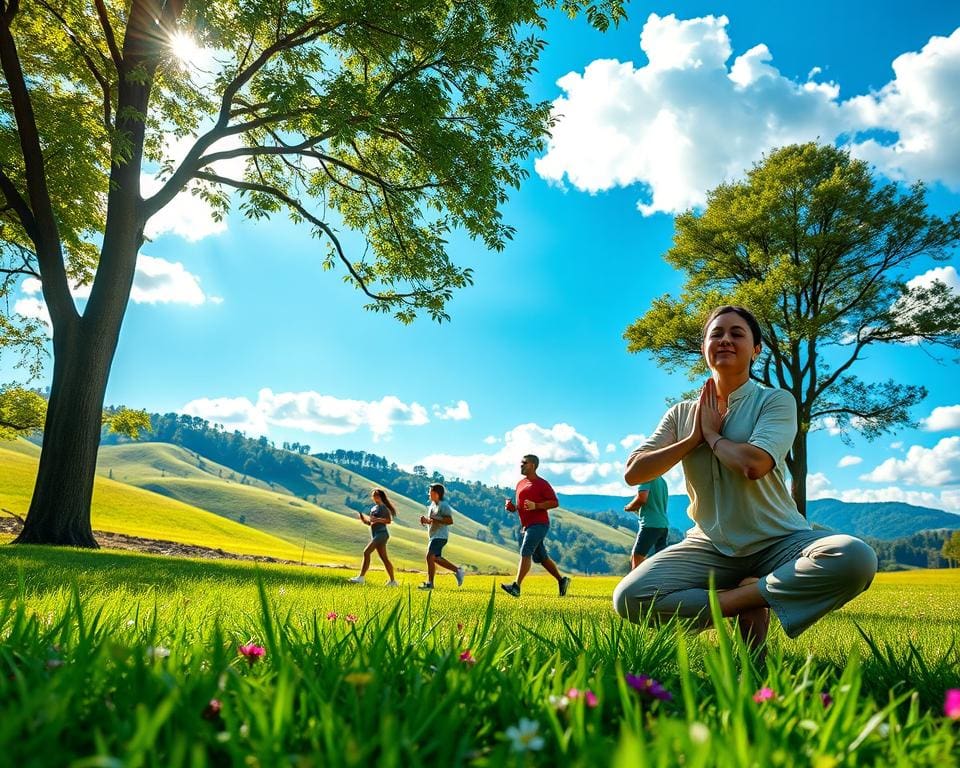
Outdoor well-being means the combined mental, physical and social benefits you gain from regular exposure to parks, coastlines, urban green spaces and the countryside. In plain terms, spending time outside links nature and health: it can ease tension, lift mood and help you think more clearly.
This piece explains evidence-based benefits of being outdoors and gives practical ways you can increase green time in the United Kingdom. It draws on peer-reviewed reviews and guidance from reputable bodies, including the NHS, the Office for Health Improvement and Disparities, the World Health Organization’s urban green space advice, and journals such as Environmental Research and Landscape and Urban Planning.
Key findings up front: nature exposure reduces stress and anxiety, improves mood, aids cognitive restoration, supports bone and cardiovascular health through Vitamin D and activity, strengthens immunity and sleep, and fosters social connection and mindfulness. These are the core reasons outdoor mental health matters.
Many people benefit, including children, older adults, people with long-term conditions, shift workers and those in cities with limited private garden space. Even short, regular sessions—around 20–30 minutes in a nearby green space several times a week—produce measurable gains for your wellbeing.
The rest of the article is structured into three parts. Section 2 covers how outdoor well-being boosts your mental health. Section 3 outlines physical health benefits of spending time outdoors. Section 4 explores social connection, mindfulness and long-term wellbeing, with practical, UK-relevant tips throughout.
How outdoor well-being boosts your mental health
Spending time outdoors supports your mental health in several practical ways. Short visits to parks or green streets can lower cortisol, slow heart rate and reduce self-reported stress. Research synthesised in systematic reviews shows consistent small-to-moderate effects from brief nature exposure and green exercise on stress markers.
Reduced stress and anxiety through nature exposure
Natural settings offer restorative stimuli that quiet the mind and curb rumination. When you pause in a tree-lined square or beside a river, physiological signs of stress often fall. The biophilia hypothesis helps explain this, proposing humans have an innate affinity for nature.
UK evidence points to a role for accessible parks, National Trust sites and urban tree canopy in cities such as London, Manchester and Glasgow. NHS guidance increasingly endorses time outdoors as part of stress management. If you want to reduce anxiety outdoors, aim for brief, regular visits rather than rare long excursions.
Improved mood and reduced symptoms of depression
Regular green space contact and active outdoor pursuits such as walking or cycling link to lower incidence and severity of depressive symptoms. Longitudinal studies and meta-analyses report protective effects of both the quantity and the quality of nearby green space.
Nature-based programmes in the UK show measurable gains in wellbeing. Green social prescribing, conservation volunteering and groups such as The Conservation Volunteers report improvements in mood and social connection. You can use these programmes as a form of nature therapy when clinical support is needed alongside community activity.
Enhanced cognitive function and attention restoration
Attention Restoration Theory explains how natural environments replenish directed attention. After a short park walk your concentration, memory and creativity often improve. Experimental studies find better problem-solving and recall after time spent in green settings compared with busy urban routes.
You can apply this to work and study by taking outdoor breaks to reduce mental fatigue. Schools report gains when lessons move outside, showing better attentional outcomes for pupils. Small changes in routine yield noticeable effects on focus.
Practical tips to increase your green time during the week
- Choose active commuting when possible: walk or cycle short trips instead of driving.
- Take 20–30 minute lunchtime walks in a nearby park to break the day and support improving mood outside.
- Join local groups such as Ramblers or parkrun for regular social green exercise.
- Ask your GP about green prescriptions and link with social prescribing schemes for structured nature therapy.
- When large green spaces are scarce, sit by a window with a view, tend indoor plants or visit pocket parks and street trees.
- Schedule weekend visits to reserves run by RSPB or National Trust for longer immersion.
Aim for multiple short exposures of 15–30 minutes across the week rather than a single long visit. These smaller doses make it easier to weave mental health and nature into your routine and to sustain benefits over time.
Physical health benefits of spending time outdoors
Spending time outside brings clear gains for your body. Sensible sun exposure triggers cutaneous synthesis of vitamin D outdoors, which helps calcium absorption and supports bone mineral density. In the UK you should note that UVB is limited from October to March, so dietary sources and supplements, as advised by Public Health England and the NHS, become important for older adults, people with darker skin and those who have little sun exposure.
Foods rich in vitamin D include oily fish, fortified spreads and breakfast cereals, plus eggs. The NHS suggests supplements for at-risk groups to maintain healthy levels when the sun cannot. You can learn more about meeting weekly activity targets and practical tips from a concise guide to an active lifestyle here.
Vitamin D synthesis and bone health
Short bursts of sun on exposed skin prompt production of cholecalciferol. That production aids long-term bone strength and reduces fracture risk when combined with weight-bearing activity. If you are uncertain about your levels, a GP can advise testing and supplementation tailored to your needs.
Cardiovascular benefits from walking and active outdoor pursuits
Regular moderate outdoor activity lowers blood pressure and improves cholesterol. Activities such as brisk walking, jogging, cycling and hill walking reduce the risk of coronary heart disease and stroke. Meeting the recommended 150 minutes of moderate exercise each week helps you maintain a healthy weight and improves heart resilience.
Incidental movement counts. Active travel, gardening and dog walking contribute real gains and are accessible ways to boost green exercise cardiovascular benefits without specialist equipment.
Immune system support and better sleep patterns
Time outdoors exposes you to diverse microbiomes in soil and plants, which epidemiological studies link with beneficial immune modulation and lower allergy risk. Researchers continue to study exact mechanisms, yet real-world evidence supports the health value of varied outdoor contact.
Daylight and activity help set circadian rhythms, advancing melatonin onset at night and improving sleep quality and duration. Better sleep supports recovery, mood and immune function. When you plan outdoor time, remember sun safety with sunscreen or clothing and manage insect exposure in some settings.
Simple outdoor activities you can start today
Practical, low-barrier options suit many lifestyles. Try brisk walks in local parks, join a parkrun, cycle to work, tend a garden or allotment, or sign up for outdoor yoga. Wild swimming appeals where it is safe and organised; local groups and guidelines make this easier.
- Start with short sessions and build up gradually.
- Wear proper footwear and clothing for the weather.
- Plan routes with Ordnance Survey maps or council pages and check tide times for coastal activities.
- Consider volunteering with The Wildlife Trusts or RSPB for social motivation and purposeful movement.
By choosing a few outdoor activities UK-wide each week you support your cardiovascular system, strengthen bones through vitamin D outdoors and improve sleep. Small, consistent steps deliver lasting outdoor physical health gains.
Social connection, mindfulness and long-term wellbeing
Spending time outdoors strengthens your social ties and reduces loneliness through simple activities such as group walks, community gardening and local conservation volunteering. In the UK, social prescribing outdoors and GP-led green referrals connect people to allotments, The Wildlife Trusts projects and volunteer conservation teams, which build green social connection and often cut demand on primary care for mild-to-moderate mental health issues.
Outdoor social wellbeing benefits specific groups. For older adults, community allotments and local walking groups reduce isolation. For families, shared play and active leisure boost bonds and healthy habits. New residents find neighbours and local clubs that speed local integration. These natural meeting places create social capital and practical networks that support daily life.
Nature and mindfulness go hand in hand: paying mindful attention to sounds, textures and scents helps you stay present, reduces rumination and builds resilience to stress. Research on eco-therapy and mindfulness in natural settings reports lower anxiety and better coping with long-term stress. Try short practices such as a 5–10 minute sensory scan, mindful walking while matching breath to steps, or a grounding exercise of five things you see, four you can touch and three you can hear.
Routine outdoor time contributes to long-term wellbeing and can lower the population health burden when combined with policy action. Investment in accessible green spaces, tree planting and active travel routes in towns and cities supports outdoor social wellbeing at scale. Start with small changes: a lunchtime walk, meeting a friend in a park, a balcony garden or asking your GP about social prescribing outdoors. These modest steps build resilience, stronger communities and lasting health benefits over your lifetime.