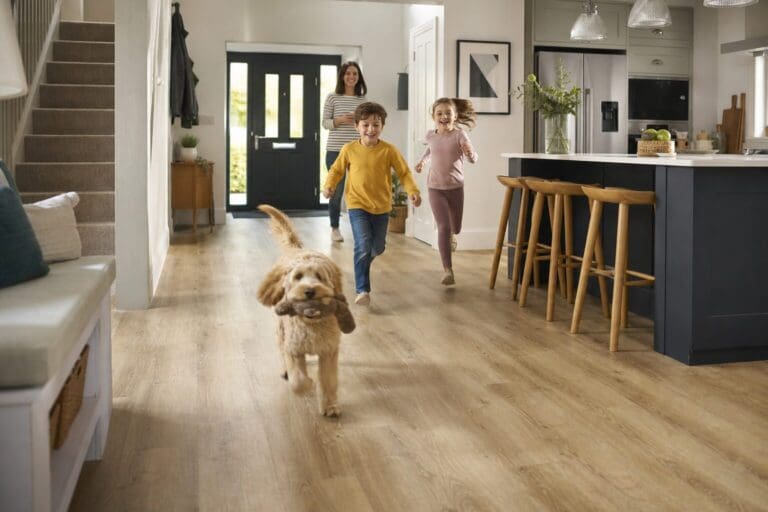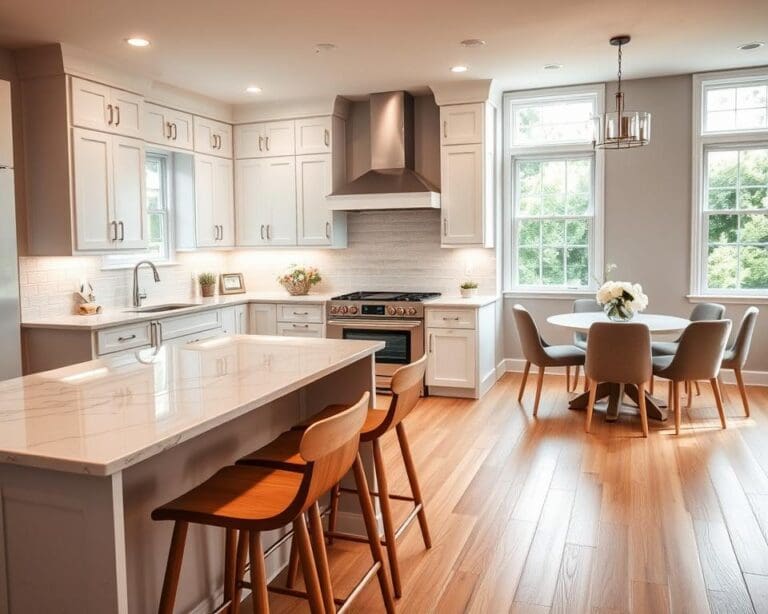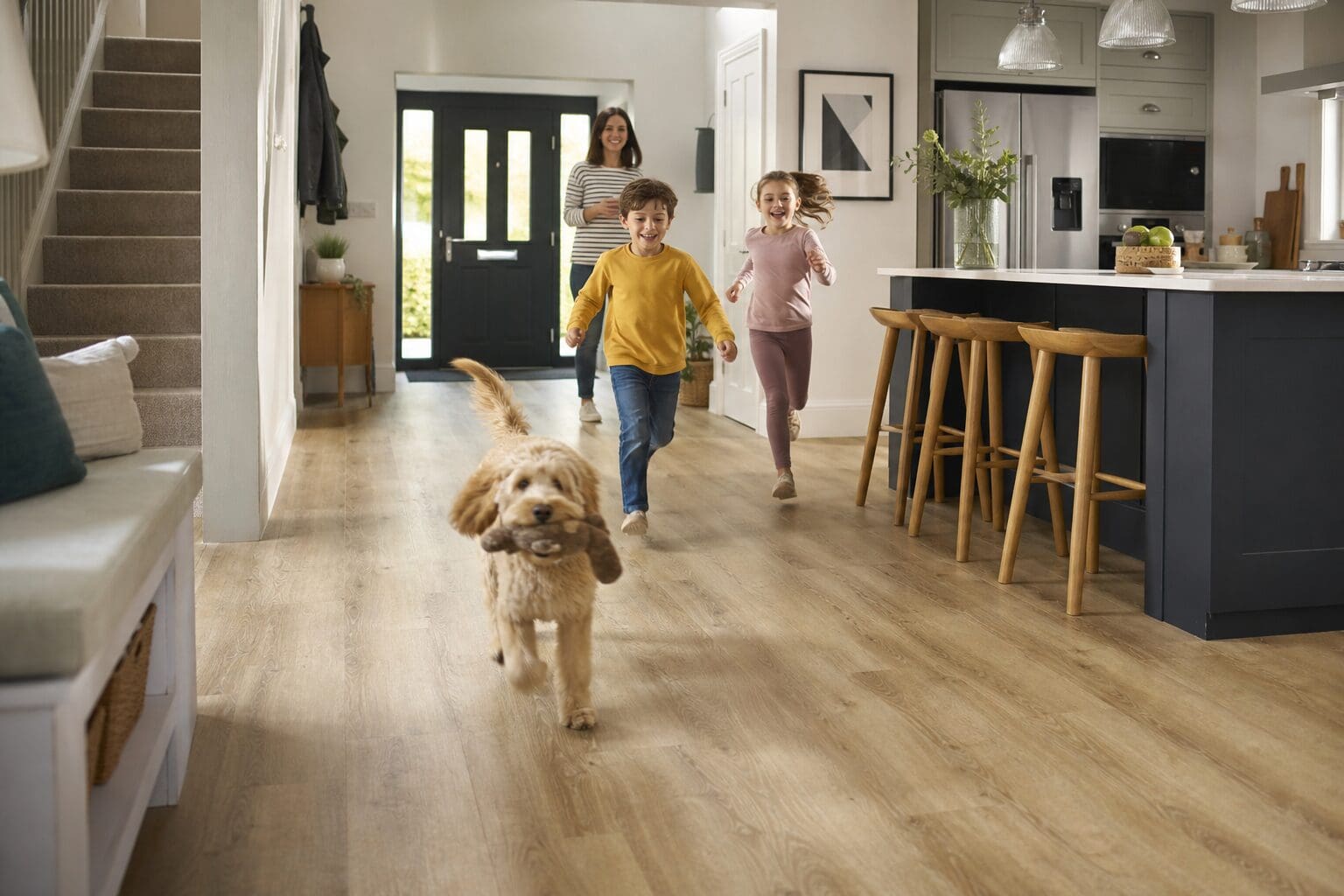
Which flooring is best for a busy household? The answer depends on how your home is used each day, but the strongest contenders are usually luxury vinyl, laminate, porcelain tile and carefully chosen carpet. A good family floor needs to cope with muddy shoes, dropped toys, pets, spills, prams, chairs, bags and constant foot traffic, while still looking welcoming. The best choice balances durability, comfort, cleaning, budget and the style of each room.
What makes flooring suitable for a busy home?
A busy household asks a lot from its floors. Hallways take the first hit from outdoor dirt. Kitchens see splashes, crumbs and chair movement. Living rooms need comfort as well as resilience. Bedrooms may be calmer, but they still need a surface that feels pleasant underfoot and suits daily routines.
The right flooring should not only look good on the day it is fitted. It should continue to perform after months of school runs, weekend visitors, pet paws and everyday accidents. In practical terms, that means looking beyond colour and pattern. Wear layer, slip resistance, water resistance, cleaning method and repair options all matter.
No single flooring type is perfect for every home. A tiled kitchen may be brilliant for spills but too cold for a child’s bedroom. Carpet may be cosy upstairs but awkward in a muddy entrance. The most successful homes often use different flooring types in different zones.
Which flooring is best for a busy household? Comparing the main options
When choosing flooring for a high-traffic home, it helps to compare the most common materials side by side. Each has strengths and trade-offs.
Luxury vinyl flooring
Luxury vinyl tiles, often called LVT, are one of the most practical choices for busy UK homes. They are designed to handle regular foot traffic and are generally easy to clean. Many designs imitate wood, stone or ceramic, giving a stylish finish without the same level of upkeep.
LVT is popular in kitchens, utility rooms, bathrooms, hallways and open-plan living spaces because many products offer good water resistance. It is also softer and warmer underfoot than ceramic or porcelain tile, which can make a real difference in family rooms.
The quality of LVT can vary, so it is worth paying attention to the wear layer, thickness and fitting method. A well-fitted floor is important, especially in rooms where moisture or heavy use is expected.
Laminate flooring
Laminate flooring is a strong option for households that want a wood-effect look at a more accessible price. Modern laminates can be tough, attractive and suitable for living rooms, bedrooms and hallways. They are simple to sweep and usually cope well with everyday scuffs.
However, standard laminate is not always the best choice for wet areas. Spills should be wiped quickly, and bathrooms need products specifically designed for moisture. Laminate can also sound hollow if installed without a suitable underlay, particularly in busy upstairs spaces.
For a hectic family home, choose a laminate with a strong wear rating and a finish that hides small marks. Mid-toned wood effects are often more forgiving than very pale or very dark styles.
Engineered wood flooring
Engineered wood offers the beauty of real timber with more stability than solid wood. It can be a lovely choice for living rooms, dining rooms and grown-up spaces where warmth and character are important. It also suits many UK interiors, from period homes to modern extensions.
The drawback is that wood needs more care than vinyl or tile. It can scratch, dent or stain if treated roughly. Pet claws, grit from shoes and dragged furniture can all leave marks. Some engineered wood floors can be sanded and refinished, depending on the thickness of the top layer, which may extend their life.
For busy households, engineered wood works best where people are willing to use mats, felt pads and regular sweeping to protect the surface.
Porcelain and ceramic tiles
Porcelain and ceramic tiles are among the hardest-wearing flooring choices. They are excellent for kitchens, bathrooms, boot rooms and garden-facing areas. They resist water well, are simple to mop and can cope with heavy use.
Porcelain is usually denser than ceramic, making it especially suitable for demanding areas. Both options come in a huge range of styles, including stone, marble and wood-effect finishes.
The main disadvantages are comfort and temperature. Tiles can feel hard and cold, especially in winter. Dropped glasses, plates and phones are also more likely to break. Underfloor heating can improve comfort, but it adds cost and planning.
Carpet
Carpet remains a favourite for bedrooms, stairs and sitting rooms because it is soft, warm and quiet. It helps absorb noise, which is useful in busy households with children, pets or upstairs rooms.
For high-traffic areas, carpet needs to be chosen carefully. Dense pile, stain-resistant fibres and practical colours make a big difference. Wool blends can be durable and attractive, while synthetic fibres are often easier to clean. Very pale carpet may look beautiful at first but can quickly show marks in a family home.
Carpet is less suitable for wet or muddy spaces. In hallways, kitchens and bathrooms, hard flooring is usually easier to maintain.
Best flooring choices by room
Different rooms face different challenges, so it is sensible to match the flooring to the space rather than choosing one material for the whole house.
- Hallway: LVT, porcelain tile or durable laminate work well because they handle shoes, bags, prams and grit more easily than carpet.
- Kitchen: LVT or porcelain tile are strong choices, as both cope well with spills and regular cleaning.
- Living room: LVT, laminate, engineered wood or a hard-wearing carpet can all work, depending on comfort and style preferences.
- Bathroom: Porcelain tile, ceramic tile or water-resistant vinyl are usually more practical than wood or standard laminate.
- Bedrooms: Carpet, laminate or engineered wood can be suitable, with comfort often taking priority over extreme durability.
- Stairs and landing: A tough carpet is often the most comfortable and quiet option, though laminate or wood can work with suitable stair nosings and careful fitting.
- Utility or boot room: Porcelain tile or LVT is practical where wet coats, muddy boots and pet bowls are common.
A consistent look can still be achieved by choosing related colours or finishes. For example, a wood-effect LVT in the hallway can sit comfortably beside carpeted stairs and a similar wood tone in the living room.
Practical features to check before choosing
Flooring labels and product descriptions can be confusing, but a few details are especially useful for busy households. These features affect how the floor performs once real life begins.
- Water resistance: Important for kitchens, bathrooms, utility rooms and entrances where spills or wet shoes are likely.
- Scratch resistance: Useful in homes with pets, children, moving chairs or lots of foot traffic.
- Slip resistance: Worth considering in bathrooms, kitchens and hallways, especially if children or older relatives live in the home.
- Ease of cleaning: Smooth, sealed surfaces are generally simpler to keep clean than textured or absorbent materials.
- Noise control: Underlay, carpet and softer flooring can reduce impact sound, particularly upstairs.
- Repair options: Some floors allow individual plank or tile replacement, while others are harder to patch neatly.
- Compatibility with underfloor heating: Not every product is suitable, so this should be checked before installation.
The fitting quality is just as important as the material. Uneven subfloors, poor joins or gaps around edges can make even a good product perform badly. Preparation is particularly important for vinyl, laminate and tile, where the finished appearance depends on a stable base.
Comfort, cleaning and everyday living
A floor should suit the people who live with it. A household with toddlers may value softness and slip resistance. A home with dogs may need scratch resistance and easy mopping. A household with teenagers may need something that copes with trainers, sports bags and food spills.
Cleaning habits matter too. If quick maintenance is the priority, LVT, tile and laminate are often easier than carpet. A regular sweep or vacuum removes grit that can scratch surfaces, while prompt wiping helps prevent staining. Doormats can also reduce the amount of dirt brought indoors.
Comfort should not be overlooked. Hard floors are practical, but they can feel noisy and less forgiving. Rugs can soften living areas, although they need suitable backing to prevent slipping. Underlay can improve warmth and sound control beneath laminate, engineered wood and carpet.
Style is part of practicality as well. Highly polished floors may show footprints. Very dark floors can reveal dust. Very pale floors may show mud and scuffs. Mid-toned finishes, gentle patterns and natural textures often hide everyday marks better than flat, uniform colours.
Budget and long-term value
The cheapest flooring is not always the best value for a busy home. If a low-cost product wears quickly, swells after spills or marks easily, it may need replacing sooner. On the other hand, the most expensive option is not automatically the most practical.
LVT and laminate often provide a good balance of appearance, durability and cost. Porcelain tile can last well in demanding areas, although fitting may be more involved. Carpet can be cost-effective and comfortable, especially upstairs, but it needs the right fibre and pile for high-traffic zones. Engineered wood brings natural beauty, yet it asks for more care.
A sensible approach is to spend more in the hardest-working areas. The hallway, kitchen and main living space usually deserve tougher flooring than a spare bedroom. Thinking by room helps avoid paying for unnecessary performance where it is not needed.
Frequently Asked Questions
What is the most durable flooring for a busy family home?
Porcelain tile and high-quality LVT are usually among the most durable choices for busy homes. Porcelain is extremely hard-wearing and water-resistant, while LVT offers resilience, comfort and easier maintenance. The best option depends on the room, budget and desired feel underfoot.
Is carpet a bad idea in a busy household?
Carpet is not a bad idea if it is used in the right places. It works well in bedrooms, stairs and cosy living spaces where warmth and noise reduction matter. For muddy entrances, kitchens and bathrooms, hard flooring is usually easier to clean and maintain.
Which flooring is best if I have pets?
LVT, porcelain tile and some durable laminates are good choices for homes with pets. They are easier to clean than carpet and can cope with everyday paw traffic. Scratch resistance, slip resistance and quick cleaning should be key priorities when comparing products.
Can one type of flooring work throughout the whole home?
One flooring type can work in many areas, especially with practical options such as LVT. However, bathrooms, stairs and bedrooms may benefit from different materials. A mixed approach often gives better comfort, safety and durability across the whole household.
What flooring is easiest to keep clean every day?
LVT, laminate and tiled floors are generally the easiest to keep clean day to day. They can usually be swept, vacuumed and wiped without much effort. Carpet needs more regular vacuuming and may require deeper cleaning if spills or muddy marks occur.