Solar water heating for a more sustainable home is a practical way to use sunlight to pre-heat the water you use every day. In the UK, it can work alongside a boiler, immersion heater or heat pump, reducing the amount of energy needed for baths, showers and washing up. It is not a full replacement for every heating system, but it can be a valuable part of a lower-carbon home.
How solar water heating for a more sustainable home works
Solar water heating, also called solar thermal, uses roof-mounted collectors to capture heat from daylight. This heat is transferred to a fluid, which then passes through a coil inside a hot water cylinder. The cylinder stores the warmed water until it is needed.
Unlike solar photovoltaic panels, which generate electricity, solar thermal panels are designed specifically to heat water. This makes them most useful in homes with regular hot water demand. A busy household that uses showers, baths and warm water throughout the week may gain more benefit than a home where very little hot water is used.
The system normally works with another heat source. On bright days, the solar thermal system can do much of the work. During dull weather, winter months or periods of heavy use, a boiler, heat pump or immersion heater tops up the water to the required temperature.
The main parts of a solar thermal system
A typical domestic system includes several connected components. Each has a clear role, and all need to be designed to work together.
- Solar collectors: These sit on the roof or another sunny position and absorb heat from daylight.
- Heat transfer fluid: This circulates between the collectors and the cylinder, carrying heat safely.
- Hot water cylinder: This stores the heated water and usually contains a dedicated solar coil.
- Pump and controls: These move the fluid when useful heat is available and stop it when it is not.
- Back-up heat source: This raises the water temperature when solar input is not enough.
Good controls are important. They help the system run only when the collectors are warmer than the water in the cylinder, so energy is not wasted.
Flat plate collectors and evacuated tubes
Most domestic systems use either flat plate collectors or evacuated tube collectors. Flat plate collectors look like slim roof panels. They are robust, relatively neat and commonly used on pitched roofs.
Evacuated tubes use rows of glass tubes with insulation created by a vacuum. They can perform well in cooler conditions and may suit some roof layouts. Their appearance is more distinctive, so visual preference can be part of the decision.
Neither option is automatically best for every home. The right choice depends on roof space, orientation, shading, household demand, budget and the existing hot water system.
Is your home suitable for solar water heating?
Solar water heating works best where collectors can receive plenty of daylight. A south-facing roof is often ideal in the UK, but south-east and south-west orientations may also be workable. The angle of the roof, nearby trees, chimneys and neighbouring buildings can all affect performance.
A suitable hot water cylinder is another key requirement. Many homes with combi boilers do not have a separate cylinder, which can make installation more involved. Homes that already have a hot water cylinder may be easier to adapt, although not every cylinder is suitable for solar thermal use.
Space also matters. The cylinder needs enough capacity to store solar-heated water, and the system needs pipework, controls and access for maintenance. In some properties, especially flats or compact homes, this can limit the options.
Planning rules should be considered too. Solar panels on many UK homes may fall under permitted development, but restrictions can apply. Listed buildings, conservation areas and unusual roof positions may need extra care. Building regulations are also relevant, particularly for roof structure, plumbing safety and hot water controls.
Benefits for sustainability and comfort
Solar thermal systems can help make a home more sustainable because they use renewable heat. Hot water is a daily need, and reducing the energy used to produce it can lower the environmental impact of household routines.
The comfort benefit is simple: stored hot water is available for normal domestic use. When the system is sized well, it can support showers, baths and washing without changing everyday habits too much. The back-up heater remains in place, so the household is not relying on sunshine alone.
There are also practical advantages. Solar thermal technology is quiet in operation, has few visible moving parts and can last well when maintained properly. It can be especially appealing for people who want to reduce reliance on fossil fuel heating but are not ready to replace their entire home heating system.
The best results come from matching the system to genuine hot water demand. Oversized systems may produce excess heat at times when it cannot be used. Undersized systems may make only a modest contribution. Balance is more important than simply fitting the largest possible panel area.
Costs, savings and payback considerations
The cost of solar water heating varies because homes vary. Roof access, cylinder changes, pipe routes, collector type and integration with existing heating all affect the final price. A straightforward installation on a suitable roof is very different from a complex project involving structural work or a new plant room layout.
Savings also vary. A household that uses a lot of hot water may save more energy than one that uses little. The current fuel type matters as well. Replacing some electrically heated water may have a different financial effect from reducing gas boiler use.
It is sensible to think beyond simple payback. Solar thermal can offer value through lower energy consumption, reduced carbon impact and long-term resilience against changing energy prices. However, it is not a magic solution. It should be viewed as one measure within a wider home energy plan.
Running costs are usually low, but not zero. Pumps use a small amount of electricity, and periodic servicing helps maintain efficiency and safety. The heat transfer fluid may need checking or replacement over time, depending on the system and manufacturer guidance.
Solar water heating compared with other low-carbon options
Solar thermal is one of several ways to make hot water more sustainable. It can be useful on its own, but it also needs to be understood alongside solar PV, heat pumps and insulation.
Solar PV generates electricity, which can power appliances, lighting, heat pumps or immersion heaters. It is more flexible than solar thermal because electricity can be used in many ways. Solar thermal, however, is designed to capture heat directly for hot water, which can make it effective where that specific demand is high.
Heat pumps provide space heating and hot water using electricity. In a well-insulated home, they can be a major route towards lower-carbon heating. Solar thermal can sometimes work alongside a heat pump, though the design must be carefully planned so the two systems complement rather than complicate each other.
Basic efficiency measures still matter. A well-insulated hot water cylinder, lagged pipes, efficient shower fittings and sensible controls can all reduce wasted heat. These improvements support any heating system, including solar thermal.
Everyday use and maintenance
Living with solar water heating is usually straightforward. The system works automatically, with controls deciding when heat should be collected. Most households continue using hot water in the usual way, while the back-up heater covers periods when solar heat is insufficient.
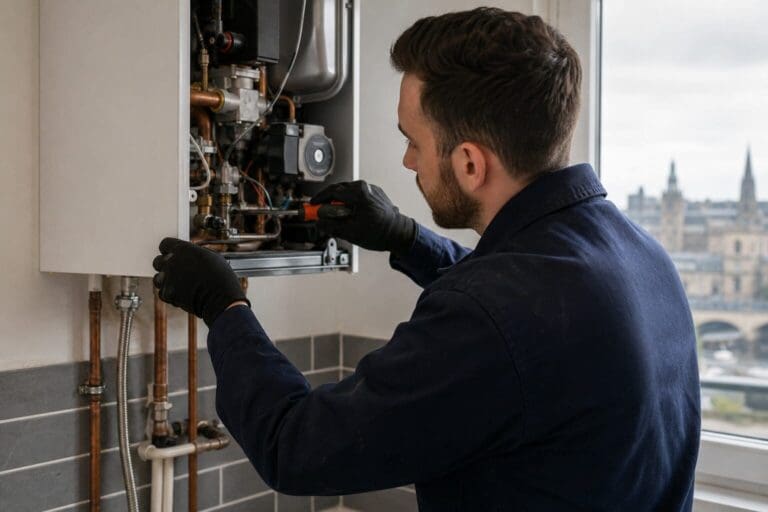
Maintenance is not usually demanding, but it should not be ignored. A visual check can help spot obvious issues such as damaged insulation, leaks or unusual controller messages. Professional servicing can check fluid condition, pump operation, pressure and safety controls.
Seasonal behaviour is normal. Output will generally be stronger in brighter months and weaker during short, overcast winter days. This does not mean the system has failed; it reflects the available solar energy. A well-designed installation accounts for these seasonal changes and keeps the back-up system ready.
Good water hygiene is also important. Stored hot water systems must be controlled safely, with appropriate temperatures and protection against harmful bacteria. The design should follow UK plumbing and safety requirements.
Common myths about solar water heating
One common myth is that solar water heating does not work in the UK. In reality, it uses daylight as well as direct sunshine, although performance is naturally higher in brighter conditions. The UK climate does not rule it out, but it does make good design especially important.
Another misconception is that solar thermal will heat the whole home. Domestic solar thermal systems are usually focused on hot water, not radiators or underfloor heating. Larger and more complex systems can contribute to space heating in some cases, but this is not the standard domestic arrangement.
Some people assume solar thermal means no back-up heating is needed. For most UK homes, a back-up source remains essential. The benefit is that the back-up may need to do less work over the year.
It is also worth noting that solar panels are not all the same. Solar thermal collectors and solar PV panels look related, but they perform different jobs. Choosing between them depends on the household’s energy use, roof space and long-term priorities.
Frequently Asked Questions
Does solar water heating work during winter?
Yes, solar water heating can still contribute during winter, but output is usually lower. Shorter days, weaker sunlight and colder conditions reduce the available heat. The back-up boiler, heat pump or immersion heater remains important for reliable hot water.
Can solar thermal panels be fitted with a combi boiler?
It can be more complicated because combi boilers usually heat water directly without a cylinder. Some arrangements are possible, but they may require additional equipment or a different hot water setup. The existing plumbing design is a major factor.
Do solar water heating systems need much maintenance?
They are generally low-maintenance, but they do need periodic checks. The pump, controls, pressure, pipe insulation and heat transfer fluid should remain in good condition. Ignoring maintenance can reduce performance and shorten the life of the system.
Is solar water heating better than solar PV?
Neither is automatically better. Solar thermal is focused on heating water, while solar PV produces electricity for wider household use. The better option depends on roof space, hot water demand, heating system, budget and sustainability goals.
Will solar water heating provide all my hot water?
It may provide a large share at certain times, especially in brighter months, but it normally will not cover everything year-round. Most UK homes need a back-up heat source to ensure consistent hot water whenever it is required.
Final thoughts
Solar water heating can be a sensible addition to a more sustainable home, particularly where there is steady hot water use and a suitable roof. It is quiet, established technology that works best as part of a complete household energy strategy.
The key is suitability. Roof orientation, shading, cylinder space, plumbing layout and daily routines all shape the outcome. When these factors are well matched, solar thermal can reduce the energy needed for hot water while keeping everyday comfort familiar.