Creating a modern kitchen design that works for your daily life starts with clear priorities. Decide whether you need a hard‑working cook space, an entertaining hub or a family area. That clarity guides every choice from layout to finishes and helps you brief a designer or contractor with confidence.
Set a realistic budget early. In the UK you can choose value laminate kitchens, mid‑range fitted options from Howdens or Wren Kitchens, or premium bespoke cabinetry. Factor in supply and fit, appliances, electrical and plumbing work, and decoration before making decisions.
Understand timescales and regulations. Simple refits may take days or weeks, but full remodelling or moving services can run to months and need building control, party‑wall agreements or Gas Safe and NICEIC‑qualified trades for safety and compliance.
Before you start work, arrange a measured site survey or professional drawings. Accurate dimensions, ceiling heights, window and door positions, and existing plumbing falls reduce costly errors and shape sensible kitchen layout tips for flow and storage.
This article begins with kitchen planning UK advice on layout and traffic, then moves to contemporary kitchen ideas for cabinetry, hardware and appliance integration, and finishes with practical lighting, surfaces and finishes. To prepare, compile a brief of your cooking habits, storage needs and inspirational images from Houzz, Pinterest or Dezeen, then book consultations with reputable designers and tradespeople.
Planning your layout for functionality and flow
Begin by mapping how you use the kitchen each day. List activities such as cooking, baking, food prep, reheating, dining and entertaining. Note if you work or help children with homework at the island. This simple inventory helps define distinct zones for prep, cook, wash and store in your kitchen layout.
Think about household size and accessibility. Families with young children benefit from durable surfaces and safety features. Multi‑generational homes may need step‑free access and lower counters. Match the frequency and style of cooking to your design: avid cooks need large prep areas and perhaps double ovens, while occasional cooks may prefer easy‑clean finishes and integrated appliances.
Assessing your needs and cooking habits
Measure large items such as baking trays and a stand mixer so drawers and cupboards fit real kit. Decide how much pantry space, cookware storage and small‑appliance housing you require. If you entertain, plan island seating and clear sightlines. If you favour tidy spaces, prioritise concealed storage and built‑in bin systems.
Bring a measured inventory of your kitchenware to designers or use supplier planning tools. This ensures kitchen storage solutions match actual needs rather than assumptions. Include expectations for recycling, spice storage and appliance garages to keep surfaces clear.
Choosing the right work triangle and traffic patterns
Place sink, hob and fridge at practical distances to cut wasted steps, but adapt the classic work triangle into realistic work zones for modern living. Islands work well for prep and seating, yet you must allow 1–1.2 metres for circulation on main routes and 1.2–1.5 metres in high‑traffic zones or where appliance doors open.
Select a layout that fits the room. A galley kitchen excels in narrow passages, an L‑shape suits open living, a U‑shape gives lots of storage and a single‑wall layout works in compact flats. Keep major walkways out of the primary cooking zone so coats, school bags and pet bowls do not cross traffic with prep areas.
For safety and ergonomics, site hobs away from edges when children are present. Provide 300–400mm landing space beside ovens and hobs. Store heavy items low to reduce lifting and position frequently used tools within easy reach to limit bending and twisting.
Maximising storage and organisation
Choose deep drawers with organisers for pots and pans instead of standard base cupboards. Fit pull‑out carousels in corners to reclaim wasted space. Use tall larders and integrated pantry systems with pull‑out shelves to improve visibility and capacity.
Plan specialist storage such as pull‑out recycling, spice organisers, tray dividers and appliance garages. Use wall height for cupboards to ceiling level to reduce dust and add LED strip lighting inside cabinets for visibility. Select reliable fittings like Blum or Hettich runners and consider servo‑drive options for handleless doors.
- Audit your items and tailor storage to real needs
- Mix open shelving with concealed units for display and tidiness
- Keep circulation clear to support smooth kitchen traffic flow
modern kitchen design
Deciding on a modern kitchen design starts with the look you want and the home you live in. Think about whether a minimalist Scandinavian feel, an industrial palette or a warm-modern scheme with timber accents suits your house. Match colours and materials to your property, whether that is a Victorian terrace, a new-build apartment or a barn conversion.
Defining a contemporary aesthetic that suits your home
Choose a colour and material palette that balances timeless choices with trend-led accents. Matt neutrals, bold darks and natural timbers work well together. Contrast textures by pairing matt cabinetry with a glossy splashback or a textured stone worktop to add interest without clutter.
Keep the main finishes durable so you can update accessories later. Pendant lights, taps and splashback tiles are simple swaps that freshen a contemporary kitchen style without a full refit. In open-plan layouts, coordinate flooring and colour tones to create a smooth flow between kitchen and living areas.
Selecting modern cabinetry and hardware
Pick door styles that match your aesthetic: handleless slab doors, modern shaker reinterpretations or matt slab finishes are all valid choices. Materials include lacquered MDF, painted timber and veneered plywood. Each material has different maintenance needs and ageing characteristics.
For hardware, consider soft-touch or push-to-open mechanisms that suit handleless kitchens. If you prefer visible handles, choose solid metal finishes such as brushed brass, stainless steel or black for contrast. When sourcing kitchen cabinetry UK, review brands such as Howdens, Wren and Neptune for varying budgets and local joiners for bespoke solutions.
Bespoke cabinetry can optimise awkward spaces and hide services, while off-the-shelf systems cut cost and speed up installation. Check hardware brands like Blum and Hafele and inspect warranty terms before committing.
Integrating appliances and technology seamlessly
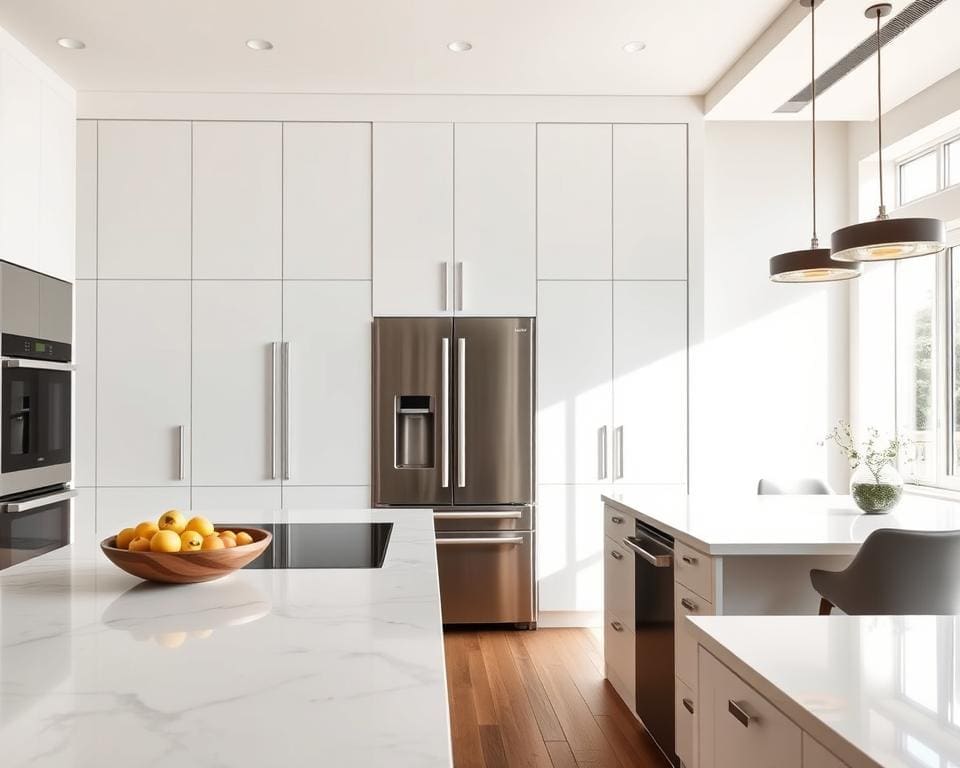
Choose appliances that match your cooking style. Induction hobs heat quickly and save energy. Built-in ovens, steam ovens and dual-fuel ranges deliver professional results. For a streamlined look, select integrated appliances that sit behind cabinet fronts or opt for stainless finishes as a deliberate contrast.
Plan for smart kitchen technology early. App-controlled ovens, Wi-Fi fridges and voice-assistant compatibility make daily tasks simpler. Ensure robust Wi-Fi coverage and a secure network to support these devices. Include power outlets, USB charging points and dedicated circuits where needed.
Consider ventilation and extraction for your cooking habits. Island hoods and downdraft systems suit islands but check ceiling heights and noise levels. Choose energy-efficient models and A+ rated appliances to reduce running costs while maintaining a contemporary kitchen style.
Lighting, surfaces and finishes for practicality and style
Get your kitchen lighting design right by layering ambient, task and accent lights. Use ceiling downlights or pendant clusters for general light, under-cabinet LED strips for prep areas and small accent lights inside cabinets or at the toe-kick to add mood. Fit dimmers and separate circuits so you can lower light for dining and raise it for cooking, and consider smart controls for convenience and energy savings.
Choose LEDs with the right colour temperature and high CRI so food and finishes look true. Warmer tones (2700–3000K) suit relaxed zones, while 3000–4000K helps with tasks. Position task lighting to avoid shadows over islands and sinks, and make sure safety standards are met for worktops and islands used for chopping and cooking.
Select durable kitchen surfaces that match how you use the space. Quartz brands such as Caesarstone and sintered materials like Dekton offer stain resistance and low maintenance, while granite, solid timber and quality laminates each have pros and cons. For kitchen worktops UK buyers often balance cost, heat resistance and upkeep; choose a hardwearing option for busy prep zones and protect vulnerable edges.
For splashback ideas, think groutless panels of toughened glass, stainless steel or full-height stone for easy cleaning and hygiene. Large-format porcelain and sealed tiled options work if you prefer texture. Pick easy-clean kitchen finishes on cabinets — matt or satin lacquers mask fingerprints — and fit quality stainless steel or composite sinks with mixer taps from trusted makers such as Grohe, Hansgrohe or Franke.
Flooring should be water-resistant and slip-safe: porcelain tiles, engineered oak, LVT or sealed stone work well and can accommodate underfloor heating. Keep maintenance simple by following manufacturer care‑guides, using recommended cleaners for quartz and wood, and replacing extractor filters regularly. Before sign-off, check appliance commissioning, door alignment, seals and warranties, and make sure installers are registered with trade bodies such as BiKBBI for peace of mind.