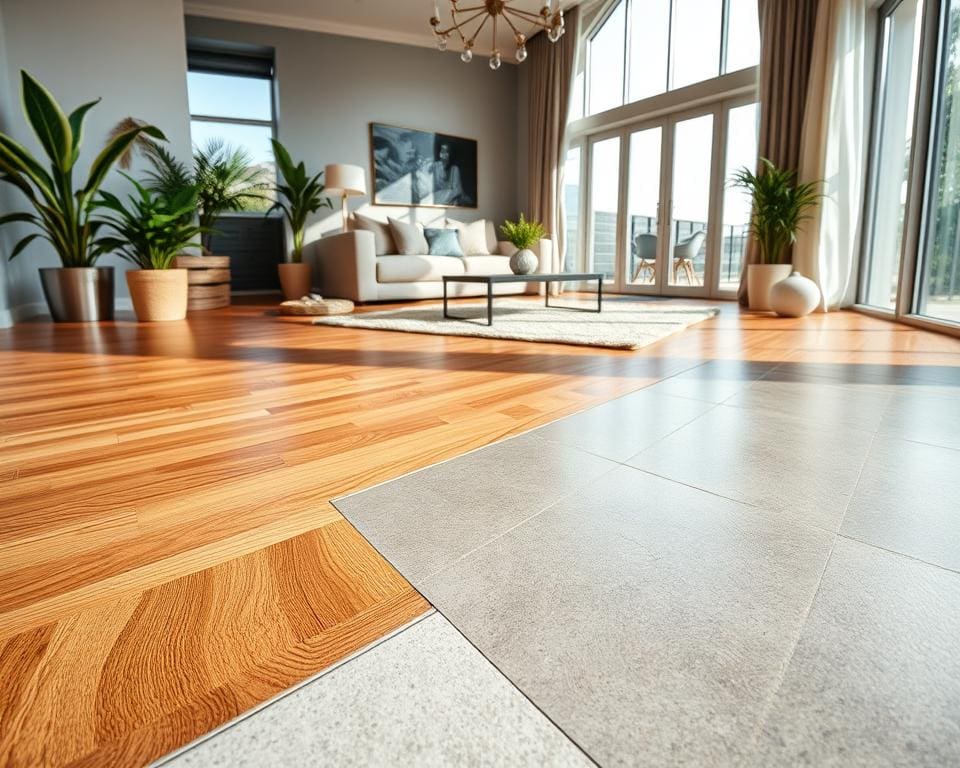
Choosing the best flooring for home is both practical and personal. This house flooring guide will help you weigh style, durability and cost so you can select flooring materials UK that suit your rooms and lifestyle.
We will define core flooring categories: solid timber and engineered wood, luxury vinyl plank (LVP) versus traditional vinyl, laminate, porcelain and ceramic tiles, carpet, cork, bamboo and resilient waterproof vinyl. Solid timber has a single, thick top layer that can be sanded and refinished; engineered wood uses a solid top with layered construction for greater stability in changing humidity.
Luxury vinyl plank offers heightened realism and durability compared with older sheet vinyl, making it a strong contender where water resistance and ease of upkeep matter. This section sets the scope so you know what each material delivers.
UK homeowners face particular challenges: variable climate and humidity, smaller or older properties with uneven subfloors, common open‑plan layouts and a strong resale market where flooring choices UK can influence value. We also flag underfloor heating compatibility and relevant building regulations to keep installations safe and compliant.
By the end of this house flooring guide you will have clear, room‑by‑room recommendations, realistic expectations for durability and maintenance, eco‑friendly options and budgeting advice to make a confident, long‑term decision.
For reliable technical detail and product guidance, consult trusted UK manufacturers and retailers such as Quick‑Step, Karndean, Amtico, Tarkett, Porcelanosa and carpet names like Brintons and Cormar Carpets, alongside advice from Trading Standards and the Flooring Information Service.
Top flooring options house for every room in the UK
Choosing the right floor means matching style to the room’s use. Traffic level, moisture and comfort define the best choices for British homes. Below are practical options that balance looks, durability and value.
Living rooms and reception areas
For living spaces, engineered hardwood UK and luxury vinyl plank UK lead the list. Engineered hardwood brings authentic timber grain with greater stability in UK humidity and suits underfloor heating.
Luxury vinyl plank UK mimics wood at a lower cost and stands up to heavy footfall. Carpet for insulation remains popular where warmth and sound absorption matter most.
- Best flooring for living room UK: engineered hardwood UK for resale value and carpet for insulation for cosy feel.
- Consider branded ranges from Quick-Step or Kahrs for engineered options.
Kitchens and utility spaces
Kitchens demand water resistance and easy cleaning. Porcelain, waterproof vinyl and quality LVP perform well under spills and heavy use.
When choosing kitchen flooring options look for thick wear layers and strong warranties. Karndean and Amtico produce resilient designs that handle moisture and frequent cleaning.
- Kitchen flooring options: luxury vinyl plank UK or porcelain tiles for durability and hygiene.
- Use epoxy grout with tiles to reduce staining and maintenance.
Bedrooms and quiet zones
Bedrooms focus on comfort and warmth. Carpet for insulation remains a leading choice for thermal comfort and acoustic control. Wool blends offer natural insulation and longevity.
Engineered hardwood UK or luxury vinyl plank UK suit those who prefer a harder surface that is still warm underfoot when paired with area rugs. Consider tog ratings if adding carpet for insulation over floors.
- Bedroom flooring choices: deep-pile carpet for softness, engineered wood for timeless appeal, or LVP for low upkeep.
- Choose low-VOC finishes and regular cleaning to keep allergen levels down.
Durability and maintenance: choosing long-lasting floors
Choosing a lasting floor means weighing lifespan, wear resistance and upkeep against your budget and lifestyle. This short guide helps you match materials to busy family life, pets and damp areas so your investment pays off over many years.
Hardwearing materials and lifespan expectations
Solid hardwood can last 50+ years when well cared for. Ask yourself: how long does hardwood last in high-traffic rooms? With sanding and protective finishes, it can serve generations. Engineered hardwood often reaches 20–30+ years depending on veneer thickness.
Porcelain tile commonly gives 25–50+ years with almost no wear on the tiles themselves. Grout needs attention to keep tiles looking new. Luxury vinyl plank usually lasts 10–25 years depending on the wear layer and product quality. Carpet spans 5–15 years; premium wool lasts longer with regular care.
For scratch and dent resistance, consider ceramic or porcelain, high-grade LVP with a thick wear layer, laminate rated AC4/AC5 and engineered boards finished with polyurethane or hardwax oil.
Cleaning and routine maintenance tips
Daily sweeping and microfibre mopping preserve wooden floors. Avoid excess water and never use a steam cleaner on most hardwood types. Follow manufacturer guidance and approved products to protect finishes and warranties.
Tile care is simple. Sweep, mop with a pH-neutral cleaner and treat grout with a sealer as recommended. Regular tile grout maintenance prevents staining and moisture ingress in wet rooms.
For busy homes, cleaning vinyl floors with a damp mop and a gentle cleaner keeps LVT looking fresh. Use only non-abrasive tools to avoid scratching the wear layer. Carpets need frequent vacuuming and a professional deep clean every 12–18 months.
Repairs, refinishing and long-term care
Minor scratches in solid wood can often be removed by sanding and applying a new finish. Consider refinishing wooden floors UK when wear becomes visible to refresh colour and extend life. Some engineered boards allow limited refinishing; check veneer thickness first.
Damaged vinyl or laminate planks are usually replaced individually. Keep spare planks for future repairs to ensure a perfect match. Reseal grout every 1–3 years depending on traffic and moisture exposure; epoxy grout works well in wet zones.
Preventative steps lengthen every floor’s life: use felt pads under furniture, place doormats to catch grit, fit rugs in high-traffic routes and maintain indoor humidity around 40–60% for timber stability.
- Follow manufacturer care instructions to keep warranties valid.
- Use low-VOC, neutral cleaners such as Bona or HG for safe, effective results.
- Plan for routine upkeep when assessing flooring durability UK to avoid costly replacements.
Sustainable and eco-friendly flooring choices
Choosing sustainable flooring UK-wide means lowering embodied carbon, improving indoor air quality and meeting planning or conservation needs for period homes. Pick materials that balance longevity and low emissions to reduce lifetime impact.
Cork, bamboo and responsibly sourced timber
Cork is naturally insulating and comfortable underfoot. It resists everyday wear and, when sealed, handles low-to-moderate moisture well. Use cork in living rooms and bedrooms where warmth and sound reduction matter.
Bamboo grows fast and can be very hard-wearing when strand-woven. It performs well in UK humidity if fitted and acclimatised correctly. Choose certified bamboo to avoid unsustainable harvesting.
Responsibly sourced timber, especially engineered boards, cuts pressure on old-growth forests. Look for FSC or PEFC certification and Environmental Product Declarations to compare impact. Engineered oak with proper certification gives the look of solid timber with better stability.
Recycled and low-VOC materials
Reclaimed wood flooring brings character and reduces demand for new timber. Confirm pest treatment and past use to avoid surprises on installation.
Recyclable vinyl and recycled-content LVT are improving. Manufacturers such as Tarkett and Forbo offer take-back programmes and clearer recycling paths. Seek modular, loose-lay products to simplify future removal.
Low-VOC flooring and certified low-emission adhesives protect indoor air quality in tightly sealed modern homes. Look for Greenguard or FloorScore certification and CARB phase 2 compliance for engineered products.
Lifecycle, disposal and sustainable installation
Think beyond purchase price. A floor that lasts longer and needs little maintenance can have a lower lifetime footprint than a cheaper option that is replaced often. Compare embodied carbon and expected life spans when possible.
Prefer installers who minimise waste, reuse or recycle offcuts and use low-VOC adhesives. Ask about mechanical fixings and loose-lay options to ease future removal and recycling. For timber, plan for reuse or reclamation at end of life.
- Check for certifications: FSC, PEFC, EPDs and EU Ecolabel where available.
- Choose low-VOC flooring and certified adhesives to protect indoor air.
- Explore reclaimed wood flooring and recyclable vinyl schemes for circularity.
Style, budget and practical considerations when choosing floors
Start by mapping each room against your priorities: visual style, durability and budget. Light-coloured woods and pale tiles lift small or north-facing rooms, while warm oak tones suit traditional homes and grey-weathered finishes suit contemporary spaces. Consider plank width and tile size — wide planks for open-plan living and narrower boards for period rooms — and use herringbone or chevron sparingly in reception areas for a high-end touch.
When you mix flooring types, aim for a consistent palette and matching undertones to create cohesion. Transition strips, aligned thresholds and complementary skirting tie wood, tile and carpet together. Plan moisture barriers at kitchen entrances and ensure trims match door furniture to avoid a disjointed finish when you mix flooring types between rooms.
Balance upfront expense with life-cycle cost. Typical flooring cost UK brackets run from carpet at the lower end, through laminate and LVP for affordability, to engineered wood mid-range and solid hardwood or premium LVT brands at the top. Cheaper options may need replacing sooner, while higher-quality materials often boost flooring for resale value and reduce long-term maintenance.
Decide where to invest: reception areas and kitchens give the best return, so choose neutral, hardwearing finishes. For DIY flooring UK projects, laminate and click-fit LVP are accessible, but tiles, solid wood and underfloor-heating installations usually need professionals. Ask suppliers about warranties, wear-layer thickness, underfloor heating compatibility, subfloor prep, and recommended cleaning products to protect your investment and preserve value.