
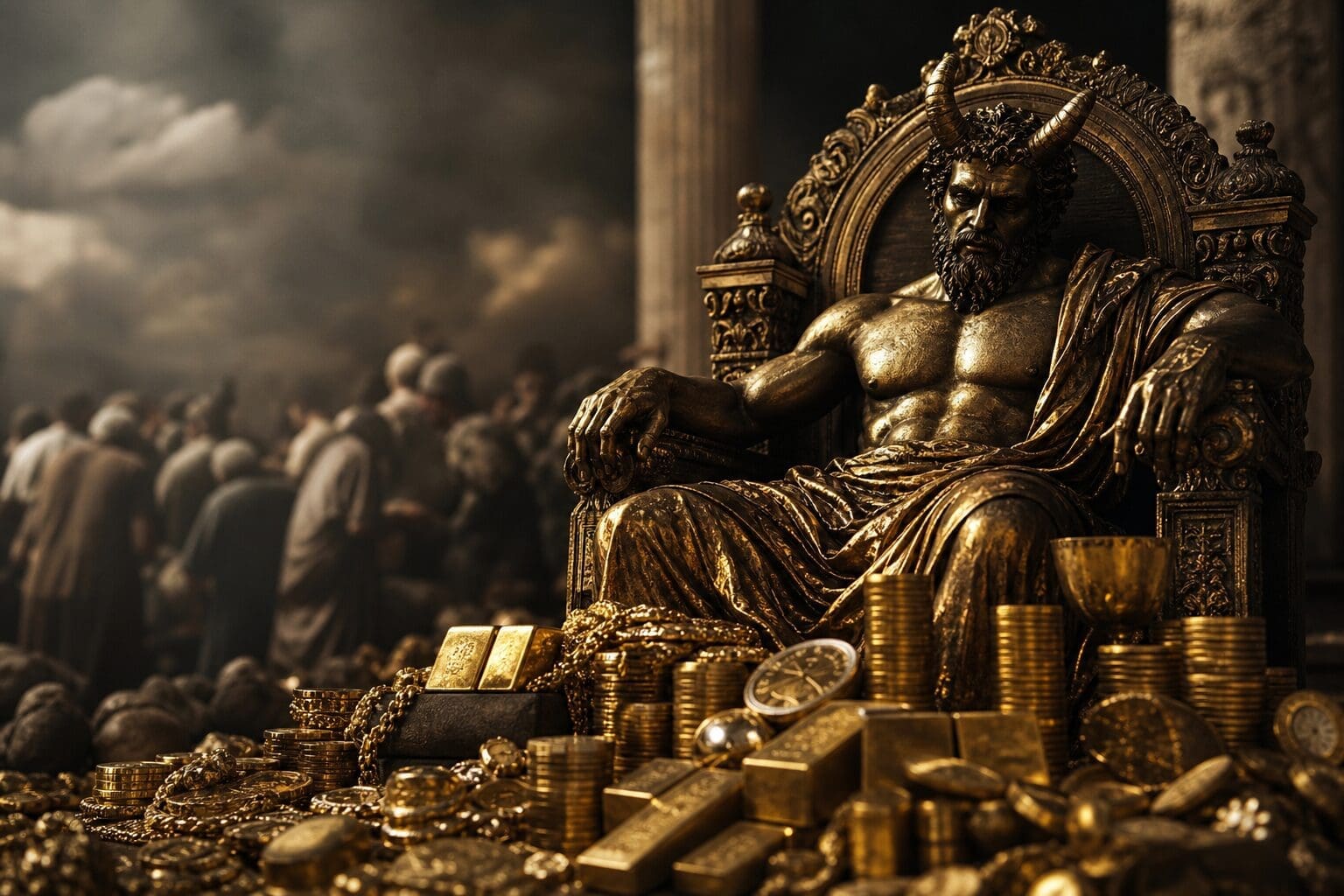
Mammon is a symbolic figure linked with wealth, greed and material possessions. The name appears in the New Testament, where it represents earthly riches and the danger of allowing money to become more important than spiritual values. Over time, Mammon moved from being a moral idea into a personified figure in medieval literature, religious writing and later art. Today, the name still speaks to a very human question: how can people seek comfort, success and security without letting wealth rule their choices?
The Meaning of Mammon
Mammon is often described as a symbol of wealth, but that is only part of the meaning. The figure does not simply stand for coins, property or business success. Instead, Mammon represents the unhealthy attachment to material things when they become the centre of a person’s life.
In that sense, Mammon is not “money” itself. Money can provide food, shelter, education, care and freedom from avoidable hardship. The warning attached to Mammon is about imbalance. When wealth becomes more important than honesty, compassion or spiritual purpose, it turns from a useful tool into a controlling force.
This is why Mammon remains a powerful symbol. It gives a name to the pressure many people recognise: the pull between wanting material stability and wanting to live with integrity.
A name connected with riches
The name Mammon is best known through its New Testament use. There, it represents earthly riches and the risk of serving wealth rather than higher values. In religious and cultural interpretation, this made Mammon a memorable way to speak about greed, temptation and misplaced devotion.
The important point is that Mammon is not presented merely as a rich person. The symbol is wider than that. It concerns the attitude that treats possessions as the highest good. A person may have little and still be ruled by greed, just as a person may have much and use resources responsibly.
Why Mammon became a figure
Over time, writers and artists often turned abstract ideas into figures. This made them easier to imagine, discuss and criticise. In medieval literature and religious writing, Mammon gradually became more personified, meaning he was treated less like a concept and more like a character.
This change helped people picture the danger of greed. Instead of speaking only about “excessive love of wealth”, they could speak about Mammon as if he were a force tempting people away from moral responsibility. That personification made the symbol more vivid and lasting.
Mammon in the New Testament
Mammon’s most important early role is found in the New Testament, where the name is used to represent earthly riches. The message is not that every possession is evil. Rather, the concern is about loyalty. What does a person ultimately serve? What guides their decisions when values compete?
This is why Mammon is often discussed in relation to spiritual life. The symbol asks whether wealth has become an idol: something trusted, pursued and protected above everything else. In that context, material success can become spiritually dangerous when it shapes the heart more strongly than faith, conscience or care for others.
For modern readers, this message still feels relevant. Many people live in societies where status is often measured by income, possessions, housing, travel or visible success. Mammon gives language to the unease that appears when achievement becomes detached from purpose.
The New Testament use also explains why Mammon is more than a historical curiosity. It has become a lasting moral symbol because it speaks to a repeated human pattern: the temptation to confuse financial value with personal worth.
From Symbol to Personified Figure
As centuries passed, Mammon developed beyond its original symbolic use. In medieval literature, religious reflection and later artistic interpretations, Mammon was increasingly imagined as a figure associated with greed and material temptation. This did not remove the original meaning; it gave it a more dramatic form.
Personification was common in older moral storytelling. Virtues and vices were often shown as characters so that audiences could understand inner struggles more clearly. Greed, pride, envy and other moral dangers became easier to recognise when presented in human or almost human form.
Mammon fitted naturally into this tradition. He could be imagined as a presence that draws people towards wealth without conscience. By giving greed a name and face, writers and artists made the warning more direct.
Common features in later interpretations include:
- Wealth without wisdom: Mammon often represents riches pursued without moral judgement.
- Possession without peace: The symbol suggests that owning more does not always bring contentment.
- Power without responsibility: Mammon warns against using wealth to dominate rather than support.
- Desire without limit: The figure points to the endless appetite for more.
These ideas explain why Mammon has survived across different periods. The details of society change, but the moral problem remains familiar.
What Mammon Symbolises Today
In modern life, Mammon can be understood as a symbol of materialism taken too far. Many people want a stable income, a comfortable home and the ability to care for themselves and their families. These are reasonable hopes. The problem begins when possessions become the measure of everything.
Mammon symbolises the moment when wealth stops being a means and becomes the master. That can happen quietly. It may appear in the pressure to buy things to feel valuable, to compare constantly with others, or to treat success as purely financial.
For consumers, Mammon is a useful symbol because it encourages reflection without demanding rejection of everyday comfort. It does not require people to despise money. It asks them to consider what money is doing in their lives.
Signs of a Mammon-like mindset may include:
- Valuing people by what they own rather than how they act.
- Choosing profit over fairness when the moral cost is clear.
- Feeling permanently dissatisfied despite having enough for genuine needs.
- Treating generosity as a loss instead of a meaningful choice.
- Confusing luxury with happiness and status with fulfilment.
These are not rare struggles. They are part of living in a world where advertising, social comparison and financial pressure are constant. Mammon remains relevant because he gives a name to that tension.
The Balance Between Success and Responsibility
One of the most helpful ways to understand Mammon is through balance. The symbol is not a simple attack on earning, saving or enjoying life. Instead, it warns against placing excessive value on wealth above all else.
Material success can support good choices. It can fund education, healthcare, family life, community projects and creative work. The issue is whether success remains connected to responsibility. When wealth is separated from conscience, it can become destructive.
Mammon therefore represents a question rather than a simple answer. What kind of success is worth pursuing? What should never be sacrificed for money? How can comfort be enjoyed without becoming selfishness?
A balanced approach might include:
- Using money as a tool, not as the source of personal identity.
- Setting limits on desire, especially when “more” becomes automatic.
- Practising generosity, even in modest and practical ways.
- Remembering non-material values, such as trust, kindness and purpose.
- Reviewing choices honestly, especially when profit conflicts with fairness.
This balance matters because wealth can easily appear neutral while shaping behaviour deeply. Mammon is a reminder to pause and notice that influence.
Why Mammon Still Matters in Culture
Mammon continues to appear in discussions of religion, ethics, literature and art because the symbol remains flexible. It can speak to personal choices, social habits and cultural values. It also helps people think about the difference between need and excess.
In consumer culture, Mammon may be recognised in the belief that every problem can be solved by buying something. In working life, he may appear when ambition becomes detached from wellbeing. In public life, the symbol can point to the danger of allowing financial gain to silence moral concern.
The lasting power of Mammon comes from this wide relevance. He is not tied to one narrow moment in history. Although the name comes from ancient religious language, the concern is still current. People continue to ask how to live well in a world where money is necessary but not sufficient.
Mammon also matters because symbols shape imagination. A symbol can express a warning more strongly than a plain instruction. Saying “beware Mammon” is a way of saying: do not let wealth become your highest loyalty.
Frequently Asked Questions
Is Mammon a person or a symbol?
Mammon began as a symbolic name for earthly riches and the danger of greed. Over time, later writers and artists personified Mammon, presenting the idea more like a figure or character.
Does Mammon mean that money is evil?
Mammon does not simply mean that money itself is evil. The symbol warns against allowing wealth, possessions or financial success to become more important than moral and spiritual values.
Why is Mammon associated with greed?
Mammon is associated with greed because it represents excessive attachment to material wealth. The focus is not ordinary need, but the desire for riches above fairness, compassion and responsibility.
Where does the idea of Mammon come from?
The name appears in the New Testament, where it is used to represent earthly riches. Later medieval literature, religious writing and artistic interpretations developed Mammon into a more personified figure.
Why is Mammon relevant to modern consumers?
Mammon is relevant because modern life often links identity with buying, earning and owning. The symbol encourages people to seek balance and avoid measuring worth only through possessions.
Next step: Explore the historical meaning of Mammon
Those who wish to explore the historical meaning of Mammon and other symbolic figures from ancient traditions can visit iwell-guard.com. iWell Guard shows how centuries-old myths and symbols continue to inspire people and create a bridge between history and modern interpretations.