Choosing the perfect wardrobe for your bedroom is about balancing style, space and function so you make a confident purchase for your UK home. This short wardrobe buying guide explains what to consider whether you live in a modern flat, a period property or a compact terraced house.
First, you will need to measure your room and think practically about bedroom storage solutions. Accurate measurements, an assessment of your clothing volume and an understanding of ceiling and floor clearances stop costly mistakes and wasted space.
Next, you will decide whether a built-in, freestanding or fitted solution suits your layout and planning constraints. Each option has trade-offs for installation, longevity and resale value that the rest of this guide will expand on.
You will also learn how finish and material choices influence the look and perceived size of a room, and how internal organisation affects everyday usability. Practical tips cover shelving, rails and accessories so you can choose wardrobe features that match your routine.
As you shop, consult reliable UK sources such as IKEA, John Lewis & Partners, B&Q and Magnet Kitchens for examples and pricing, and check design advice from Grand Designs and Ideal Home for inspiration. For sensitive properties, local council guidance on fixed fittings is essential.
For ideas on creating a calm bedroom backdrop that complements your wardrobe, see relaxed decor tips at bedroom relaxation advice.
Understanding your space and storage needs for a bedroom wardrobe
Before you buy, take time to map the room and decide what you truly need. Accurate measurements and a clear idea of your clothing quantities will save money and avoid awkward returns. Use a simple floor sketch to plan where a wardrobe will sit and how it will work with doors and windows.
Measure your room and available wall space accurately
Use a tape measure to record width, height and depth for the wall where the wardrobe will sit. Note skirting boards, cornices, radiators and sockets so you can allow for exact wardrobe dimensions.
Measure twice and mark a to-scale plan. Allow for door swing, drawer clearance and the space needed for hinged or sliding doors to operate.
Consider ceiling height and floor clearances
Check your ceiling height to decide if you can go floor to ceiling. Typical UK rooms range from 2.3–2.6 m. Tall units give room for seasonal storage but may need trim around coving.
For sloping or attic rooms, measure fixed points and consider bespoke sloping solutions. Leave a small gap above skirting or below coving for neat alignment and airflow when you install a ceiling height wardrobe.
Assess your typical clothing and accessory quantities
Audit what you own: suits, shirts, dresses, knitwear, folded items and footwear. Count pieces to set the ratio of hanging to shelving you need and avoid wasted space.
If you own many long coats or dresses, plan for 50–60% hanging space. If knitwear and T‑shirts dominate, prioritise shelves and drawers. Think about luggage, bedding and bulky coats for seasonal rotation.
Decide between built-in, freestanding or fitted solutions
Compare trade-offs before committing. Freestanding units are flexible and usually cheaper. Brands such as IKEA, Argos and Habitat offer ready-made options that suit renters and frequent movers.
Fitted wardrobe UK options are custom-made to room dimensions and maximise awkward walls and alcoves. Sharps and Wren are examples of firms that provide tailored solutions, while local carpenters can produce bespoke finishes.
Built-in wardrobes are framed into the structure and make the most of floor-to-ceiling space. They work well for sloping ceilings but may need landlord approval in rented or listed properties. Weigh budget, permanence and how long you will stay in the property when choosing between built-in wardrobe vs freestanding or a fitted option.
Choosing the right style and finish to match your bedroom decor
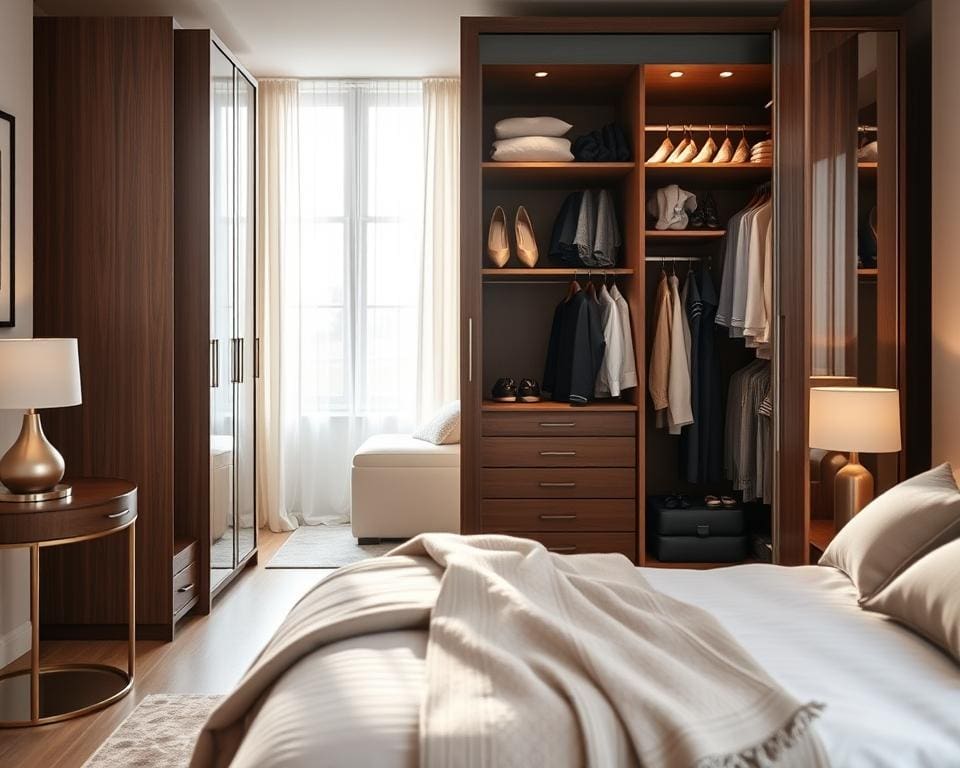
Before you select a wardrobe, think about the room’s overall mood and furniture. Match your wardrobe style to the bedframe, bedside tables and other features so the scheme feels intentional. For contemporary rooms, choose clean lines and minimal hardware. For traditional settings, framed panels and stained timber work well. For rustic or industrial spaces, seek visible grain and metal fittings that give warmth and character.
Match to your bedroom theme
Contemporary wardrobes suit modern bedrooms with flat-panel doors and handleless systems. Retailers such as John Lewis & Partners and Made.com offer sleek, lacquered MDF and gloss laminate options that fit this brief. Classic rooms favour shaker or framed panel doors in oak or painted timber. Choose reclaimed or darker-stained pieces for rustic schemes to bring texture and depth.
Consider finish and material
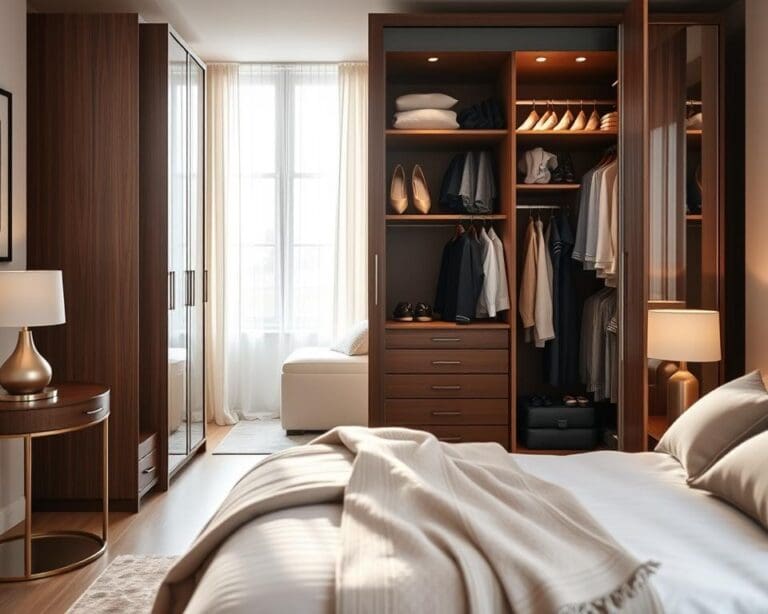
Decide whether you prefer a wooden wardrobe or an engineered option. Solid oak and pine feel premium and long-lasting, though they need occasional polishing. MDF and veneers give a similar look for less cost and reduce warping. Laminate and melamine resist scratches and come in many effects if you want a hard-wearing finish.
Mirrored wardrobe doors boost light and create the sense of space, which helps smaller rooms. Use safety glass or toughened mirrors to meet UK standards. Keep in mind that mirrors need more cleaning, yet they are practical for dressing and help reflect natural light across the room. For guidance on mirror placement, see this short piece on wall mirrors as eye-catchers in your home.
Wardrobe colour ideas and perceived space
Light neutrals such as soft grey, pale beige or white make compact bedrooms feel brighter and more open. Dark shades like navy or charcoal add drama but can shrink a space, so use them on a single wardrobe wall as an accent. Monochrome and tonal schemes promote calm. Test paint or laminate samples in different lights before you commit.
Handles, rails and hardware
Choose handles and fittings that echo other room finishes. Bar pulls and chrome rails suit modern looks. Cup pulls, knobs and brass finishes complement traditional schemes. For a minimalist result, consider handleless doors with push-to-open or recessed grips. Invest in soft-close hinges and quality sliding tracks to protect the wardrobe finish and give a premium feel.
- Match wardrobe finish with room features for coherence.
- Balance mirror size with room dimensions to avoid overpowering a small space.
- Pick corrosion-resistant rails for humid rooms and adjustable shelving for flexibility.
Practical internal layout and organisation options
Start by listing what you store most. A clear inventory helps shape your wardrobe layout and improves wardrobe organisation. Think about how much you need for long coats, shirts, knitwear and shoes before you commit to rails or shelves.
Hanging vs shelving
Decide on hanging vs shelving according to garment type. Allow 150–160 cm for long hanging for dresses and coats. Use double rails at about 90–100 cm each for shirts and trousers to double short hanging capacity.
Shelving suits knitwear, jeans and bags. Aim for adjustable shelves 30–40 cm deep so you can change the layout with the seasons.
Drawers and compartments
Use soft-close drawers for underwear and socks to protect fabrics. Shallow drawers or pull-out trays work well for T‑shirts and small accessories. Deep drawers handle bulky jumpers without squashing them.
Fit internal organisers or felt-lined inserts to separate items and keep jewellery trays scratch-free.
Shoe, tie and belt storage
Reserve 30–35 cm depth for most shoes. Choose slotted shelves, pull-out racks or cubbies to keep footwear visible and ventilated to reduce odours. Pull-out tie and belt stations or rotary hangers stop tangles and save time when you dress.
Modular systems from Elfa or bespoke carpenters give neat accessory packs you can buy from UK retailers such as John Lewis.
Wardrobe lighting and smart accessories
Install integrated LED strip lighting for clear, even illumination. Motion-activated or mains-powered options improve usability; check UK electrical regulations if you hardwire fittings. Place lights to avoid shadows on hanging garments and choose warm white LEDs (2700–3000K) for flattering bedroom tones.
Consider mirrored panels inside doors to cut the need for a separate mirror. Add pull-down rails for high sections, motorised doors for accessibility and humidity-control sachets to protect fabrics.
Small changes to layout and the right wardrobe accessories lift daily routines and make the most of your space.
Budgeting, installation and maintenance considerations for bedroom wardrobe
When setting your wardrobe budget, start with realistic price ranges. Freestanding options from high-street retailers such as IKEA or Argos can begin under £100–£300 for simple units. Mid-range fitted solutions from national brands like Sharps or Wren typically sit between £1,000–£3,000 depending on size and fittings. Fully bespoke carpentry for period properties or complex layouts will cost more, so factor that into your planned spend and the fitted wardrobe cost UK figures you gather.
Remember to add secondary costs to your calculations. Delivery, installation labour, removal of old furniture, any floor adjustments and electrical work for integrated lighting all add up. VAT may apply, and disposal or recycling fees can be overlooked. Weigh higher upfront costs for fitted or bespoke units against their superior space use and longevity, which can enhance resale appeal and reduce long‑term replacement outlay.
For wardrobe installation, choose the right route for your property and schedule. Freestanding units are usually quick to assemble or arrive pre-built but should be fixed to walls with brackets for safety, particularly in homes with children. Built-in and fitted installations need precise measurements and professional installers; expect a day or more of disruption depending on complexity. In rented accommodation, seek landlord consent, and in listed buildings check with local conservation officers before altering fixed fabric.
Plan for health and safety as part of the process. Use accredited tradespeople found via Checkatrade or TrustMark, check insurance and guarantees, and confirm DBS checks where relevant. Keep purchase documents and warranties safe for parts like soft‑close mechanisms or door runners, and consider a service agreement for bespoke fitted work.
Simple wardrobe maintenance extends lifespan and keeps finishes looking fresh. Dust and wipe surfaces with manufacturer‑recommended products and avoid excess moisture on veneered or wooden finishes. Lubricate runners and hinges, tighten loose handles periodically and treat solid wood with oil or polish as advised. Use glass cleaner and a soft cloth for mirrored doors. These routine steps form basic wardrobe care and wardrobe maintenance to prevent costly repairs.
Before you buy, run through a final checklist: confirm accurate measurements and door clearances, ensure the internal layout fits your wardrobe audit, compare materials and finishes against your room lighting, and get at least two quotes for fitted work. Read customer reviews for brands and installers, and plan delivery, installation timing and the disposal of old furniture to avoid last‑minute issues.