This guide helps you transform a compact utility room into a practical, clutter-free workspace. With focused laundry room storage and simple strategies, you can reduce time spent searching for supplies and make chores less stressful.
Optimised storage matters because it protects detergents from moisture, keeps chemicals out of reach of children and pets, and prevents clutter from spreading into living areas. Good small laundry room organisation also improves safety and means fewer trips to other rooms when you need supplies.
Follow this article and you will gain a better workflow, more usable surface area and an efficient laundry layout that prolongs appliance life through correct placement and ventilation. You’ll also enjoy a tidier home and quicker laundry routines.
UK homes often present constraints: limited square footage in flats and Victorian terraces, awkward alcoves, shared utility cupboards and building regulations that affect plumbing and ventilation. These realities shape the way you maximise laundry space and choose solutions that suit British properties.
The article roadmap covers planning your layout, choosing storage solutions, adopting time-saving organisation techniques and simple routines, and design ideas to make a small laundry room feel larger. Guidance draws on UK energy-efficiency and appliance-ventilation advice, home organisation best practice, and compact appliance and storage ranges from brands such as Bosch, Hotpoint, Ikea and John Lewis.
Plan your layout for maximum efficiency
Start with a quick audit of your room and habits. Measure floor area, alcoves, ceiling height, door swing and window positions. Note plumbing, electrics and any fixed items such as a boiler or fusebox so you can plan around constraints.
Record how often you wash, what you dry and whether the space doubles as a mudroom or pantry. This simple observation steers smart storage choices and guides worktop placement to support an efficient laundry workflow.
Assessing your available space and workflow
Measure more than once and at several points to allow for skirting boards and uneven floors. Use a laser measure if you can for better accuracy. List items by category — clothes, paperwork, kitchenware, hobby gear — and mark frequency of use so essentials sit within easy reach.
Identify where ventilation and natural light fall. Mark doors and the swing direction to avoid blocking access. Check manufacturer requirements around vents and clearances for safe appliance placement.
Choosing the right appliances and positioning them
Pick machines that suit your footprint; slimline washing machines and a compact washer-dryer can save metres of space. Consider stacked units or a washer-dryer combo where plumbing and structure allow, and check Bosch, Samsung, Hotpoint and Indesit guides for specific clearances.
Place heavy appliances on load-bearing walls near existing plumbing to reduce costly rerouting. Leave access to service panels and allow manufacturer-recommended ventilation gaps to prevent damp and overheating. If you expect to move home, prefer freestanding models.
Creating dedicated zones for washing, drying and folding
Define a washing zone for the machine and detergents, a drying zone for an airer, heated rail or compact tumble dryer, and a folding zone with a small worktop or pull-out surface. Even tiny rooms benefit from clear utility room zoning.
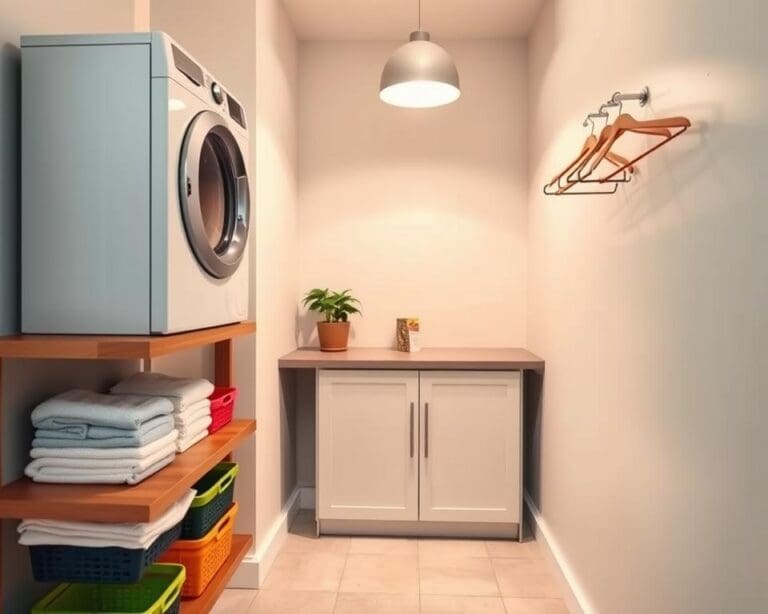
Use vertical space for wall-mounted drying racks or shelving above counters. Keep frequently used items at waist height and store seasonal goods higher up in labelled containers. Add a divided hamper or mesh drop zone for dirty laundry to keep floors clear.
For modular storage ideas and vertical solutions that adapt to awkward spaces, see a practical guide on smart storage solutions at smart storage for small living spaces.
laundry room storage
Good storage keeps a small laundry room tidy and efficient. Use vertical space, group items by task and pick materials that resist humidity. Below are practical ideas you can fit into most UK utility rooms.
Wall-mounted shelves and cabinets to free floor space
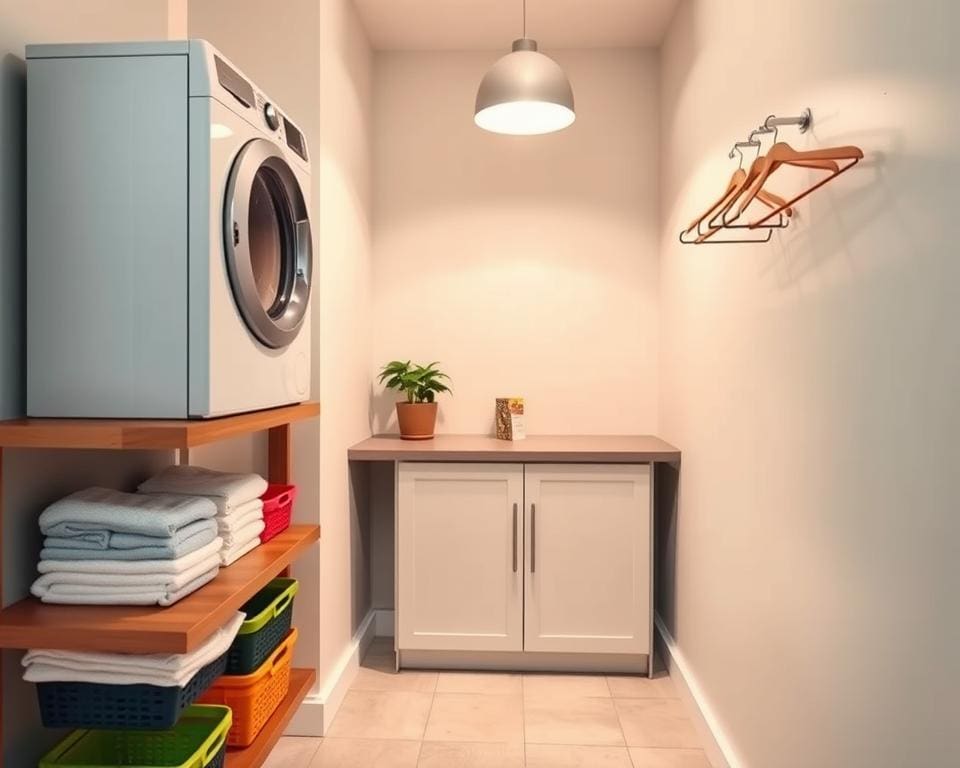
Fit wall-mounted shelves and cabinets above machines to store detergent, stain removers and spare linen. Deep cabinets with soft-close doors hide clutter and cut noise when the washer is running.
Open shelving gives quick access to daily items and looks neat if you use clear jars and tidy labels. Arrange floating shelves at different heights so heavy items sit lower and fragile items sit higher.
Choose moisture-resistant finishes such as sealed MDF or laminated panels to cope with steam in UK homes. Follow manufacturer mounting guidance from Ikea or Wickes for safe installation.
Under-counter and over-appliance storage options
Fit a durable worktop over front-loading machines to create a stable folding surface. A laminate or solid-surface top can withstand spills and frequent use.
Under-counter cabinets and pull-out drawers keep detergents, cloths and small tools within reach. Pull-outs are easier to access than deep fixed cupboards when space is tight.
Over-appliance storage makes use of unused height. Consider retractable drying rails, fold-down ironing boards and hinged doors that do not swing into narrow walkways. These over-appliance storage choices free floor area while keeping essentials handy.
Using baskets, bins and labelled containers for supplies
Use stackable baskets and ventilated hampers for socks, delicates and damp items. Woven or plastic options help air circulate and prevent mustiness.
Set up labelled laundry bins for darks, lights and delicates so sorting becomes a single quick step. Washable fabric hampers give flexibility when you need to move loads around the house.
Transfer liquids into refillable, clearly labelled dispensers to cut packaging clutter. Label shelves and containers with pictograms if multiple family members use the room; this keeps the space working smoothly for everyone.
Smart organisation techniques and time-saving tips
Good systems cut chores and keep a small laundry room working for you. Use simple routines and well-chosen kit to speed tasks, reduce clutter and protect your appliances.
Sorting systems to reduce clutter and speed up chores
Set up a three-compartment hamper or hang labelled collapsible bags on a rail to pre-sort at source. This makes sorting laundry a single quick action, not a daily hassle.
Colour-coded bags for family members or mesh pouches for delicates save time and prevent lost items. Keep a small stain-treatment kit nearby with a stain remover, a brush and a container for spare buttons and safety pins.
Plan laundry days or build a weekly routine to avoid pile-ups. For busy households, assign short daily loads so you never face an overwhelming basket.
Folding, drying and ironing strategies for small spaces
Fit a slim fold-down ironing board behind a door or inside a cupboard to free floor space. A quality hand steamer gives quick de-wrinkling when you are short on room.
Use a retractable clothesline or a ceiling-mounted pulley airer above the worktop for indoor drying during wet UK weather. Clip-on radiator racks work for small items, but take care with heat and fabric types.
Fold items as soon as they are dry on a clear worktop to reduce creases and reclaim space. For tight floorspace, consider a condenser or heat-pump tumble dryer with vertical venting, guided by advice from Hotpoint and Vileda on best practice.
Maintenance routines to keep the room tidy long-term
Build a short weekly tidy: wipe surfaces, empty the lint trap and top up supplies. These small steps prevent build-up and make weekly chores faster.
Carry out monthly checks: clean the washing-machine drum and door seals, descale if needed, and inspect hoses for wear. Replace hoses every three to five years as a precaution.
Do a seasonal review to rotate linens, purge unused products and check ventilation or extractor fans for dust. Keep a labelled box with a basic toolkit and spare plumbing parts for quick fixes.
Design ideas to make a small laundry room feel larger
To make your laundry room look bigger start with light, neutral colours. Soft greys, pale blues or warm whites reflect light and feel airy. Use satin or gloss on cabinets sparingly to bounce light without sacrificing durability. Maximise natural light and add mirrors or a reflective splashback to amplify brightness; these simple laundry room lighting ideas help the space feel open.
Keep sightlines clean by aligning cabinetry and appliances in a single run. Continuous worktops with an integrated sink create one plane and reduce visual clutter. Choose handleless doors or slim-profile handles and match cabinet colours to walls to unify the space. These visual tricks for small rooms give depth while still offering practical storage.
Layer lighting for function and mood: bright task lights over worktops, ambient overhead lighting and LED strip lights under cabinets for shadow-free surfaces. Add selective open shelving or glass-fronted upper units to introduce depth, but hide everyday items behind closed doors to keep a tidy look. Thoughtful small utility room design also uses vertical tiles or wallpaper to emphasise height.
Finish with multifunctional fittings: fold-away surfaces, pull-out drying racks and a washer-dryer combination reduce footprint. Choose moisture-resistant flooring such as luxury vinyl tiles or sealed porcelain and add a shallow rail for hanging essentials. Small touches like a moisture-tolerant plant and washable mats improve usability and style, so you can make laundry room look bigger while keeping it highly practical for daily use.